

Blog
Ayurvedic Detox Treatment vs Juice Cleanse: Myths and Facts

Juice Cleanses, Detox Teas and Fasting Apps Compared With a Doctor-Led Ayurvedic Detox: What Ama Really Means, the Common Myths, and Why Assessment Comes First
Ayurvedic detox treatment and a juice cleanse are not really two versions of the same thing, because they are built on different ideas. A juice cleanse restricts food in the same way for everyone, usually on a general promise to flush the body clean, with no individual assessment. An Ayurvedic detox treatment addresses Ama, a specific idea of undigested metabolic residue, through a doctor-assessed programme matched to your constitution and digestion, with medical oversight. They share the word detox. They do not share a method, a reason or a safety profile.
Why people compare the two
If you are comparing an Ayurvedic detox treatment with a juice cleanse, you are probably trying to work out whether they are really the same idea in different clothes. Juice cleanses, detox teas and fasting apps have made the word detox so familiar that many people assume Ayurvedic detox is simply the traditional version of it.
It is not, and the difference matters for your safety as much as for your results. This guide separates common myths from what is actually true, and explains the concept that an Ayurvedic detox treatment is really built around: Ama.
The core difference: Ama, not vague impurities
In classical Ayurveda, the key idea is Ama: food and experiences that have not been properly digested, leaving a heavy, sticky residue when digestion, or Agni, is weak. Signs often linked with Ama include a coated tongue, heaviness after meals, low appetite, sluggishness and bloating.
An Ayurvedic detox treatment works on Ama by first strengthening digestion, then using therapies and diet chosen for the individual, and finally rebuilding healthy routine. It is not blanket restriction applied to everyone in the same way.
Read more about these ideas in our guide to Agni and Ama in Ayurveda.
Why this distinction matters
A juice cleanse or detox tea is sold with the promise of cleaning the body, without saying exactly what is removed, how, or for whom, because the product is the same whoever buys it.
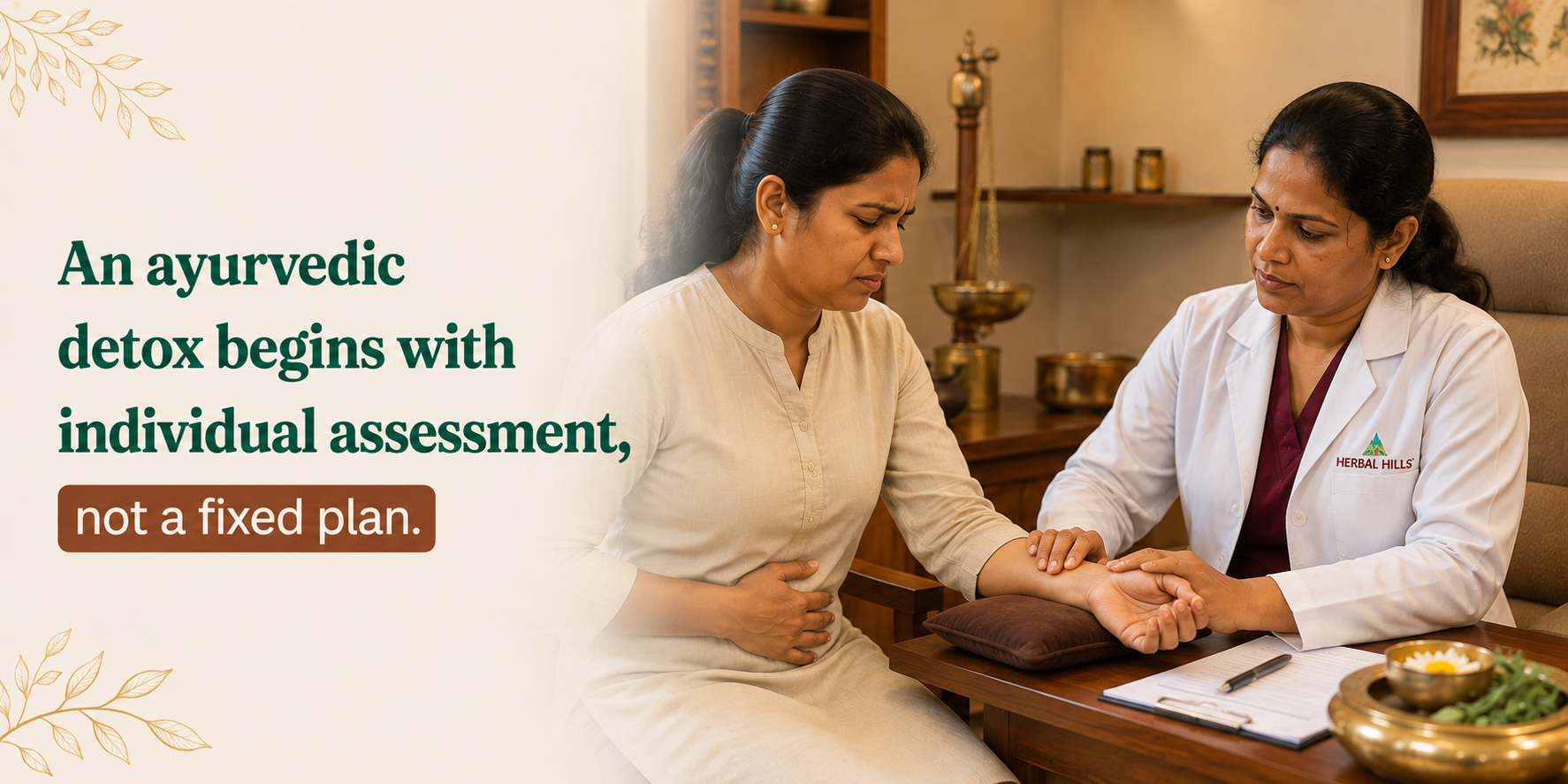
An Ayurvedic detox treatment starts from an assessment of your digestion and constitution. That is why two people who both say they want a detox can walk away from the same consultation with two very different plans: one may need gentle digestive support and diet changes, the other a structured programme of therapies.
What a juice cleanse actually does
A typical juice cleanse replaces meals with fruit and vegetable juices for a few days. Most people take in far fewer calories and much less protein and fibre than usual. The scale may drop quickly, but much of that is water and stored carbohydrate, which tends to return once normal eating resumes.
Some people feel lighter for a while. Others feel tired, cold, irritable or hungry, and some notice digestive upsets. For people with diabetes, kidney problems or a history of disordered eating, a juice cleanse can be unsuitable or risky. None of this makes juice harmful in itself; it simply means a cleanse is a blunt tool, not a personal plan.
What an Ayurvedic detox treatment actually involves
- Assessment. A doctor reviews your digestion, sleep, energy, health history, medicines and constitution, often with Nadi Parikshan.
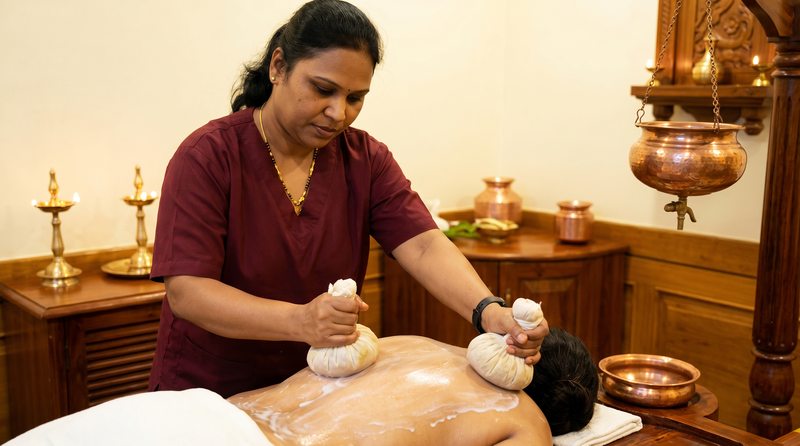
- Preparation. Digestion is first strengthened with diet and, where appropriate, internal or external oil preparation (Snehana) and herbal steam.
- Cleansing therapies. Therapies chosen for your imbalance, from simpler cleansing therapies to a classical Panchakarma sequence when needed.
- Rebuilding. A careful return to normal food, with diet and routine guidance so the benefit lasts.
Every stage of an Ayurvedic detox treatment is set and supervised by the doctor, and adjusted if something is not suiting you.
Common myths about detox, and what is actually true
| Myth | What is actually true |
|---|---|
| Juice cleanses flush your body clean. | Your liver, kidneys, gut and skin already clear waste continuously. A juice cleanse mainly cuts calories and fibre; it does not add a new cleaning mechanism your body lacks. |
| Fasting and Ayurvedic detox are basically the same. | Some Ayurvedic preparatory phases include dietary changes, but they are specific, time-limited and chosen for your constitution, not an extended fast applied the same way to everyone. |
| More restriction means a better detox. | In Ayurveda, harsh restriction without proper preparation can aggravate Vata and leave you weaker. More is not automatically better, and can be counterproductive or unsafe. |
| Detox teas are harmless because they are natural. | Natural does not mean risk-free. Many detox teas act as laxatives or diuretics, and unsupervised products can interact with existing conditions or medicines. |
| You can feel the results in one weekend. | Feeling lighter after a weekend is common, but lasting change in digestion and energy usually needs a planned programme and steady habits. |
| A detox is only for people who are unwell. | Many healthy people choose a planned Ayurvedic detox treatment as a seasonal reset, guided by a doctor. |
Detox tea: what is really in the cup?
Detox teas are among the most bought wellness products online. Many contain herbs with a laxative or diuretic effect, so the lightness people feel is often simply water loss or more frequent trips to the toilet.
Used often, such teas can upset digestion, disturb sleep and, with some medicines, cause problems. If you already use a detox tea, bring it to your consultation. An Ayurvedic detox treatment may still include herbal support, but chosen for you and taken for a set time, not by habit.
Is fasting the same as Ayurvedic detox?
Not exactly. Extended, unsupervised fasting of the kind promoted by some apps is a one-size approach that can be risky for people with certain conditions, including diabetes, low blood pressure, pregnancy or a history of disordered eating.
In an Ayurvedic detox treatment, any change in eating is specific, time-limited and set by a doctor who has assessed you. Lighter meals, warm cooked food or a simple kitchari-style diet may be advised for a short period, but never a fast imposed on everyone for the same number of hours.
Detox diet: what Ayurveda actually suggests
An Ayurvedic detox diet is less about cutting food and more about making digestion easier. Common advice includes warm, freshly cooked meals, simple combinations, regular meal times, warm water through the day, and fewer cold, heavy, fried or processed foods.
The exact plan depends on your constitution and digestion. Someone with a fiery, Pitta-type digestion may be advised differently from someone whose digestion is slow and heavy. That is why a detox diet works best as part of an Ayurvedic detox treatment rather than copied from a list.
Why medical supervision matters
- An assessment can show when restriction is not appropriate for you at all; an app or a product cannot.
- A doctor can adjust the plan if something is not suiting you partway through; a fixed juice schedule cannot.
- Existing conditions and medicines are taken into account before anything changes.
- Aftercare guidance is part of the plan, not something you have to work out alone.
This is the heart of the difference between an Ayurvedic detox treatment and a product sold to everyone in the same way.
Who should not start any detox without advice
Some people should always speak to a doctor before changing their diet sharply or starting any cleanse, Ayurvedic or otherwise:
- People with diabetes, heart, kidney or liver conditions.
- Anyone who is pregnant or breastfeeding.
- People with low blood pressure, anaemia or a recent illness.
- Anyone with a past or present eating disorder.
- Older adults, and anyone taking regular medicines.
For these groups especially, a doctor-led Ayurvedic detox treatment, or a decision not to detox at all, is far safer than a self-directed cleanse.
Signs your digestion may need attention
People often look for a detox because they feel heavy, bloated or tired after meals, wake up without energy, or notice a coated tongue. These can be signs that digestion needs support, but they can also have other causes.
An assessment helps separate a simple digestive imbalance, which may respond to diet and routine, from something that needs medical investigation. Either way, the answer begins with understanding you, not with a product.
How the doctor reads your digestion
Before recommending any Ayurvedic detox treatment, the doctor looks closely at how you digest. Questions cover appetite, how you feel after meals, bowel habits, sleep, energy through the day and cravings. The doctor may look at your tongue, take your pulse through Nadi Parikshan and ask about your work, stress and eating times.
Together, these help the doctor judge whether Ama is present, how strong your digestion is, and which of the doshas is out of balance. Read more about this first step in our guide to Nadi Pariksha in Ayurveda.
When Ayurveda suggests a seasonal detox
Ayurveda traditionally links cleansing with the change of seasons, when the body is thought to be more likely to build up imbalance. In Mumbai, the end of the monsoon and the start of the cooler months are times when many people notice heavier digestion and lower energy.
A seasonal Ayurvedic detox treatment, planned by a doctor, can be a gentle way to reset at these points. It is not about punishing the body after a season of indulgence, but about supporting digestion so you move into the next season feeling lighter and steadier.
Questions to ask before any detox
- Who has assessed whether this is right for me?
- What exactly will I eat, and for how long?
- Does it suit my medicines and any condition I have?
- What happens if I feel unwell during it?
- How will I return to normal eating afterwards?
A genuine Ayurvedic detox treatment answers each of these clearly before you begin. A product or app usually cannot.
Detox for busy professionals in Mumbai
Long commutes, late dinners, irregular sleep and desk-bound days are common in Mumbai, and they show up in digestion. Many professionals look for a quick cleanse to undo a stressful month. A short Ayurvedic detox treatment, planned around your schedule, with simple routines you can keep at home, usually does more good than a weekend of juice.
Vishudhi, Detox Pro and Panchakarma: choosing the right programme
At Herbal Hills, an Ayurvedic detox treatment can take several forms, depending on your assessment:
- Vishudhi, Ayurvedic body cleansing, a doctor-planned cleansing therapy programme.
- Detox Pro, condition-focused programmes for digestion, hormonal balance, immunity, weight, sugar management and men’s wellness.
- A classical Panchakarma programme for deeper or long-standing concerns.
The doctor recommends the programme and its length after assessing you, so you do not have to choose from a menu.
Can you combine a detox with your regular medicines?
Often yes, but only with the doctor’s knowledge. Some herbs, laxative teas and sudden diet changes can affect how medicines for blood pressure, sugar, thyroid or blood thinning work. That is why the doctor asks for a full list of what you take before planning any Ayurvedic detox treatment.
Never stop a prescribed medicine because you are starting a detox. If a change is needed, it should be discussed with the doctor who prescribed it. A good Ayurvedic doctor will happily work alongside your regular physician.
What results can you realistically expect?
People who complete a planned programme commonly describe lighter digestion, better appetite, more regular bowel habits, steadier energy and better sleep. These changes tend to build over the weeks that follow, especially when the diet and routine advice is kept up.
Be wary of anyone promising dramatic weight loss or instant transformation. A responsible Ayurvedic detox treatment sets realistic expectations from the start.
What happens after a detox
In Ayurveda, what happens after the cleansing therapies is part of the treatment. Food is reintroduced gradually, starting with light, warm meals, and you receive guidance on routine, sleep and activity.
Skipping this stage is one reason quick cleanses often leave people back where they started within days. A planned Ayurvedic detox treatment includes this rebuilding phase so the benefit carries into everyday life.
A short reset or a planned programme?
One or two cleansing sessions can leave you feeling lighter and refreshed, and that is welcome in a busy week. But if heaviness, bloating or low energy have been around for months, a single session is rarely enough for lasting change.
That is where a planned Ayurvedic detox treatment helps: preparation, therapies chosen for you, diet and routine guidance, and follow-up visits so the doctor can adjust the plan as you respond. Read more about what detox means in Ayurveda in our guide to body detox in Ayurveda.
An honest comparison, not a sales pitch
An Ayurvedic detox treatment and a juice cleanse share a word, not a method. If you are considering either, the honest question to ask is whether what you are about to try has been assessed for you, or is simply applied the same way to everyone.
At Herbal Hills, our doctors begin every Ayurvedic detox treatment with that assessment, across all five of our Mumbai centres. For an overview of how modern medicine views detox claims, see the NHS guide to eating well.
Frequently asked questions
No. A juice cleanse restricts food the same way for everyone on a general promise to clean the body. An Ayurvedic detox treatment addresses Ama, undigested metabolic residue, through a doctor-assessed programme specific to your constitution and digestion.
Ama is the Ayurvedic idea of improperly digested residue that builds up when digestion is weak. It is a defined concept, unlike vague wellness claims about cleaning the body, and it is addressed by strengthening digestion first.
Not exactly. Dietary changes in an Ayurvedic detox are specific, time-limited and set by a doctor for you, while extended unsupervised fasting applies the same restriction to everyone, which can be risky for some people.
Not automatically. Many detox teas act as laxatives or diuretics, and unsupervised products can interact with existing conditions or medicines. A proper assessment, not a product label, decides what is appropriate for you.
A doctor can identify when restriction is not appropriate at all, take your conditions and medicines into account, and adjust the plan partway through. A fixed product or app cannot.
It depends on your assessment and the programme recommended. There is no single fixed duration; the doctor advises the length after assessing you.
This article is for general education and does not replace medical advice. Ayurvedic therapies and medicines at Herbal Hills are planned by qualified doctors after a personal consultation.
Find a Herbal Hills centre near you
Our wellness centres are spread across Western Mumbai, from Juhu to Borivali, so individuals, families and companies in the western suburbs can reach doctor-led detox care easily. A doctor will assess your digestion, explain which programme suits you and plan the right length. Open Tuesday to Sunday, 10 am to 7 pm. Find your nearest centre.
Detox that starts with you, not a bottle.
One thought on “Ayurvedic Detox Treatment vs Juice Cleanse: Myths and Facts”