
The Fire That Feeds You

Agni in Ayurveda: What Ama Really Means, Signs of Balanced and Weak Digestive Fire, and What Actually Happens During an Ayurvedic Detox Programme
Agni in Ayurveda is the digestive and metabolic fire that turns food into nourishment, energy and strength, and when it works well you feel light, hungry at meal times and clear-headed. When Agni is weak or irregular, food is only partly processed, and Ayurveda calls that leftover residue Ama. This guide explains Agni and Ama in plain words, the signs often linked with balanced and weak digestive fire, and what really happens during an Ayurvedic detox programme. It also explains why Panchakarma is not a detox package.
The short version
- Agni is the Ayurvedic word for your digestive and metabolic fire.
- Ama is a concept for food and metabolism that has not been fully processed. It is not a physical poison.
- Balanced Agni is often linked with good appetite, comfortable digestion and steady energy.
- Weak Agni is often linked with heaviness, bloating and low appetite.
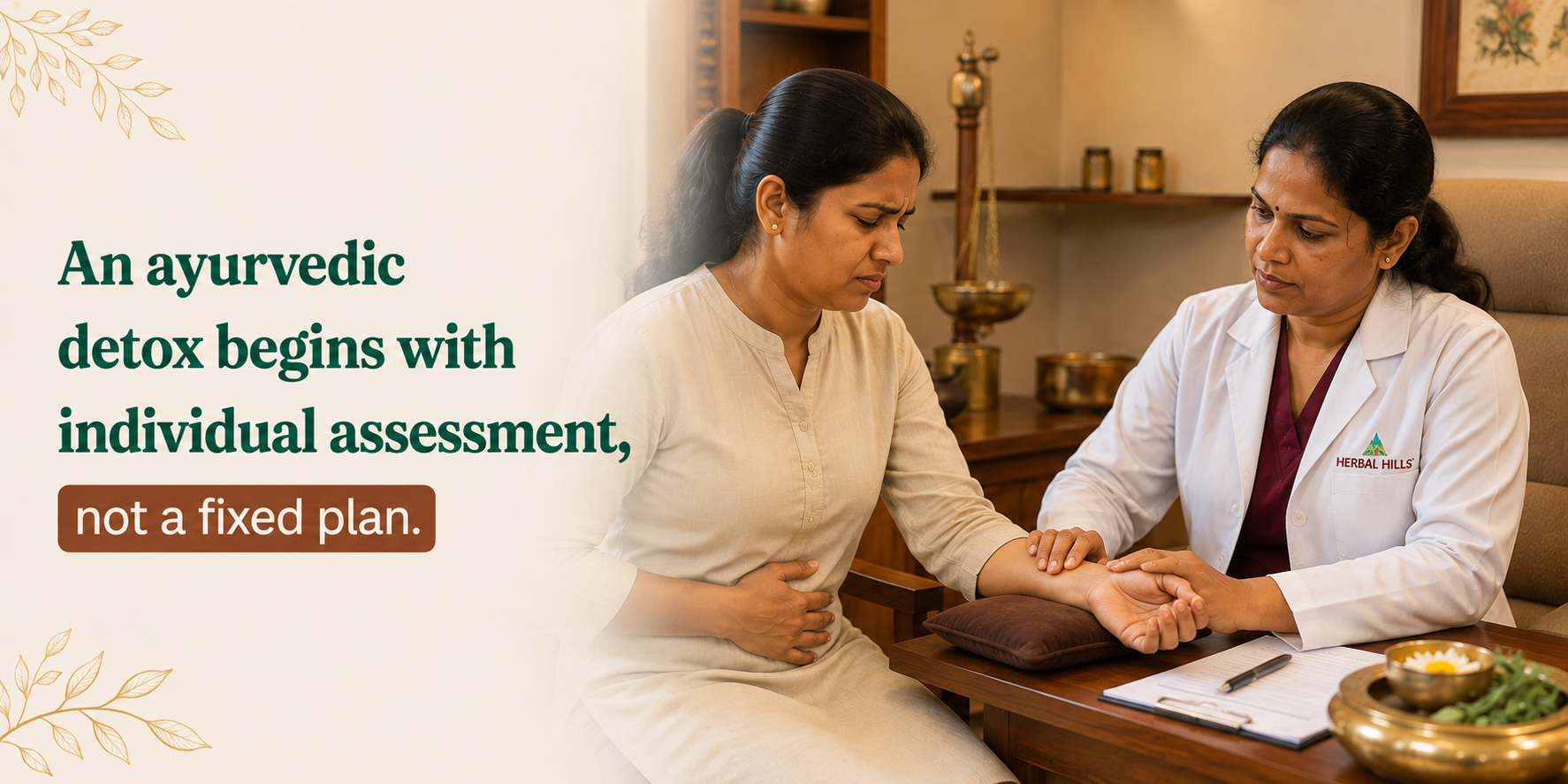
- An Ayurvedic detox starts with assessment, not therapies.
- Panchakarma is a classical treatment, not a detox package.
- A juice fast at home is not Ayurvedic detox.
What is Agni in Ayurveda?
Agni literally means fire. In Ayurveda, it describes the body’s capacity to digest food, absorb nourishment and carry out normal metabolism.
Agni in Ayurveda is not one organ or one chemical. It describes how well the whole digestive and metabolic process is working, and almost every Ayurvedic plan begins by asking how your Agni is doing. The NCCIH overview of Ayurvedic medicine gives useful background on the wider system.
Agni in Ayurveda is more than stomach acid
A common mistake is to treat Agni as another word for stomach acid. Agni in Ayurveda covers much more: appetite, digestion, absorption, how nourishment reaches the tissues, and how waste leaves the body.
Sharp, burning hunger can even be a sign that the fire is out of balance. What matters is how steady the fire is, not how strong.
What is Ama?
If Agni is the fire, Ama is what is left when the fire does not finish its work. Ama is an Ayurvedic term for food and metabolic by-products that are considered incompletely processed.
Classical texts describe Ama as heavy, sticky and slow. So, what is Ama in one line? It is the Ayurvedic name for a state of incomplete digestion.
Ama in Ayurveda: a concept, not a substance
It is important to read Ama in Ayurveda correctly. Ayurveda does not describe Ama as one physical poison that can be measured in a blood test or flushed out with a drink.
Instead, Ama is a concept. It describes a state of imbalance where digestion and metabolism are not working as efficiently as they should. This is why Ayurvedic care focuses on improving digestion, rather than on dramatic flushing routines that promise to wash something out.
How Agni and Ama are linked
Agni and Ama are two sides of the same idea. When Agni is steady, food is digested on time, nourishment reaches the body and very little residue is left behind.
When Agni is weak, irregular or overloaded, more food stays partly processed, and Ayurveda says Ama begins to build up. Breaking this loop gently is the main aim of Ayurvedic digestive care.
The rice on a low flame
Imagine cooking rice on a very low flame. The rice is good quality and the water is clean, yet after the usual time it is still hard in the middle. The problem is not the ingredients. It is the flame.
Ayurveda uses a similar picture. Healthy food alone is not enough. Your body also needs the capacity to digest, absorb and use that food. This is why Agni in Ayurveda matters as much as what is on your plate.
Signs often linked with balanced Agni
Ayurvedic doctors often link a balanced digestive fire with:
- A clear, natural appetite at meal times.
- Comfortable digestion without heaviness or burning.
- Regular, easy bowel movements.
- Steady energy through the day.
- A feeling of lightness after meals.
- A clean tongue on waking.
These are general signs, not a diagnosis. The exact picture always depends on your individual assessment.
Signs often linked with weak Agni and Ama
On the other side, signs often linked with weak Agni and Ama include:
- Feeling unusually heavy, especially after meals.
- Sluggishness and low energy.
- Bloating, gas or burping.
- Loss of appetite, or hunger at odd times.
- A thick coating on the tongue.
- Irregular bowel habits.
Many of these signs can also come from medical conditions, so frequent or severe symptoms always need a doctor’s check.
The four states of Agni in brief
Classical texts describe four broad states of Agni: Sama (balanced), Vishama (irregular), Tikshna (sharp) and Manda (slow). Each is loosely linked with a dosha pattern.
The four states are a tool for the doctor, not labels for self-diagnosis. For a fuller look at these four types and daily habits, see our guide to Ayurvedic support for digestion and Detox Pro.
Digestive fire and daily rhythm
Ayurveda says the digestive fire follows the sun. It is thought to be gentler in the early morning, strongest around midday and slower again in the evening.
This is why many Ayurvedic doctors suggest making lunch the main meal, keeping breakfast and dinner lighter, and finishing dinner a few hours before bed. Agni in Ayurveda is not only about what you eat, but also when you eat it.
Everyday habits that may weaken digestive fire
| Habit | How Ayurveda sees it |
|---|---|
| Eating again before the last meal is digested | Overloads the fire |
| Late, heavy dinners | Food sits while the body winds down |
| Very cold drinks with meals | Thought to dampen the fire |
| Irregular meal times | The fire loses its rhythm |
| Eating while stressed or rushed | Digestion slows on alert |
| Poor sleep | Next-day appetite and digestion suffer |
Everyday habits that support Agni in Ayurveda
- Eat at regular times and let hunger return before the next meal.
- Prefer warm, freshly cooked food.
- Sit down, eat slowly and chew well.
- Stop when satisfied, not stuffed.
- Use kitchen spices such as ginger, cumin and fennel in normal amounts.
- Walk gently after meals.
- Sleep at regular times.
Check with your doctor before big diet changes.
Why doctors ask so many questions about digestion
An Ayurvedic doctor asks about appetite, meal timings, bloating, acidity, bowel habits, sleep and stress. These questions are how the doctor reads your digestive fire.
Two people with the same complaint may have very different patterns, so the answers shape the plan. Understanding Agni in Ayurveda is the foundation of any genuine Ayurvedic detox, and that understanding begins in conversation.
What happens during an Ayurvedic detox programme
A genuine Ayurvedic detox programme does not begin with therapies. It begins with assessment. The doctor needs to understand how your body is working before deciding whether any detox-oriented care is suitable at all.
The steps below describe what usually happens. Not every person goes through every step, and some people are advised only diet and lifestyle changes. You can read more about the idea in our article on what detox means in Ayurveda.
Step 1: Understanding your Prakriti and Vikriti
The doctor first looks at your Prakriti, your natural constitution, the balance of Vata, Pitta and Kapha you were born with. It explains why some people digest heavy food easily and others do not.
Next comes your Vikriti, your current imbalance. This is how your body is behaving now, under present habits, stress and season. The gap between the two shows what needs support.
Step 2: Digestion, lifestyle and medical history
The doctor then asks about your digestion and lifestyle: meal times, food choices, appetite, bowel habits, sleep, stress levels and physical activity.
Your medical history, recent tests and current medicines matter just as much. If anything suggests a need for medical tests or a specialist, the doctor will say so first, before any Ayurvedic plan is made.
Step 3: Nadi Parikshan, the pulse assessment
Nadi Parikshan is the traditional Ayurvedic pulse assessment. The doctor reads the pulse at the wrist to understand dosha patterns and the state of your digestive fire.
At Herbal Hills, Nadi Parikshan is part of the free doctor consultation for proper diagnosis. It is read together with your history and never replaces medical tests.
Step 4: Diet and routine come first
For many people, the first and most important part of the plan is simple: food and daily routine. The doctor may suggest lighter, warm meals for a period, a regular eating rhythm, an earlier dinner, better sleep timing and gentle movement.
For some people, diet and routine alone are enough, and no therapies are needed at all.
Step 5: Medicines and therapies only if suitable
Only when the doctor feels it is appropriate are medicines or therapies added. Ayurvedic medicines are used only as prescribed by a doctor, who considers your Agni, your other health conditions and any medicines you already take.
Therapies such as oil massage, herbal steam or classical Panchakarma procedures are chosen individually. Not everyone needs them.
Is Panchakarma the same as a detox package?
No. Panchakarma is one of Ayurveda’s classical therapeutic approaches, with defined preparation, main procedures and after-care. It is selected according to your health status, constitution and goals, under medical supervision.
A detox package, in everyday language, often means a fixed set of treatments sold to everyone. Ayurveda does not work that way. Not every patient needs Panchakarma, and some benefit from diet and lifestyle guidance alone.
Detox package vs Panchakarma at a glance
| Point | Typical detox package | Classical Panchakarma |
|---|---|---|
| Starting point | Fixed menu | Doctor’s assessment |
| Who gets it | Anyone who signs up | Only people it suits |
| Preparation and after-care | Often skipped | Essential phases |
| Supervision | Varies | Doctor-planned throughout |
| Focus | Flushing | Restoring balance and Agni |
The doctor decides which approach, if any, suits you after your consultation.
Why a home juice or fasting cleanse is not Ayurvedic detox
Many cleanses promoted online involve days of juice, raw food or long fasting. Ayurveda does not describe detox this way. Cold juices and long fasts can unsettle weak digestion.
Classical Ayurvedic care is not a one-size-fits-all plan. The type of therapy, its duration and its suitability are decided after a proper consultation. If you have diabetes, take regular medicines or are pregnant, never start a fast without your doctor.
Myths about Agni in Ayurveda
Myth: Strong hunger always means strong Agni
Fact: Sharp, burning hunger can be a sign of imbalance, not strength.
Myth: Ama is a poison you can flush out with a drink
Fact: Ama is a concept for incomplete digestion. Care focuses on improving digestion.
Myth: Everyone needs Panchakarma to reset digestion
Fact: Many people do well with diet and routine changes alone.
Myth: Ayurveda replaces medical tests
Fact: Warning signs need modern tests first.
When to see a doctor first
Digestive symptoms are common, but some need prompt medical attention, not home care or a detox. See a doctor quickly if you have:
- Weight loss without trying.
- Difficulty or pain when swallowing.
- Repeated vomiting, or vomiting blood.
- Black, tarry or bloody stools.
- Severe or worsening tummy pain.
- Ongoing fever or yellowing of the eyes or skin.
Chest pain with sweating or breathlessness needs emergency care. Modern tests come first for these signs.
Who should be extra careful with any detox
Some people need special care before any change in diet, fasting or detox-oriented therapy. Speak to your doctor first if you are pregnant or breastfeeding, elderly, recovering from illness or surgery, underweight, or living with diabetes, heart, kidney or liver disease.
Never stop a prescribed medicine to start an Ayurvedic plan. A good Ayurvedic doctor will work alongside your other doctors, not against them.
How Herbal Hills supports Agni in Ayurveda
At Herbal Hills, every programme begins with a free doctor consultation, including Nadi Parikshan. The doctor looks at your digestion, sleep, stress, lifestyle and medical history, and reads your Agni and signs of Ama.
Based on this, a personal plan is made. It may include diet and routine guidance, medicines as prescribed, or therapies in private rooms with attached showers, using Herbal Hills oils from a range of more than 40. See our page on Ayurvedic treatment for detoxification.
Detox Pro Digestion: a one-month plan
For people whose digestive problems have gone on for months, the doctor may suggest Detox Pro Digestion. It is a one-month, doctor-supervised programme with consultations and follow-up, personalised therapy sessions, and diet and lifestyle guidance.
It is one structured way to support Agni in Ayurveda when simple home changes have not been enough on their own.
The 5 Days Panchakarma Package
When the doctor feels classical Panchakarma suits you, one option is the 5 Days Panchakarma Package, with 8 sessions over 5 days. It is planned after assessment, not chosen from a menu.
The doctor decides which procedures are suitable, explains the preparation and after-care, and tells you what to eat during and after the days of treatment.
Key takeaways
- Agni in Ayurveda is your digestive and metabolic fire, and it sits at the centre of health.
- Ama is a concept for incomplete digestion, not a physical poison.
- An Ayurvedic detox starts with assessment, then diet and routine, then medicines or therapies only if suitable.
- Panchakarma is a classical treatment, not a detox package.
- Warning signs need a doctor and modern tests first.
Frequently asked questions
Agni is the Ayurvedic concept for the body’s digestive and metabolic capacity. It describes how well the body digests food, absorbs nourishment and supports normal metabolism. Supporting steady Agni is a central goal of Ayurvedic care.
Ama is an Ayurvedic concept for food and metabolic by-products that are considered incompletely processed when digestion is not working efficiently. It is understood as a state of imbalance, not a single physical poison, and is often linked with heaviness and sluggishness.
Signs often linked with weak Agni include heaviness after meals, bloating, low or irregular appetite, a coated tongue, sluggishness and irregular bowel habits. These can also come from medical conditions, so frequent or severe symptoms need a doctor’s check.
It starts with assessment of your Prakriti, Vikriti, digestion, lifestyle and medical history, often with Nadi Parikshan. Diet and routine changes usually come first. Medicines and therapies are added only if the doctor feels they suit you.
No. Panchakarma is a classical Ayurvedic treatment with preparation, main procedures and after-care, chosen by a doctor according to your health and goals. Not everyone needs it, and some people do well with diet and lifestyle guidance alone.
A juice or fasting cleanse is not what Ayurveda means by detox, and it can unsettle weak digestion. Any fasting or detox plan should be decided after a consultation with a qualified doctor.
This article is for general education and does not replace medical advice. Ayurvedic therapies and medicines at Herbal Hills are planned by qualified doctors after a personal consultation.
Find a Herbal Hills centre near you
A doctor can read your Agni, explain what your symptoms may mean and suggest the right next step, whether that is a simple diet change or a planned programme. Herbal Hills has five centres in Western Mumbai, in Juhu (Andheri West), Goregaon West, Kandivali West and two in Borivali West, open Tuesday to Sunday, 10 am to 7 pm. Find your nearest centre.
Understand your fire first. Then plan the care.
One thought on “The Fire That Feeds You”