
Ayurvedic Dhara Therapy · Head & Mind
Takradhara in Mumbai – Ayurvedic Buttermilk Head Dhara
Takradhara is an Ayurvedic dhara therapy in which medicated buttermilk is poured in a slow, steady stream over the forehead. At Herbal Hills Center in Mumbai, a Takradhara session takes about 60 minutes, including a head massage, after a consultation with an Ayurvedic doctor.
Feeling overheated, stressed or short of sleep? This guide explains what Takradhara is, how it differs from Shirodhara, the benefits described in Ayurveda, what happens in a session and who should avoid it.
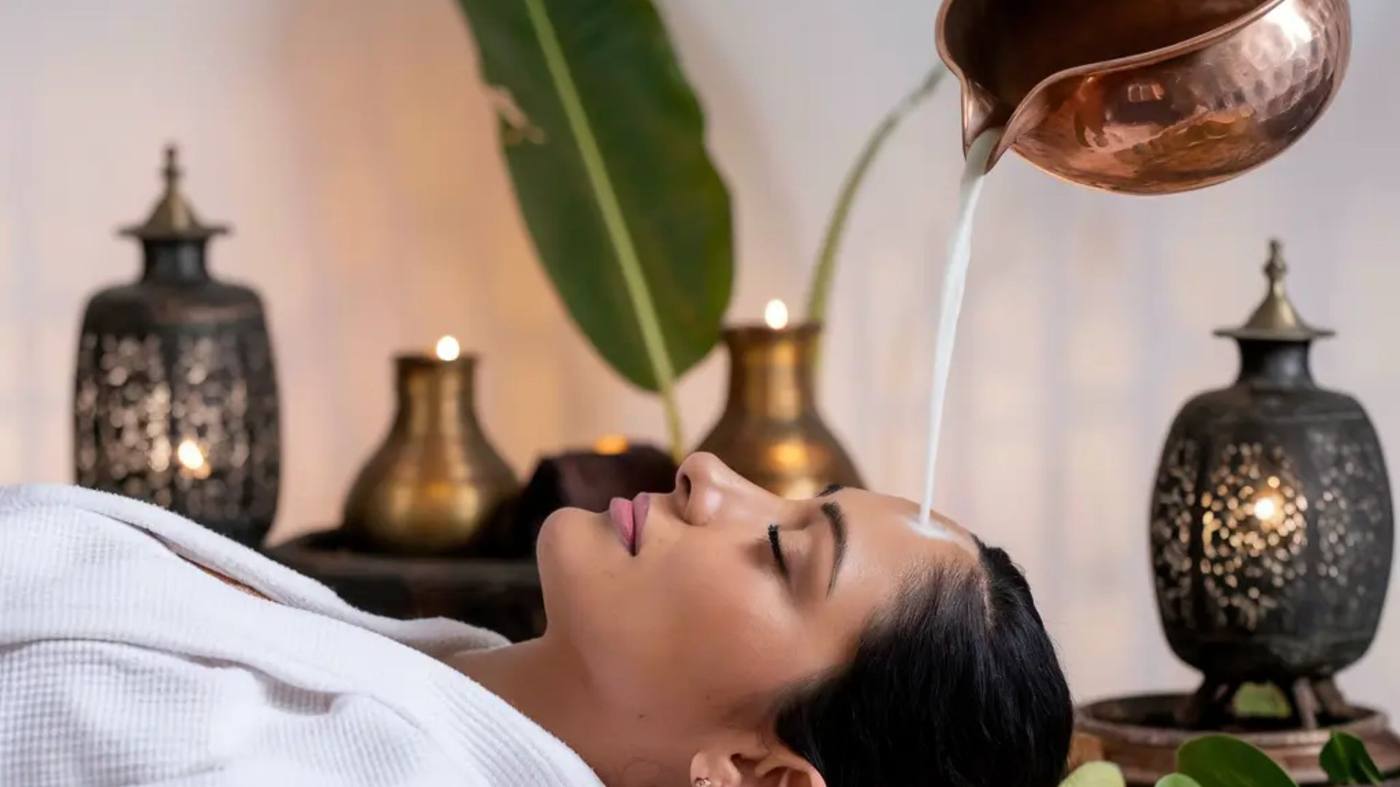
A Cooling Dhara for Pitta
“Takra” means buttermilk and “Dhara” means a continuous stream. Medicated buttermilk is cooling in nature, which is why Takradhara is often chosen when heat, irritability and a hot scalp come with stress.
⏱️
Duration
60 Mins
🏥
Session Type
In-Clinic
🥛
Treatment Detail
Buttermilk Dhara + Head Massage
🔄
Sessions Needed
As Suggested by Our Doctor
What Is Takradhara?
Takradhara (also written Takra Dhara) is a classical Ayurvedic therapy in which medicated buttermilk (Takra) is poured in a continuous, gentle stream over the forehead. It is a variation of Shirodhara, which uses oil. The buttermilk is prepared with herbs — commonly Amalaki (Indian gooseberry) and Musta — so that it is cooling and soothing.
In Ayurveda, Takradhara is traditionally used where heat (Pitta) and stress come together: a hot head, irritability, restless sleep and a dry or itchy scalp. The cool, steady stream is designed to calm the mind and settle excess Pitta.
At Herbal Hills, every Takradhara session is planned by an Ayurvedic doctor, who checks your constitution, sleep, stress and scalp before preparing the medicated buttermilk for you.
How Takradhara Works in Ayurveda
Ayurveda sees Pitta as the principle of heat and intensity. Long screen hours, deadlines, spicy food, late nights and Mumbai’s heat can all push it out of balance — showing up as a hot head, irritability, burning eyes and disturbed sleep.
This therapy answers this with coolness and rhythm. The steady stream of medicated buttermilk over the forehead, at the area Ayurveda calls the Ajna Marma, is traditionally used to calm the nervous system and bring on a deeply restful state. The herbs in the buttermilk add a cooling, soothing quality for the scalp.
This is why it is often the dhara a doctor chooses when stress comes with heat rather than with dryness alone.
What It Supports
Takradhara Benefits Described in Ayurveda
The benefits described in Ayurveda centre on a calmer mind, cooling and scalp comfort. Results vary from person to person, and your doctor will explain what to expect in your case.
😌
Calms Stress & Restlessness
A steady stream that helps the mind settle.
😴
Supports Restful Sleep
Many people sleep more deeply after a session.
❄️
Cools Excess Heat
Traditionally used to settle Pitta.
🤕
Eases Tension Headaches
Often chosen for stress-related headaches.
💇
Soothes the Scalp
For a dry, itchy or overheated scalp.
⚖️
Balances Pitta
A classical Pitta-calming therapy.
Is It for You?
Concerns Takradhara May Help Support
Ayurvedic doctors commonly include this dhara in plans for the concerns below. It supports your wellbeing alongside — never instead of — any treatment prescribed by your physician.
😓
Stress & Mental Fatigue
Long hours and little rest.
😴
Disturbed Sleep
Difficulty falling or staying asleep.
🤕
Stress-Related Headaches
Linked to screens, heat and tension.
🔥
A Feeling of Excess Heat
Burning and irritability.
💇
Hair Fall & Dry Scalp
As part of a wider hair-care plan.
⚖️
Pitta Imbalance
Heat, irritability and intensity.
Takradhara vs Shirodhara and Ksheerdhara
All three are dhara therapies — a continuous stream over the forehead — but the liquid is different:
- Takradhara (this page) — medicated buttermilk; cooling, suited to Pitta-type stress and a hot scalp.
- Shirodhara — warm medicated oil; nourishing, suited to Vata-type stress and dryness.
- Ksheerdhara — medicated milk; cooling and nourishing.
Your Ayurvedic doctor chooses the right dhara after your consultation.
How It Works
The Takradhara Procedure, Step by Step
Whichever centre you choose for your Takradhara, the procedure follows the same five stages.
1
Ayurvedic Consultation
Our Ayurvedic doctor assesses your health, dosha balance, sleep, stress and scalp concerns, and decides on the medicated buttermilk preparation and the length of the dhara.
2
Head & Scalp Preparation
A gentle head and scalp massage with medicated oil prepares the scalp and helps you relax before the dhara.
3
Positioning & Setup
You lie comfortably on the therapy table. A cloth band is placed around the forehead to guide the flow, and the buttermilk is brought to a comfortable temperature.
4
Continuous Buttermilk Stream
Medicated buttermilk is poured in a smooth, rhythmic stream across the forehead from side to side. Duration: about 45 minutes of dhara. Sensation: cool and deeply calming.
5
Post-Care & Rest
The hair and scalp are gently cleaned and you rest briefly. The doctor gives aftercare, diet and follow-up advice.
How the Medicated Buttermilk Is Prepared
Takradhara uses freshly prepared buttermilk, not plain buttermilk from the kitchen. Classically, a herbal decoction — commonly of Amalaki and Musta — is prepared and mixed with buttermilk made from fresh curd. The preparation is made for each session and adjusted by the doctor for your constitution and the season, which is why the consultation always comes first.
Takradhara and Related Therapies
It is often combined with other therapies as part of a personalised plan. Your doctor may suggest:
- Shiro Abhyanga — head and scalp oil massage.
- Thalam — a medicated paste on the crown of the head.
- Ayurvedic stress relief treatment — a structured plan when stress is the main concern.
You can explore every therapy on our Ayurvedic therapies page.
Takra Dhara in Classical Ayurveda and Kerala Practice
In Ayurveda, takra, or buttermilk, is valued as light, easy to digest and soothing for the digestive fire. Dhara therapies, in which a liquid is poured in a steady stream over the forehead or body, were developed in great detail in the Kerala tradition of Ayurveda, where buttermilk-based dhara has long been used alongside oil and milk dhara.
For this therapy, buttermilk is usually prepared with a decoction of herbs such as Amalaki and Musta, then strained so that it flows smoothly. The choice of herbs, the temperature of the liquid and the length of the stream are decided by the doctor for each person. Because buttermilk is cooling and drying rather than oily, it is traditionally chosen where heat and stress come together, while oil-based Shirodhara suits dryness and Vata, and milk-based Ksheerdhara is chosen for a more nourishing, soothing effect.
These classical descriptions explain why Takradhara benefits are usually described in terms of a cooler head, calmer mind and more restful sleep. They are traditional descriptions rather than promises, and results vary from person to person. Takra Dhara supports, and never replaces, care from your physician for sleep, blood pressure or any other condition.
In practice, buttermilk dhara rarely stands alone. The doctor may combine it with a gentle Shiro Abhyanga head massage beforehand, follow a course with Thalam, a cooling herbal paste on the crown, or add simple diet and routine changes such as earlier dinners, fewer late nights and less spicy, fried food. Together these aim to keep the cooling effect of each session going between visits.
What to Expect in Your First Takra Dhara Session
Your visit begins with a short consultation, where the doctor asks about your sleep, stress, digestion and scalp, checks your general health and prepares the medicated buttermilk. You then change into comfortable therapy wear and lie on your back on a traditional wooden table, with a soft pad over your eyes to protect them.
Many sessions begin with a gentle head and shoulder massage with a little oil. The therapist then lets the cool buttermilk flow from a vessel above you in a thin, steady stream onto the centre of your forehead, moving it slowly from side to side. Most people find the coolness surprising at first and then deeply calming, and some drift into a light sleep.
At the end, the buttermilk is wiped away and you rest for a few minutes before getting up slowly. Keep your head covered on the way home, avoid cold wind and air-conditioning straight afterwards, and wash your hair only when the doctor advises. A full Takradhara treatment visit usually takes about an hour, so it is best booked on a day when you can go home and rest rather than rush back to work.
It is completely normal to feel unsure before your first session. The therapists check the temperature and flow throughout, and you can ask them to pause at any time if you feel too cold or uncomfortable.
Most courses are planned as a series of sessions on consecutive or alternate days, followed by a review with the doctor. Keeping a short note of how you sleep and how your head feels each morning helps the doctor decide whether to continue, change the herbs in the buttermilk or move to another therapy. If you are taking medicines for sleep, anxiety or blood pressure, carry on with them and mention them at the consultation; never stop a prescribed medicine on your own.
On the day itself, eat a light meal an hour or two beforehand, come with clean, dry hair and allow a little extra time so you are not rushed. Wear clothes you are comfortable lying down in, and bring a scarf or cap to cover your head afterwards, especially during the monsoon or in an air-conditioned car. If you have any questions, the doctor is happy to answer them before the session begins.
How Many Takradhara Sessions Are Needed?
The number of sessions depends on your concern and goals. Some people notice a difference within 3–5 sessions; long-standing concerns usually need a longer, structured course, often on consecutive days. Your Ayurvedic doctor will advise the right course after consultation and review it as you go.
Takradhara Through Mumbai’s Seasons
Because it is cooling, many people find it especially welcome in the hot months before the monsoon and in October’s heat, when the city feels humid and the head and eyes feel heavy and hot. During cooler or damp weather, your doctor may adjust the preparation or suggest an oil dhara instead. This seasonal approach keeps each Takradhara session comfortable and suited to your body.
Who Benefits Most from Takradhara?
People who book Takradhara at our centres are often professionals with long screen hours and deadlines, students during exams, and anyone who feels heat, irritability and poor sleep building up together. Many also come with scalp concerns such as dryness or itching. Because the treatment is calming, most people plan it at the end of the day.
Before and After Your Takradhara Session
Before your session
- Eat a light meal at least two hours before.
- Tell the doctor about a cold, cough, sinus congestion, fever, scalp infections or any recent illness.
- Allow time to rest afterwards rather than rushing back to work.
After your session
- Rest quietly and avoid screens, bright sun and loud noise for a while.
- Avoid cold drinks and a cold shower on the same day if your doctor advises.
- Eat a light, freshly cooked meal and sleep on time.
Is Takradhara Safe? Who Should Avoid It?
Takradhara is a gentle, non-invasive therapy and is well tolerated by most adults when it is planned by a doctor and given by trained therapists.
Because it is cooling, it is usually postponed during a cold, cough, sinus congestion or fever, and it is used with care in people who feel cold easily or have a strong Kapha constitution. It should not be given over a scalp infection or open wound. An Ayurvedic consultation will confirm suitability. Takradhara supports your wellbeing alongside your prescribed care; it does not replace medical treatment.
Choosing a Takradhara Centre in Mumbai
Look for a centre where an Ayurvedic doctor assesses you first, where the medicated buttermilk is prepared fresh for every session and where the room is quiet and private. At Herbal Hills, all five centres follow the same consultation-first standard, starting with a free Nadi Parikshan.
Ayurveda is a recognised system of medicine in India under the Ministry of AYUSH, and our doctors follow its classical principles.
Find Us
Takradhara in Mumbai: Our 5 Centres
Every centre offers the same doctor-planned Takradhara, private therapy rooms and trained therapists. Choose the location nearest to you.
Herbal Hills Kandivali West
Unit No. 101, Maitri Swami Kripa, Mahatma Gandhi Cross Rd No. 3, Kamala Nagar, Kandivali West, Mumbai 400067
+91 88288 55200 · Tue–Sun
Herbal Hills Goregaon West
Office No. 1, Ground Floor, Swarupam, Plot No. 79, Jawahar Nagar Road No. 10, Goregaon West, Mumbai 400104
+91 86577 77967 · Tue–Sun
Herbal Hills Borivali West (L.T. Road)
Office No. A/102, 1st Floor, New Gopal Premises CHS, L.T. Road, 212 TPS Road, Borivali West, Mumbai 400092
+91 86575 55515 · Tue–Sun
Herbal Hills Borivali West (Yogi Nagar)
Rajkamal CHS, 1st Floor, Office No. 2, Next to Celebration Restaurant, Yogi Nagar, Borivali West, Mumbai 400092
+91 97696 26565 · Tue–Sun
Herbal Hills Andheri West (Juhu Lane)
G-3/4, Ground Floor, Bharat Apartment, C. D. Barfiwala Marg, Juhu Lane, Andheri West, Mumbai 400058
+91 86579 15422 · Tue–Sun
Common Questions
Frequently Asked Questions About Takradhara
Shirodhara uses warm medicated oil poured over the forehead, while Takradhara uses medicated buttermilk. Takradhara is cooler in nature and is often chosen for Pitta-related concerns such as stress with heat, a hot scalp and irritability, whereas Shirodhara is often chosen for Vata-type stress and dryness.
Takradhara is commonly included in Ayurvedic plans for hair fall, scalp dryness and early greying. The medicated buttermilk is traditionally used to cool and soothe the scalp. Results vary, and hair fall with a medical cause should also be checked by a doctor or dermatologist.
The number of sessions depends on your concern and goals. Some people notice a difference in 3–5 sessions, while long-standing concerns may need a longer, structured plan. Your Ayurvedic doctor will guide you on the recommended course.
Takradhara is commonly used in Ayurveda for stress and poor sleep, especially when they come with a feeling of heat. The steady stream of medicated buttermilk over the forehead is traditionally described as calming the nervous system, and many people say they sleep better after sessions.
No. Takradhara is a relaxing and comfortable therapy. Most people find the cool, continuous stream over the forehead calming, and many drift into a meditative state during the session.
Herbal Hills offers Takradhara at five centres in Mumbai: Kandivali West, Goregaon West, Borivali West (L.T. Road and Yogi Nagar) and Andheri West (Juhu Lane). Every session starts with a consultation with an Ayurvedic doctor.
Why Herbal Hills Center
Trusted by Thousands. Authentic Ayurveda.
🏆
20+ Years
of Excellence
👨⚕️
Qualified Doctors
Ayurvedic specialists
📍
5 Centres
Across Mumbai
💧
Fresh Herbal Oils
Every session
🔒
100% Private
Confidential care
Experience Deep Calm with Takradhara
Consult our Ayurvedic doctor and find out if Takradhara is right for you. Book your Takradhara at the centre closest to you.
Takradhara – Ayurvedic Buttermilk Head Dhara Free consultation at 5 Mumbai centres