

Blog
Nadi Pariksha in Ayurveda: How a Doctor Understands You Before Treatment

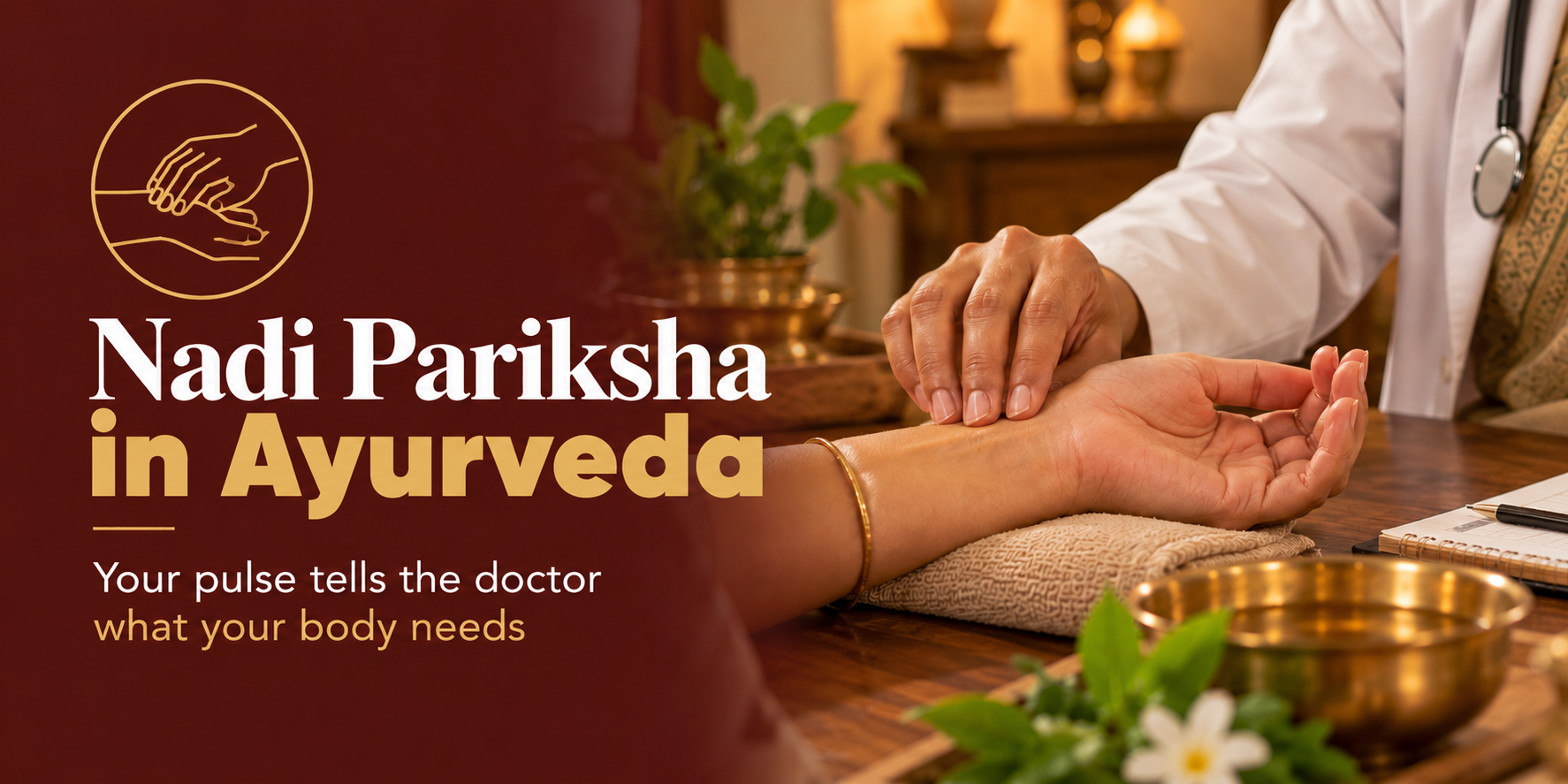
Nadi Parikshan and Ayurvedic Consultation: How Ayurveda Understands You Before Treatment
Nadi Pariksha in Ayurveda is pulse-based diagnosis: a doctor reads your pulse to assess your constitution (Prakriti) and your current imbalance (Vikruti) before deciding which therapy, oil or programme actually suits you. It takes a few minutes, is completely non-invasive, and is why Herbal Hills starts every first-time visit with a consultation rather than a treatment table. Without it, even an authentic-sounding therapy is a guess, not a plan.
The short version
- Nadi Pariksha (also written Nadi Parikshan) means pulse examination.
- A doctor reads the rhythm, strength and character of your pulse at the wrist.
- It is used with a conversation about your history, digestion, sleep and routine.
- It helps the doctor understand your Prakriti (constitution) and Vikruti (current imbalance).
- It decides which oil, therapy, sequence and duration suit you.
- It is painless, needs no equipment and takes a few minutes.
- Nadi Pariksha in Ayurveda does not replace medical tests for a specific disease.
Why the consultation matters
If you’ve booked an Ayurvedic massage or Panchakarma session anywhere and been asked nothing more than your name and a time slot, you may not have realised what was missing. In classical Ayurveda, no therapy is chosen blind. It follows an assessment.
Nadi Parikshan, literally pulse examination, is the most well-known of these assessment methods. It is the reason a genuine Ayurvedic consultation looks nothing like a quick intake form at a general wellness centre.
This guide explains what Nadi Pariksha in Ayurveda actually involves, what a doctor is assessing when they take your pulse, why this step changes your entire treatment plan, and what to expect the first time you have one done.
What is Nadi Pariksha in Ayurveda?
Nadi Pariksha in Ayurveda is a classical diagnostic method in which a physician assesses the qualities of your radial pulse, its rhythm, strength and character, to understand the current state of your three doshas: Vata, Pitta and Kapha.
Ayurvedic texts describe it as one of several examination methods a physician uses before recommending treatment. It sits alongside a structured conversation about your history, digestion, sleep and daily habits, and the doctor’s observation of physical signs.
Because the reading depends on training and experience, the same pulse can mean different things to an untrained hand and a qualified physician. That is why the person taking your pulse matters as much as the method itself.
For a general background on Ayurveda as a system, see the NCCIH overview of Ayurvedic medicine.
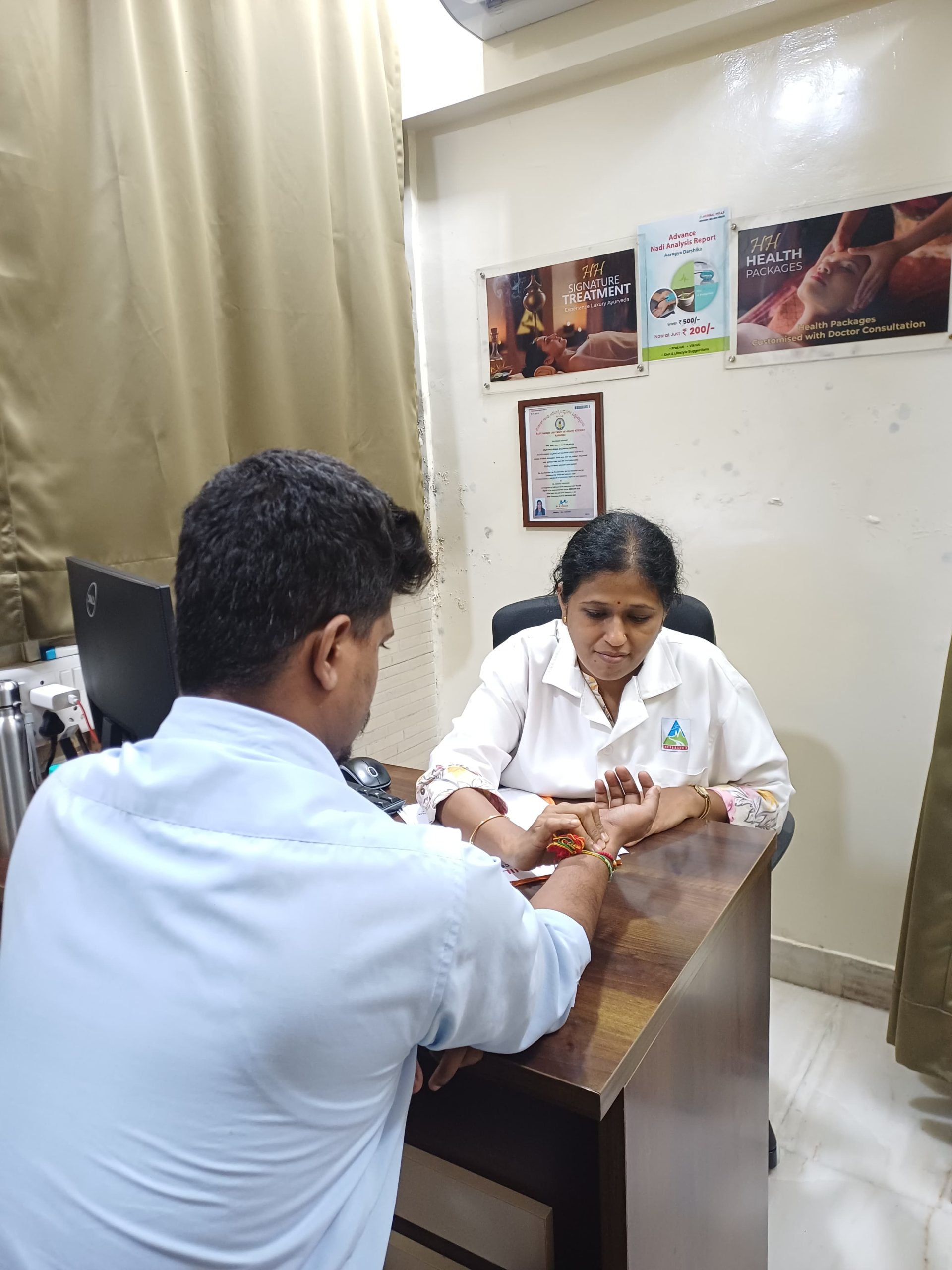
Nadi Parikshan or Nadi Pariksha: is there a difference?
No. Both names describe the same practice. Pariksha means examination, and Parikshan is a common spoken form of the same word. You will see both spellings on clinic boards and in search results, and both refer to pulse-based assessment by an Ayurvedic doctor.
Whichever spelling you use, the value of Nadi Pariksha in Ayurveda lies in who is reading the pulse and how the reading is used to plan your care.
What can a doctor actually tell from your pulse?
A trained Ayurvedic physician uses pulse assessment, combined with your history and physical signs, to build a picture of two things.
- Prakriti: your inherent constitution, the balance of doshas you were born with.
- Vikruti: the imbalance you are presenting with right now.
These two are often different. Someone with a naturally Vata-dominant constitution can currently be showing a Pitta-type imbalance, for instance.
Treatment is planned around the imbalance, in the context of the constitution, not around a generic label like stress or fatigue. This is the core idea behind Nadi Pariksha in Ayurveda.
Prakriti and Vikruti at a glance
| Aspect | Prakriti | Vikruti |
|---|---|---|
| What it means | Your natural constitution | Your current state of imbalance |
| Does it change? | Broadly stable through life | Changes with season, diet, stress and routine |
| Why it matters | Shapes what keeps you balanced long term | Shapes what needs attention now |
| How it guides treatment | Context for the plan | Main focus of the plan |
To understand why two people with the same complaint can need different care, read our guide on Prakriti and why the same illness behaves differently in different bodies.
How a doctor takes your pulse
In the classical method of Nadi Pariksha in Ayurveda, the physician places three fingers gently on the radial pulse at your wrist, just below the base of the thumb.
- The index finger is traditionally associated with Vata.
- The middle finger is traditionally associated with Pitta.
- The ring finger is traditionally associated with Kapha.
The doctor notes the speed, rhythm, strength and movement felt under each finger, and may check both wrists. The reading is then compared with what you share in conversation and what the doctor observes, such as your tongue, skin and energy.
In Nadi Pariksha in Ayurveda, the pulse reading on its own is never the whole picture. It is one important part of a complete assessment.
Why every Herbal Hills therapy starts with a consultation, not a table
The single biggest difference between an authentic Ayurvedic session and a generic Ayurveda-labelled service is what happens before you lie down.
A consultation, including Nadi Pariksha in Ayurveda where appropriate, determines which oil, which therapy and which duration actually suit you. Skip this step, and even a technically correct massage or Panchakarma protocol is being applied to the wrong problem.
This is exactly the distinction covered in our Ayurvedic massage guide and our guide to Panchakarma treatment in Mumbai. This piece goes one level deeper into the consultation itself.
What happens during your consultation?
- A conversation first. The doctor asks about your current concerns, medical history, digestion, sleep and daily routine, not just which treatment you would like.
- Nadi Parikshan, where appropriate. A few minutes of pulse assessment at the wrist, entirely non-invasive, requiring no equipment beyond the physician’s training.
- Assessment of Prakriti and Vikruti. Your constitution and current imbalance are considered together, not treated as the same thing.
- A therapy recommendation. Which massage, Panchakarma therapy or programme is suggested, and why. You leave the consultation understanding the reasoning, not just the booking.
For a step-by-step view of a first visit, including what to bring, see what to expect at your first Ayurvedic consultation.
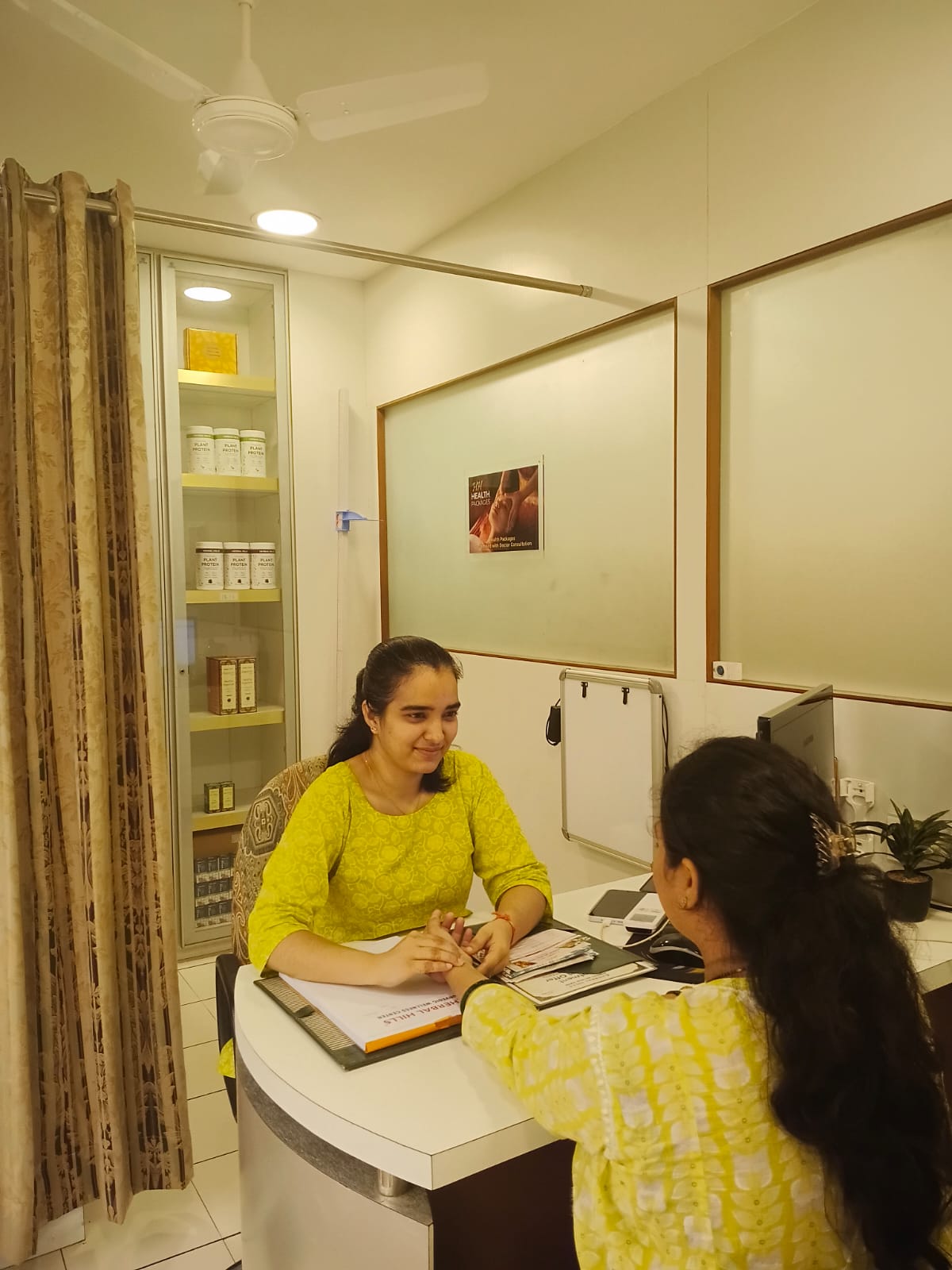
Nadi Parikshan vs a standard intake form: what is actually different
| Aspect | Standard intake form | Nadi Parikshan-based consultation |
|---|---|---|
| What is assessed | Allergies, preferences, a pain scale | Constitution (Prakriti), current imbalance (Vikruti), pulse quality |
| Who conducts it | Front-desk staff or the therapist directly | A BAMS-qualified Ayurvedic doctor |
| What it changes | Which room or time slot you get | Which oil, therapy, sequence and duration are recommended |
| Time taken | 1 to 2 minutes, mostly paperwork | A few minutes of genuine assessment as part of a longer consultation |
How to prepare for Nadi Pariksha
The pulse is affected by what you have just done, so doctors usually suggest a few simple steps before Nadi Pariksha in Ayurveda.
- Avoid a heavy meal in the two hours before your consultation, if you can.
- Skip tea, coffee and strenuous exercise just before the visit.
- Arrive a few minutes early and sit quietly before the doctor takes your pulse.
- Bring a list of your current medicines and any recent reports.
- Tell the doctor about any diagnosed condition, pregnancy or recent illness.
None of this is complicated. It simply helps the doctor read your pulse as it normally is, which makes Nadi Pariksha in Ayurveda more useful.
What Nadi Pariksha can and cannot tell you
Nadi Pariksha in Ayurveda is valuable for understanding constitutional and functional imbalance in Ayurvedic terms. It guides the choice of therapy, diet and routine.
It is not a substitute for medical diagnostic tests such as blood work or imaging. If you have a diagnosed medical condition or concerning symptoms, share this with the consulting doctor and continue any medical care alongside Ayurvedic therapy, not instead of it.
A good Ayurvedic doctor will tell you clearly when something needs a check with your regular physician first.
Ayurvedic care at Herbal Hills is meant to work alongside your regular doctor. If you take medicines for blood pressure, sugar, thyroid or any other condition, keep taking them as prescribed, and let both doctors know about each other’s advice. Never stop or change a prescribed medicine because of Nadi Pariksha in Ayurveda or any single reading. Clear communication between you, your Ayurvedic doctor and your regular physician keeps your care safe, consistent and easy to follow over time.
Traditional Nadi Parikshan and device-based Nadi analysis
Classical Nadi Pariksha in Ayurveda relies on the doctor’s trained fingers. Some centres also use a device that records the pulse and produces a report, which the doctor then interprets.
At Herbal Hills, the doctor-led reading remains the foundation of the consultation. Learn more about Authentic Nadi Parikshan and Advanced Nadi Analysis at Herbal Hills, or read how device-based pulse diagnosis works.
Common myths about Nadi Pariksha in Ayurveda
Myth: the doctor can read everything from the pulse alone. In practice, Nadi Pariksha in Ayurveda is always combined with your history, symptoms and the doctor’s observation. A good doctor will still ask questions.
Myth: it is only for serious illness. Many people have Nadi Parikshan simply to understand their constitution and choose the right routine, diet or relaxing therapy.
Myth: it is the same as checking pulse rate. A pulse rate counts beats per minute. Nadi Pariksha in Ayurveda looks at the quality and movement of the pulse in Ayurvedic terms, which is a different kind of reading.
Myth: one reading is enough for life. Your Prakriti stays broadly stable, but your Vikruti changes. That is why the doctor may take your pulse again at follow-up visits.
What happens after your Nadi Pariksha?
Once the assessment is complete, the doctor explains what the reading suggests in plain language. You should understand your main imbalance and why a particular therapy is being recommended.
Depending on your needs, the plan may include a single therapy, a short series of sessions, a Panchakarma programme, diet and routine guidance, or Ayurvedic medicines prescribed by the doctor. You are free to ask questions and take time to decide.
At follow-up visits, a repeat Nadi Pariksha in Ayurveda helps the doctor see how your body is responding and adjust the plan if needed.
Questions to ask during your consultation
- What did my pulse reading suggest about my current imbalance?
- How does my Prakriti affect the therapy you are recommending?
- Why this oil, this therapy and this number of sessions?
- What diet or routine changes should I make at home?
- When should I come back for a follow-up reading?
Clear answers to these questions are a good sign that Nadi Pariksha in Ayurveda is being used properly, as the starting point of a personal plan rather than a formality.
Do you need a consultation even for a single massage session?
Yes, and this surprises some first-time visitors. Even a single Abhyanga session benefits from knowing your constitution, which is exactly what Nadi Pariksha in Ayurveda helps the doctor understand.
The oil selected for a Vata-dominant, currently anxious client is different from the oil selected for someone with a Pitta-related skin concern. A consultation for a single session is shorter than one preceding a full Panchakarma programme, but it isn’t skipped.
Nadi Pariksha in Ayurveda and your daily routine
The value of a pulse reading does not end at the clinic. Once you know your constitution and current imbalance, everyday choices become clearer.
A person with a Vata-type imbalance may be advised warm, regular meals, steady sleep times and grounding oil massage. Someone with a Pitta-type imbalance may be guided towards cooling foods and avoiding long hours in the heat. A Kapha-type picture often calls for lighter meals and more daily movement.
These are general examples only. Your own advice will depend on what your doctor finds. This is where Nadi Pariksha in Ayurveda becomes practical: it links what happens in the consultation room to how you eat, sleep and move at home.
Who benefits most from Nadi Pariksha?
- First-time visitors who are not sure which therapy to choose.
- Anyone planning a multi-day Panchakarma programme.
- People with long-standing concerns such as poor digestion, disturbed sleep or stress.
- Those who have tried general wellness treatments without lasting benefit.
- Anyone who wants to understand their own constitution better.
In each case, Nadi Pariksha in Ayurveda turns a general wish to feel better into a specific, doctor-guided plan.
Start with a conversation, not a booking slot
A therapy chosen without a consultation is a guess dressed up as a treatment. Nadi Parikshan and the consultation around it are what make an Ayurvedic session at Herbal Hills a plan built for you, rather than a fixed routine applied to whoever walks in.
Nadi Pariksha in Ayurveda is available before every session, a single massage, a full Panchakarma programme or anything in between, across all of Herbal Hills’ Mumbai centres.
Frequently asked questions
Nadi Pariksha in Ayurveda is a classical diagnostic method where a physician assesses the qualities of your pulse to understand your constitution (Prakriti) and current imbalance (Vikruti), used alongside a broader consultation to decide the right therapy for you.
No. It involves the physician placing their fingers on your wrist to assess your pulse. It is non-invasive, requires no equipment and typically takes just a few minutes as part of your consultation.
It varies with what you are being assessed for. A consultation before a single therapy session is generally shorter than one preceding a multi-day Panchakarma programme, since more history and planning are involved in the latter.
Both. Even a single Abhyanga session should follow a consultation, because the oil and technique suited to you depend on your constitution and current state, not just which therapy you booked.
Nadi Pariksha assesses constitutional and functional imbalance in Ayurvedic terms; it is not a substitute for medical diagnostic tests. If you have a diagnosed medical condition or concerning symptoms, share this with the consulting doctor and continue any medical care alongside Ayurvedic therapy, not instead of it.
Avoid a heavy meal, tea, coffee and strenuous exercise just before your visit, arrive a few minutes early to rest, and bring a list of your current medicines and any recent reports.
This article is for general education and does not replace medical advice. Ayurvedic therapies and medicines at Herbal Hills are planned by qualified doctors after a personal consultation.
Find a Herbal Hills centre near you
A doctor can take your pulse, explain your Prakriti and Vikruti, and recommend the therapy that suits you. Herbal Hills has five centres in Western Mumbai, in Juhu (Andheri West), Goregaon West, Kandivali West and two in Borivali West, open Tuesday to Sunday, 10 am to 7 pm. Find your nearest centre.
The right therapy starts with the right consultation.
4 thoughts on “Nadi Pariksha in Ayurveda: How a Doctor Understands You Before Treatment”