
Ayurvedic Eye Care · Shalakya Therapy
Netra Tarpan Eye Rejuvenation in Mumbai – Ayurvedic Ghee Eye Therapy
Netra Tarpan (also written Netra Tarpana) is an Ayurvedic eye therapy in which medicated ghee is retained around the eyes inside rings of dough. Herbal Hills Center offers Netra Tarpan eye rejuvenation in Mumbai; a session takes about 30–45 minutes after consultation with an Ayurvedic doctor.
This guide explains what Netra Tarpan is, the Netra Tarpan benefits described in Ayurveda, which ghee is used, what happens in a session, who must consult the doctor first and how it differs from Netra Dhara.
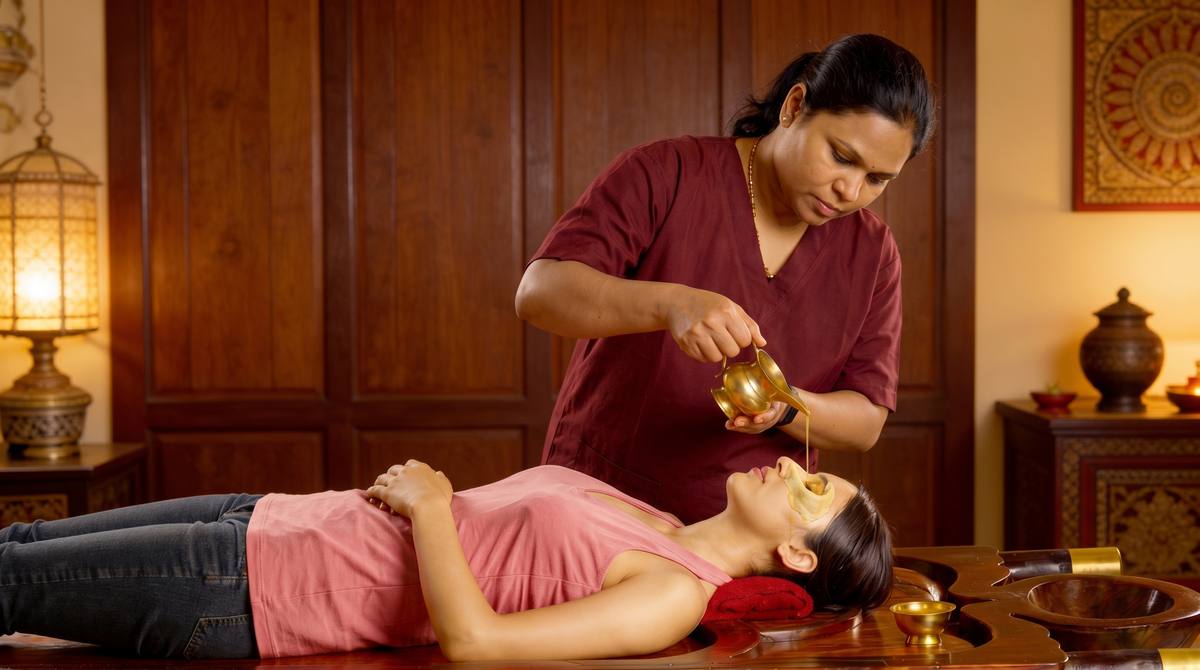
Nourishment for Tired Eyes
“Netra” means eye and “Tarpana” means to nourish or satisfy. Warm medicated ghee rests over the eyes while you blink gently, so the eyes can soak in its soothing qualities.
⏱️
Duration
30–45 Mins
🏥
Session Type
In-Clinic
👁️
Therapy
Medicated Ghee Eye Bath
🔄
Sessions Needed
As Suggested by Our Doctor
What Is Netra Tarpan?
Netra Tarpan is a classical Ayurvedic eye therapy in which specially prepared medicated ghee is retained inside rings of black gram dough placed around the eyes. “Netra” means eyes and “Tarpana” means nourishment. You may also see it spelled Netra Tarpana or Netra Terpana, or called Akshi Tarpana or Netra Basti — they all refer to the same therapy.
The warm medicated ghee bathes the eyes for a set time while you blink gently. In Ayurveda it is traditionally used to nourish the eyes, ease dryness and strain, and calm Vata and Pitta around the eyes. It is the most nourishing of the classical eye procedures.
At Herbal Hills, every Netra Tarpan eye rejuvenation session is planned by an Ayurvedic doctor, who examines your eyes and chooses the ghee.
How Netra Tarpan Eye Rejuvenation Works in Ayurveda
Ayurveda describes the eyes as especially sensitive to Pitta (heat) and Vata (dryness). Long hours on screens, air-conditioning, bright light, late nights and age all tend to dry and tire the eyes. Ghee is the classical opposite: unctuous, cooling and nourishing.
In Netra Tarpan, ghee prepared with herbs — most often Triphala Ghrita or Mahatriphala Ghrita — is gently warmed and poured into the dough wells. As you open and close your eyes slowly, the ghee coats the surface of the eyes and eyelids. This is the basis of the classical Netra Tarpan benefits: soothing, lubricating and nourishing.
Because it is a deeper therapy than an eye wash or eye pour, the doctor decides carefully whether it suits you and how long the ghee should stay.
What It Supports
Netra Tarpan Benefits
The Netra Tarpan benefits described in Ayurveda centre on eye comfort and nourishment. Results vary from person to person, and your doctor will explain what to expect in your case.
👁️
Nourishes the Eyes
Ghee is traditionally used to nourish the eye area.
💧
Eases Dryness
Supports a lubricated, comfortable feeling.
💻
Soothes Screen Strain
Often chosen by people with long screen hours.
🔴
Calms Burning & Redness
Traditionally used for heat-related irritation.
🤕
Eases Strain-Related Heaviness
Many people feel lighter around the eyes and forehead.
🧘
Deep Relaxation
A calm, restful experience for the eyes and mind.
Is It for You?
Who Might Choose Netra Tarpan?
Netra Tarpan is a supportive therapy. It does not replace examination or treatment by an eye specialist, and it is never a substitute for prescribed eye care.
💧
Dry, Tired Eyes
Especially in air-conditioned work spaces.
💻
Digital Eye Strain
Long hours of screen use.
🔴
Burning & Irritation
After exposure to heat, light or dust.
🤕
Strain-Related Headaches
When linked to eye strain.
🌙
Tired Eyes After Poor Sleep
Late nights and early starts.
🧠
Stress
As part of a calming, restorative plan.
Which Ghee Is Used in Netra Tarpan?
The type of medicated ghee varies according to your eyes and dosha. Common classical preparations include:
- Triphala Ghrita — ghee prepared with Triphala, the classical eye herb.
- Mahatriphala Ghrita — a richer preparation with additional herbs.
- Other classical ghee formulations — chosen when your doctor needs a specific effect.
Your Ayurvedic doctor will prescribe the most suitable ghee after a thorough consultation, so the Netra Tarpan benefits match your needs.
How It Works
The Netra Tarpan Procedure, Step by Step
Whichever centre you choose for your Netra Tarpan eye rejuvenation, the procedure follows the same four stages.
1
Ayurvedic Consultation
Our Ayurvedic doctor examines your eyes, asks about your history and decides on the ghee and the number of sessions.
2
Dough Ring Preparation
Rings of black gram (urad dal) dough are shaped and fitted around both eyes to form sealed wells, often after a gentle face massage.
3
Medicated Ghee Application
Warm medicated ghee is slowly poured into the rings until the eyes are covered. You blink gently and slowly. Duration: about 30–45 minutes. Sensation: soothing and calming.
4
Removal & Post-Care
The ghee and rings are removed, the eyes are cleaned gently and you rest. The doctor advises on aftercare and follow-up.
Who Should Consult the Doctor First?
Tell your Ayurvedic doctor before the session if you have:
- An eye infection, conjunctivitis, a stye or discharge.
- Recent eye surgery (including LASIK or cataract surgery) or injury.
- A known eye disease such as glaucoma, or any sudden change in vision.
- Contact lenses — these must be removed well before the session.
Eye symptoms that are severe, sudden or persistent should be checked by an eye specialist. Netra Tarpan is not used in these situations without the doctor’s clearance.
Netra Tarpan vs Netra Dhara
Both are classical Ayurvedic eye therapies:
- Netra Tarpan (this page) — medicated ghee held around the open eyes inside dough rings. Deeper and more nourishing.
- Netra Dhara — a herbal liquid poured gently over closed eyes. Lighter, cooling and quick.
Many plans begin with Netra Dhara and move to Netra Tarpan when deeper nourishment is needed. Your doctor decides which suits you.
Ayurvedic Ghee Eye Therapy in a Wider Plan
Netra Tarpan often sits within a wider eye-care plan:
- Dristi eye-care programme — our structured Ayurvedic eye programme.
- Ayurvedic eye health treatment — how we approach eye care overall.
- Ekang Lepam — including Netra Lepam, a cooling herbal paste around the eyes.
- Shiro Abhyanga — head massage that relaxes the forehead and temples.
You can explore every therapy on our Ayurvedic therapies page.
Who Benefits Most from Netra Tarpan Eye Rejuvenation?
People who book Netra Tarpan eye rejuvenation at our centres are often professionals who spend eight hours or more in front of screens, students preparing for exams, and people who work in air-conditioned offices where the eyes dry out by evening. Others are older adults whose eyes simply feel tired and dry, or people who drive long distances in Mumbai’s glare and dust.
For each group, the doctor tailors the ghee, the time it stays over the eyes and the number of sessions. A short Netra Tarpan eye rejuvenation course before or after a demanding work period is a common plan, often with daily eye habits and diet advice. Many people describe the first session as unusual but deeply restful, and look forward to the calm it brings.
Netra Tarpan in Classical Ayurveda
Classical texts list Tarpana among the Kriya Kalpas, the special procedures for the eyes, and describe it as the most nourishing. They also describe signs that the eyes have received enough — a feeling of lightness, comfortable vision, easy opening and closing of the eyes and good sleep — and advise the physician to watch for them. This is why the doctor, not a set menu, decides the length of each Netra Tarpan eye rejuvenation session.
Netra Tarpana, Akshi Tarpana and Netra Basti: One Therapy, Several Names
If you have searched for this therapy, you may have found several names for it. “Netra” and “Akshi” are both Sanskrit words for the eye, and “Tarpana” means to nourish or satisfy, so Netra Tarpana and Akshi Tarpana describe exactly the same procedure. “Netra Basti” is a newer, everyday name: “basti” here means a well or container, describing the dough ring that holds the ghee over the eye, much like Kati Basti holds warm oil over the lower back.
Spellings also vary between regions and clinics — Tarpan, Tarpana, Tarpanam and Terpana are all in use. Whatever the name on the menu, the essentials stay the same: a doctor’s examination first, medicated ghee chosen for your eyes, a sealed dough ring and a careful, unhurried session.
What to Expect in Your First Netra Tarpan Session
Most people feel a little unsure before their first session, so it helps to know what happens. You lie comfortably on your back while the therapist gently massages your face and fits the soft dough rings around each eye. The warm ghee is then poured in slowly. At first it feels unusual to open your eyes into ghee, but within a minute or two most people find it warm, soothing and surprisingly relaxing.
The therapist will ask you to blink slowly and look gently in different directions so the ghee reaches every part of the eye. You can close your eyes and rest at any time, and you can ask for a pause if you feel uncomfortable. Afterwards your vision may be hazy for a short while, so plan to rest at the centre, avoid screens and travel home without driving yourself.
A full session, including the face massage, fitting the rings, the ghee itself and cleaning up afterwards, usually takes around an hour. Wear comfortable clothes, come without eye make-up, and give yourself a quiet evening afterwards so your eyes can rest. If you have questions at any stage, ask the therapist or the doctor; they are used to first-timers and will talk you through every step.
How Many Netra Tarpan Sessions Are Needed?
For general eye nourishment and preventive care, 3–7 sessions are typically recommended. For long-standing dryness or strain, a structured course of 7–14 sessions may be advised. Your Ayurvedic doctor will determine the right plan after assessing your eyes.
Choosing a centre close to home or work makes it easier to attend sessions on consecutive days, which is how most Netra Tarpan eye rejuvenation courses are planned.
Before and After Your Netra Tarpan Session
Before your session
- Remove contact lenses well in advance; bring your spectacles if you wear them.
- Remove eye make-up.
- Tell the doctor about any eye infection, surgery, injury or eye disease.
After your session
- Vision may be slightly blurred for a short time from the ghee; do not drive until it clears.
- Avoid screens, bright sunlight, wind, dust and smoke for the rest of the day; wear sunglasses outdoors.
- Do not rub your eyes, and wash them only as the doctor advises.
- Report any pain, redness or lasting blurred vision straight away.
Daily Habits for Comfortable Eyes
Your doctor may suggest small habits that help the Netra Tarpan benefits last:
- Follow the 20-20-20 habit when using screens.
- Blink fully and often, and keep screens at arm’s length.
- Sleep on time and limit screens before bed.
- Eat fresh fruit and vegetables, a little ghee and drink enough water.
- Splash closed eyes with cool, clean water a few times a day.
Is Netra Tarpan Safe? Who Should Avoid It?
Netra Tarpan is generally well tolerated when it is performed by a trained Ayurvedic therapist under a doctor’s guidance, with ghee at a gentle temperature and careful sealing of the dough rings.
It should be avoided during active eye infections or conjunctivitis, after recent eye surgery or injury, and it is planned carefully in people with known eye disease. Netra Tarpan eye rejuvenation supports your wellbeing alongside — never instead of — care from an eye specialist.
Choosing a Netra Tarpan Centre in Mumbai
Look for a centre where an Ayurvedic doctor examines your eyes first, where the ghee is prepared and warmed carefully, and where the room is clean and calm. At Herbal Hills, all five centres follow the same consultation-first standard, starting with a free Nadi Parikshan.
Ayurveda is a recognised system of medicine in India under the Ministry of AYUSH, and our doctors follow its classical principles.
Find Us
Netra Tarpan Eye Rejuvenation in Mumbai: Our 5 Centres
Every centre offers a doctor consultation first, private therapy rooms and trained therapists. Choose the location nearest to you.
Herbal Hills Kandivali West
Unit No. 101, Maitri Swami Kripa, Mahatma Gandhi Cross Rd No. 3, Kamala Nagar, Kandivali West, Mumbai 400067
+91 88288 55200 · Tue–Sun
Herbal Hills Goregaon West
Office No. 1, Ground Floor, Swarupam, Plot No. 79, Jawahar Nagar Road No. 10, Goregaon West, Mumbai 400104
+91 86577 77967 · Tue–Sun
Herbal Hills Borivali West (L.T. Road)
Office No. A/102, 1st Floor, New Gopal Premises CHS, L.T. Road, 212 TPS Road, Borivali West, Mumbai 400092
+91 86575 55515 · Tue–Sun
Herbal Hills Borivali West (Yogi Nagar)
Rajkamal CHS, 1st Floor, Office No. 2, Next to Celebration Restaurant, Yogi Nagar, Borivali West, Mumbai 400092
+91 97696 26565 · Tue–Sun
Herbal Hills Andheri West (Juhu Lane)
G-3/4, Ground Floor, Bharat Apartment, C. D. Barfiwala Marg, Juhu Lane, Andheri West, Mumbai 400058
+91 86579 15422 · Tue–Sun
Common Questions
Frequently Asked Questions About Netra Tarpan
The type of medicated ghee (Sneha) used varies according to your eye condition and dosha imbalance. Common preparations include Triphala Ghrita, Mahatriphala Ghrita, and other classical formulations. Your Ayurvedic doctor will prescribe the most appropriate ghee after a thorough consultation.
Netra Tarpana is generally well tolerated when performed by a trained Ayurvedic therapist under medical supervision, and it is often chosen for dry, strained eyes. It should be avoided during active eye infections, conjunctivitis, or after recent eye surgery, and people with known eye disease should be cleared by their eye specialist first.
For general eye nourishment and preventive care, 3–7 sessions are typically recommended. For long-standing dryness or strain, a longer structured course of 7–14 sessions may be advised. Your Ayurvedic doctor will determine the right plan after assessing your condition.
Netra Tarpana is commonly chosen by people with digital eye strain from long screen use. The medicated ghee is traditionally used to soothe dry, tired eyes and ease burning, and regular sessions can be part of an eye-care routine for screen-intensive work.
Contact lenses must be removed before Netra Tarpana. We recommend removing lenses well in advance of your appointment. Spectacle wearers can keep their glasses off during the treatment. Our team will guide you on all pre-treatment instructions during your consultation.
Herbal Hills offers Netra Tarpan at five centres in Mumbai: Kandivali West, Goregaon West, Borivali West (L.T. Road and Yogi Nagar) and Andheri West (Juhu Lane). Every course starts with a free consultation with an Ayurvedic doctor.
Why Herbal Hills Center
Trusted by Thousands. Authentic Ayurveda.
🏆
20+ Years
of Excellence
👨⚕️
Qualified Doctors
Ayurvedic specialists
📍
5 Centres
Across Mumbai
💧
Fresh Herbal Oils
Every session
🔒
100% Private
Confidential care
Restore & Rejuvenate Tired Eyes with Netra Tarpan
Consult our Ayurvedic doctor and find out if Netra Tarpan is right for your eyes. Book your Netra Tarpan eye rejuvenation consultation at the centre closest to you.
Netra Tarpan – Ayurvedic Ghee Eye Therapy Free consultation at 5 Mumbai centres