
Kizhi Therapy · Rice Bolus
Navarakizhi Treatment Benefits – Ayurvedic Rice Bolus Massage
Navarakizhi is an Ayurvedic rice bolus massage in which warm pouches (potalis) filled with Navara rice cooked in medicated milk are massaged over the body. The main Navarakizhi treatment benefits described in Ayurveda are nourishment of the muscles and skin, eased stiffness and a deep sense of rejuvenation. Herbal Hills Center offers it in Mumbai in full-body, half-body and local forms; sessions take 30–60 minutes after consultation with an Ayurvedic doctor.
This guide explains what Navarakizhi is, the Navarakizhi treatment benefits Ayurveda describes, the three types, what happens in a session, who it suits and how it differs from other kizhi therapies.
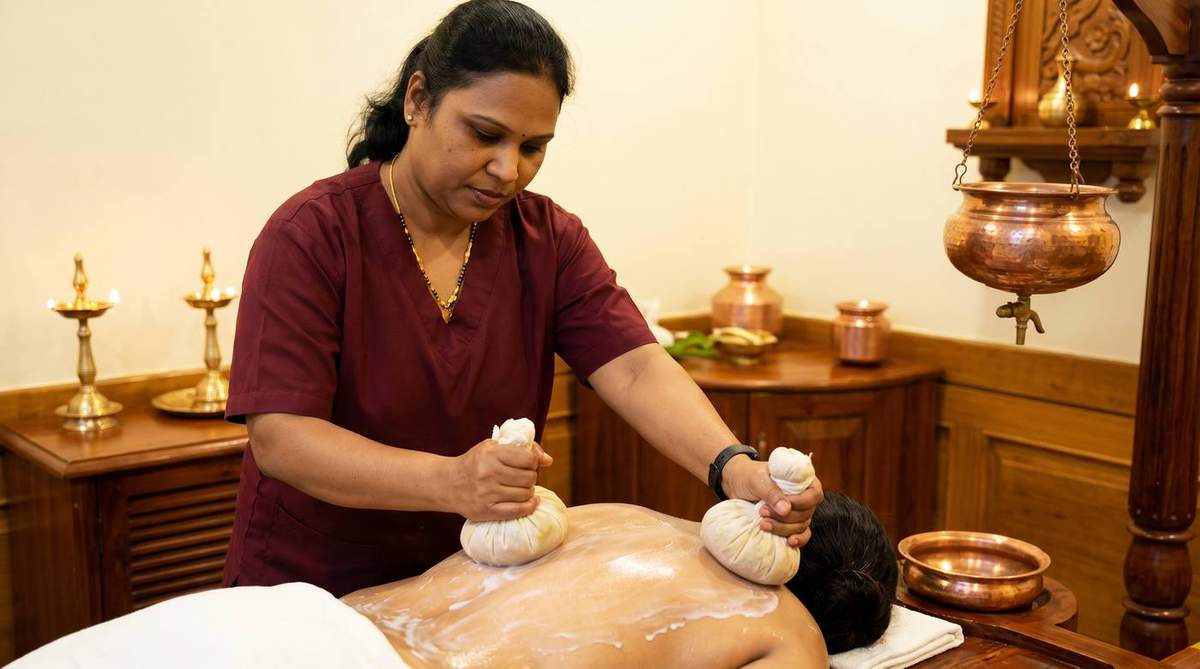
The Nourishing Kizhi
Navara is a traditional medicinal rice from Kerala. Cooked in milk and a herbal decoction, it turns each bundle into a warm, soft and nourishing poultice — the most building of all kizhi therapies.
⏱️
Duration
30–60 Mins
🏥
Session Type
In-Clinic
🍚
Therapy
Rice Potali in Medicated Milk
🔄
Sessions Needed
As Suggested by Our Doctor
Navarakizhi is a nourishing Ayurvedic kizhi (potali) therapy in which cloth pouches filled with Navara rice — a traditional medicinal rice — cooked in a herbal milk decoction are used to massage the body. “Navara” is the rice, and “kizhi” means bundle or poultice. It is also known as Shashtika Shali Pinda Sweda, and in Kerala it is often spelled Njavarakizhi or Njavara Kizhi.
Unlike other kizhi therapies, Navarakizhi combines the nourishing qualities of rice and herbal milk with warm massage, which is why it is traditionally used to build strength and nourish the muscles and skin rather than to reduce or dry.
At Herbal Hills, every Navarakizhi session is planned by an Ayurvedic doctor, who decides the herbal milk formulation, the type of Navarakizhi and the number of sessions.
Ayurveda describes two broad directions in treatment: Langhana (lightening) and Brimhana (nourishing). Most heat therapies are lightening; Navarakizhi is one of the few that is clearly nourishing. It is chosen when the body is thin, weak, dry or depleted, typically with Vata imbalance.
The rice is cooked in milk and a decoction of herbs such as Bala (Sida cordifolia), chosen for strength. The warm bundles are dipped in the same milk mixture through the session and massaged rhythmically over the body. The combination of warmth, gentle pressure and nourishing ingredients is the basis of the Navarakizhi treatment benefits Ayurveda describes.
The paste left on the skin is usually wiped off with a soft scraper or cloth, then a light oil may be applied.
What It Supports
The Navarakizhi treatment benefits described in Ayurveda centre on nourishment, strength and comfort. Results vary from person to person, and your doctor will explain what to expect in your case.
💪
Nourishes Muscles
Traditionally used to support muscle strength.
✨
Nourishes the Skin
Leaves skin feeling soft and supple.
🦴
Eases Stiffness
Warm, moist heat helps stiff joints and muscles.
🩸
Supports Circulation
Rhythmic massage is thought to support blood flow.
⚖️
Balances Vata
Nourishing warmth settles dryness and depletion.
🧘
Deep Rejuvenation
Many people describe feeling restored and rested.
Is It for You?
Ayurvedic doctors commonly include Navarakizhi in plans for the concerns below. It supports your wellbeing alongside — never instead of — any treatment or rehabilitation prescribed by your physician.
💪
Muscle Weakness
When the body feels thin and depleted.
🦴
Joint Pain & Stiffness
Especially with dryness and Vata.
🔙
Back Stiffness
As part of a wider back-care plan.
😓
Fatigue & Debility
After illness or long periods of stress.
✨
Dry, Dull or Ageing Skin
For gentle nourishment.
🧘
General Rejuvenation
As a seasonal, restorative therapy.
Navarakizhi can be given to the whole body or to one area:
- Sarvanga Navarakizhi — massage with medicated rice potalis to the full body.
- Ardhanga Navarakizhi — massage with medicated rice potalis to half of the body.
- Ekanga Navarakizhi — massage with medicated rice potalis to one local part.
Your doctor decides which type suits you. A full-body session takes about 60 minutes; local sessions are shorter.
How It Works
Whichever centre you choose, the Navarakizhi procedure follows the same four stages.
1
Ayurvedic Consultation
Our Ayurvedic doctor assesses your health, dosha balance and areas of concern to choose the herbal milk formulation and type of Navarakizhi.
2
Rice Potali Preparation
Navara rice is cooked in a herbal milk decoction until soft, tied into cloth potalis and kept warm in the milk throughout the session.
3
Potali Massage
After a light oil application, the warm rice potalis are pressed and massaged rhythmically over the body. Duration: about 60 minutes for full body. Sensation: warm, soft and deeply nourishing.
4
Post-Care & Advice
The rice paste is gently wiped off, you rest briefly and the doctor advises on aftercare, diet and follow-up sessions.
All four kizhi therapies we offer are types of potali massage, and they differ by what is inside the bundle:
- Navarakizhi (this page) — Navara rice cooked in milk and herbs; moist and nourishing, chosen for weakness and dryness.
- Elakizhi — fresh medicinal leaves; warming and slightly drying, often chosen for stiffness with swelling.
- Podikizhi — herbal powders; used for stiffness and heaviness.
- Manalakizhi — warm sand; dry heat for heavy, Kapha-type stiffness.
Your doctor chooses the kizhi that matches your condition, so the Navarakizhi treatment benefits are used where they fit best.
Rice Bolus Massage in Ayurveda: A Wider Plan
Rice bolus massage in Ayurveda is often combined with other therapies:
- Sarvanga Abhyanga — full-body warm oil massage, often before Navarakizhi.
- Saundarya face care — where Navarakizhi on the face may be part of a skin-care plan.
- Ksheera Dhoomam — gentle milk steam for a local area.
- Diet and herbs — nourishing foods and Rasayana herbs chosen by your doctor.
You can explore every therapy on our Ayurvedic therapies page.
Ayurveda times nourishing therapies carefully. Navarakizhi is especially valued at the end of the monsoon and in early winter, when the body is recovering from the damp season and the air begins to dry. This is when Vata rises and many people notice dry skin, stiff joints and low energy — exactly where the nourishing Navarakizhi treatment benefits fit best.
In the hot, humid months, doctors may choose shorter local sessions or a lighter therapy instead, because a heavy, nourishing treatment is not always right when Kapha is high. Your doctor will match the timing and type of Navarakizhi to the season and your body, so the Navarakizhi treatment benefits support you rather than adding heaviness.
What a Rice Potali Session Feels Like
The session begins with a light application of warm oil over the body or the area to be treated. The therapist then lifts a warm rice potali from the herbal milk, checks the warmth on their own forearm and presses it onto your skin in slow, rhythmic strokes. The bundles feel soft, moist and comforting rather than hot, and as the session goes on a little of the cooked rice and milk comes through the cloth and coats the skin. Two therapists often work together for a full-body session so the strokes stay even on both sides. Many people find it so soothing that they drift into a light sleep.
At the end, the rice paste is gently scraped and wiped away, and you rest for a few minutes. Most people say their skin feels soft and their body feels warm, heavy and relaxed.
Navara is a traditional medicinal rice grown mainly in Kerala, valued in Ayurveda as light to digest yet nourishing. For each session, the rice is cooked in a decoction of herbs such as Bala together with milk until it becomes soft and creamy, and then tied into small cloth bundles. The same herbal milk is kept warm beside the table so the bundles can be dipped and rewarmed throughout. Because fresh milk and rice are used, everything is prepared on the day of your session. Your doctor may adjust the herbs in the decoction to suit your body and the season.
A typical course ranges from 7 to 14 sessions depending on your condition. For general rejuvenation, fewer sessions may be enough. For long-standing weakness or stiffness, a longer plan may be recommended. Your Ayurvedic doctor will advise the right course after consultation.
Choosing a centre close to home or work makes it easier to attend consecutive sessions, which is how most people get the full Navarakizhi treatment benefits.
Before your session
- Eat a light meal at least an hour before.
- Tell the doctor about fever, skin conditions, milk allergy, diabetes, heart problems or pregnancy.
- Wear clothes you do not mind getting a little oily.
After your session
- Rest and avoid cold drafts and air-conditioning straight after.
- Wait before bathing and use warm water; avoid harsh soap on the skin.
- Eat warm, nourishing, easy-to-digest food.
- Report any itching, redness or discomfort to the doctor.
People who ask about Navarakizhi usually fall into a few groups. Older adults with dry, stiff joints and thinning muscles often find it deeply comforting. People recovering from a long illness, surgery or a stressful period may feel weak and depleted. Thin, Vata-type people who feel cold, dry and tired are classic candidates. Others want a nourishing therapy for dry, tired-looking skin.
For rehabilitation after a stroke or nerve injury, Navarakizhi may be used only as a supportive therapy alongside the rehabilitation and medical care your doctors prescribe. Your Ayurvedic doctor will be clear about what it can and cannot do.
Rice Potali Therapy Alongside Medical Care
Many people who come for this therapy are already under a physician’s, neurologist’s or physiotherapist’s care, for example while recovering from an illness, surgery or a long period of weakness. The therapy can usually sit alongside that care rather than replace it. Bring your reports and a list of all your medicines to the consultation, so the doctor has the full picture. Keep doing the exercises your physiotherapist has given you, and never stop or change prescribed medicines on your own. People with diabetes should mention it clearly, as the milk and rice decoction and the session length may be adjusted.
Diet and Routine During a Nourishing Therapy Course
Ayurveda links dryness, thinning muscles and fatigue to Vata, so your doctor may suggest warm, freshly cooked, nourishing meals at regular times while your course is running, such as soft rice, dals, soups, a little ghee and seasonal fruit, with fewer dry snacks, cold drinks and late nights. Gentle movement such as walking or simple stretches, enough sleep and a calm daily routine also help. Your doctor will tailor this advice to your constitution, your digestion and any other health needs, so the benefits of each session last longer.
Navarakizhi is generally very well tolerated when the warmth is carefully controlled by trained therapists under a doctor’s guidance.
It should be avoided during acute fever, skin infections, active inflammatory flare-ups and, because it is nourishing, it is used with care in people with excess Kapha, heaviness or obesity. It is also planned carefully in diabetes and pregnancy. An Ayurvedic consultation will confirm suitability. Navarakizhi supports your wellbeing alongside your prescribed care; it does not replace medical treatment.
Look for a centre where an Ayurvedic doctor examines you first, where the rice and milk decoction are prepared fresh for every session and where therapists keep the bundles at the right warmth. At Herbal Hills, all five centres follow the same consultation-first standard, starting with a free Nadi Parikshan.
Ayurveda is a recognised system of medicine in India under the Ministry of AYUSH, and our doctors follow its classical principles.
Find Us
Every centre offers the same doctor-planned Navarakizhi, private therapy rooms and trained therapists. Choose the location nearest to you.
Herbal Hills Kandivali West
Unit No. 101, Maitri Swami Kripa, Mahatma Gandhi Cross Rd No. 3, Kamala Nagar, Kandivali West, Mumbai 400067
+91 88288 55200 · Tue–Sun
Herbal Hills Goregaon West
Office No. 1, Ground Floor, Swarupam, Plot No. 79, Jawahar Nagar Road No. 10, Goregaon West, Mumbai 400104
+91 86577 77967 · Tue–Sun
Herbal Hills Borivali West (L.T. Road)
Office No. A/102, 1st Floor, New Gopal Premises CHS, L.T. Road, 212 TPS Road, Borivali West, Mumbai 400092
+91 86575 55515 · Tue–Sun
Herbal Hills Borivali West (Yogi Nagar)
Rajkamal CHS, 1st Floor, Office No. 2, Next to Celebration Restaurant, Yogi Nagar, Borivali West, Mumbai 400092
+91 97696 26565 · Tue–Sun
Herbal Hills Andheri West (Juhu Lane)
G-3/4, Ground Floor, Bharat Apartment, C. D. Barfiwala Marg, Juhu Lane, Andheri West, Mumbai 400058
+91 86579 15422 · Tue–Sun
Common Questions
Navarakizhi uses Navara rice cooked in herbal milk, which makes it nourishing rather than drying. While Manalakizhi uses sand for dry heat and Elakizhi uses herbal leaves, Navarakizhi is suited to building strength, nourishing the tissues and improving skin quality.
In Ayurveda, Navarakizhi is often included as a supportive therapy for weakness, including during recovery from nerve-related conditions. It never replaces neurological care or physiotherapy, and your doctor will plan it alongside the treatment your physicians prescribe.
A typical course ranges from 7 to 14 sessions depending on the condition. For general rejuvenation, fewer sessions may be enough. For long-standing musculoskeletal conditions, a longer structured plan is recommended. Your Ayurvedic doctor will advise the right course after consultation.
The Navara rice and herbal milk combination is traditionally used to nourish the skin. Many people notice softer, smoother skin after a course of Navarakizhi, especially if their skin is dry or dull. Results vary from person to person.
Navarakizhi is generally well tolerated. It should be avoided during acute fever, skin infections, or active inflammatory flare-ups. An Ayurvedic consultation before beginning the therapy will confirm suitability and the safest treatment approach for your condition.
In Ayurveda, the main Navarakizhi treatment benefits are nourishing the muscles and skin, easing stiffness, supporting circulation and bringing a deep sense of rejuvenation. Results vary from person to person.
Herbal Hills offers Navarakizhi at five centres in Mumbai: Kandivali West, Goregaon West, Borivali West (L.T. Road and Yogi Nagar) and Andheri West (Juhu Lane). Every course starts with a free consultation with an Ayurvedic doctor.
Why Herbal Hills Center
Trusted by Thousands. Authentic Ayurveda.
🏆
20+ Years
of Excellence
👨⚕️
Qualified Doctors
Ayurvedic specialists
📍
5 Centres
Across Mumbai
💧
Fresh Herbal Oils
Every session
🔒
100% Private
Confidential care
Consult our Ayurvedic doctor and find out if Navarakizhi is the right treatment for you. Ask about the Navarakizhi treatment benefits for you at the centre closest to you.
Navarakizhi – Ayurvedic Rice Bolus Massage Free consultation at 5 Mumbai centres