

Blog
Is Your Joint Pain Really Osteoarthritis (Sandhivata)?

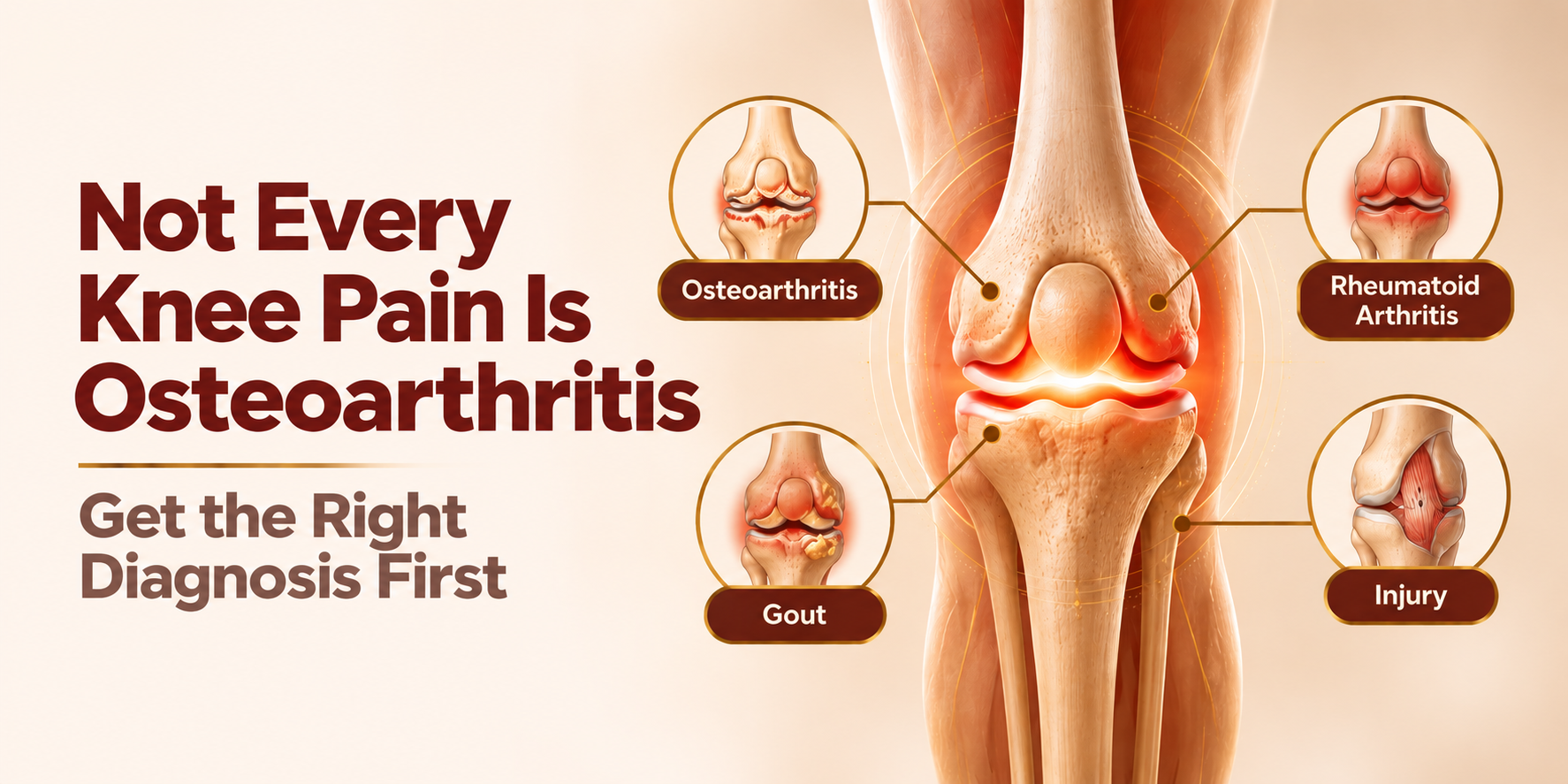
Why the Right Diagnosis Is the First Step Towards Better Joint Health
“Every knee pain is not osteoarthritis. Every joint problem does not require the same treatment.”
If you have been experiencing knee pain, back pain, shoulder pain, or stiffness while getting up from a chair, you are not alone.
Millions of Indians live with joint-related problems, especially after the age of 40. As life expectancy increases and sedentary lifestyles become more common, joint disorders are becoming one of the leading reasons people seek medical care.
However, one of the biggest mistakes people make is assuming that every joint pain is osteoarthritis (known in Ayurveda as Sandhivata).
In reality, several different conditions can produce similar symptoms, but each requires a different treatment approach.
Not Every Joint Pain Is Osteoarthritis
Joint pain may be caused by various conditions, including:
- Osteoarthritis (Sandhivata) – Age-related wear and tear of the joints.
- Rheumatoid Arthritis – An autoimmune condition causing inflammation in multiple joints.
- Cervical Spondylosis – Degenerative changes affecting the neck.
- Lumbar Spondylosis – Degenerative changes affecting the lower back.
- Frozen Shoulder – Restricted shoulder movement with pain.
- Gout – Joint pain caused by uric acid crystal deposition.
- Sports or Overuse Injuries – Muscle, tendon, or ligament injuries around the joint.
Although these conditions may produce similar symptoms—osteoarthritis vs rheumatoid arthritis is one of the most common confusions—their management is often different.
That is why proper evaluation is essential before starting any treatment.
Self-diagnosis can delay the right treatment. A professional evaluation helps identify the real cause of your joint pain.
How Do You Know If It Could Be Osteoarthritis?
Common symptoms may include:
- Knee pain while walking or climbing stairs.
- Morning stiffness lasting for a short duration.
- Difficulty sitting cross-legged.
- Joint stiffness after prolonged sitting.
- Reduced flexibility.
- Cracking or grinding sounds during movement.
- Gradually increasing difficulty in daily activities.
These symptoms may suggest osteoarthritis, but they do not confirm the diagnosis.
Only a qualified healthcare professional can determine the exact cause of your joint pain after proper clinical evaluation.
Why Early Evaluation Makes a Difference
Many people ignore joint pain until it begins affecting their daily life.
Others continue taking painkillers without understanding the underlying condition.
Early evaluation helps doctors:
- Identify the actual cause of joint pain.
- Assess the severity of the condition.
- Recommend appropriate investigations if required.
- Develop a personalised treatment plan.
- Help maintain mobility and quality of life.
The earlier the condition is understood, the better the opportunity to manage it appropriately.
Our Approach at Herbal Hills Wellness Centre
At Herbal Hills Wellness Centre, we believe that treatment begins with understanding the individual—not just the symptom.
Our Ayurvedic doctors perform a comprehensive assessment that may include:
- Detailed medical history.
- Ayurvedic evaluation.
- Joint examination.
- Review of previous investigations (if available).
- Lifestyle assessment.
- Dietary assessment.
Based on this evaluation, the doctor prepares a personalised joint care plan.
Depending on the diagnosis and your individual needs, this plan may include:
- Ayurvedic medicines.
- ArthroHill Capsule, where clinically appropriate.
- ArthroHill Joint Care Oil.
- Panchakarma therapies such as Janu Basti (for the knee joints), Kati Basti, Abhyanga, or Swedana.
- Diet and lifestyle guidance.
- Weight management advice.
- Home exercise recommendations.
- Regular follow-up.
Because every patient is different, every treatment plan should also be different.
Why ArthroHill Is Part of Our Osteoarthritis Programme
For patients diagnosed with osteoarthritis (Sandhivata), our doctors may recommend ArthroHill Capsule as part of a comprehensive Ayurvedic management plan.
The formulation is based on classical Ayurvedic principles and has also been evaluated in clinical studies involving patients with osteoarthritis. These evaluations assessed important outcomes such as pain, physical function, joint stiffness, walking ability, quality of life, and safety.
Your doctor will determine whether ArthroHill Capsule is appropriate for your specific condition after a complete clinical assessment.
Don’t Guess. Get the Right Diagnosis.
Joint pain is your body’s way of telling you that something needs attention.
The important question is not,
“Which medicine should I take?”
The important question is,
“What is causing my joint pain?”
The answer to that question determines the right treatment.
Visit Herbal Hills Wellness Centre
If you are experiencing persistent joint pain, knee pain, back pain, neck pain, shoulder stiffness, or difficulty in daily movements, we invite you to consult our experienced Ayurvedic doctors.
A proper evaluation can help identify the cause of your symptoms and guide you towards a personalised treatment plan that may include Ayurvedic medicines, Panchakarma therapies, lifestyle modifications, and, where appropriate, ArthroHill Capsule as part of your joint care programme.
Because the right treatment always begins with the right diagnosis.
One thought on “Is Your Joint Pain Really Osteoarthritis (Sandhivata)?”