
Ayurvedic Treatment for Joint Pain: Herbal Hills’ 1-Month Joint Care Package

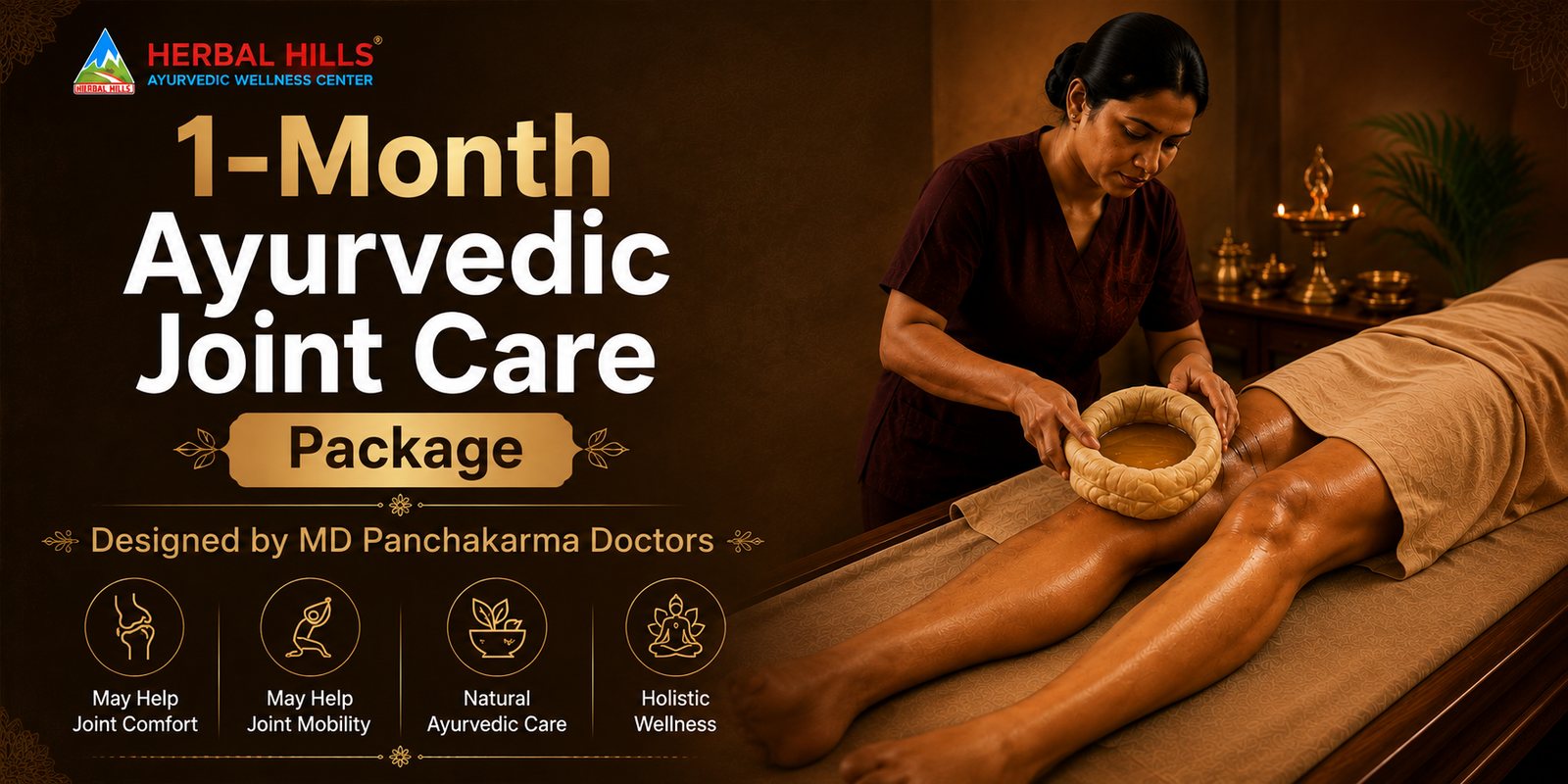
Joint pain has quietly become part of everyday life for people of every age group. Whether it is the early 30s or the late 60s, rising stress, poor lifestyle, lack of movement — or even over-exercise — is affecting joint health.
In short
Ayurveda treats joint pain by correcting its root cause — aggravated Vata, accumulated Ama and weak digestive fire — rather than only numbing the symptom. Herbal Hills’ 1-month Joint Care Package begins with Nadi Parikshan, then combines four Panchakarma therapies (Janu Basti, Kati Basti, Abhyanga and Swedana) with internal herbal medicines and diet correction.
Why Joint Pain Is No Longer Just a “Senior Problem”
Knee pain, stiffness in the fingers, shoulder trouble and backaches are now regular complaints among working professionals and homemakers alike. Ignoring these early signs can lead to chronic joint disorders such as arthritis, osteoarthritis and spondylitis. This is where Ayurveda and Panchakarma therapy come in as powerful, natural solutions.
What Causes Joint Pain According to Ayurveda?
Ayurveda does not treat every joint pain the same way. Before any therapy begins, the doctor identifies which of the three underlying factors is driving your discomfort — because the treatment changes completely depending on the answer.
Aggravated Vata
Vata governs movement and dryness. When it rises through irregular routines, cold food, travel, stress or age, the natural lubrication inside the joint reduces. This is the classic picture of cracking knees, stiffness worse in the morning, and pain that moves from joint to joint.
Ama — Accumulated Toxins
When food is not digested completely it forms a sticky residue called Ama. This settles in the joints and causes heaviness, swelling and a dull, constant ache. Pain driven by Ama usually worsens after heavy meals and eases with light, warm food.
Weak Agni — Digestive Fire
Agni is the body’s capacity to digest and transform. When it weakens, Ama keeps forming no matter how the joints are treated externally. This is why Ayurvedic joint care always corrects digestion alongside the therapies.
How Ayurveda and Panchakarma Offer Lasting Relief
Unlike temporary painkillers or topical ointments, Ayurveda works on the root cause of joint pain. Panchakarma therapies help detoxify the body, balance the doshas and deeply nourish the joints. They not only relieve pain but also strengthen the muscles and bones to prevent further degeneration.
Treating the knee alone, without correcting what is producing the problem, brings only temporary relief.
Introducing Herbal Hills’ 1-Month Joint Care Package
To provide long-term relief and holistic healing, the expert Ayurvedic doctors at Herbal Hills Wellness Center have curated a special 1-month Joint Care Package.
Who This Package Is For
- Knee pain or arthritis
- Shoulder or neck stiffness
- Lower back pain
- Joint swelling and restricted movement
Condition-Specific Joint Care Packages
Because rheumatoid arthritis, osteoarthritis and gout each behave differently, we run separate protocols for each rather than a single generic plan:
What’s Included in the 1-Month Package?
The Joint Care Package combines internal medication with external Panchakarma therapies for complete, 360° joint support.
1. Nadi Parikshan (Pulse Diagnosis)
Your programme begins with Nadi Parikshan performed by MD Panchakarma doctors, to identify your body type and the root imbalances behind your joint pain.
2. Customized Treatment Plan
Every plan is built around your specific condition and body constitution — no two patients receive the same protocol.
3. External Panchakarma Therapies
Four core therapies work together to lubricate the joints, release stiffness and clear accumulated toxins.
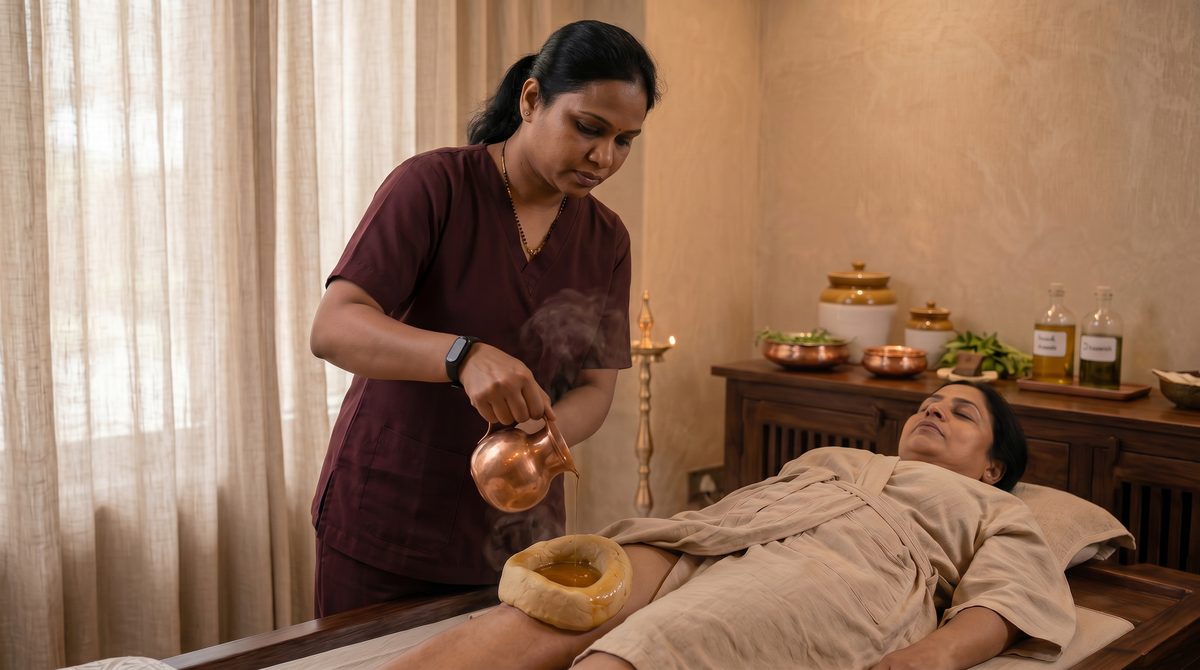
Janu Basti (for Knees)
Warm medicated oil is pooled over the knee joint within a dough ring. The oil penetrates deep into the tissues, lubricates the joint, and helps reduce stiffness, pain and inflammation — especially beneficial in arthritis and knee injuries.
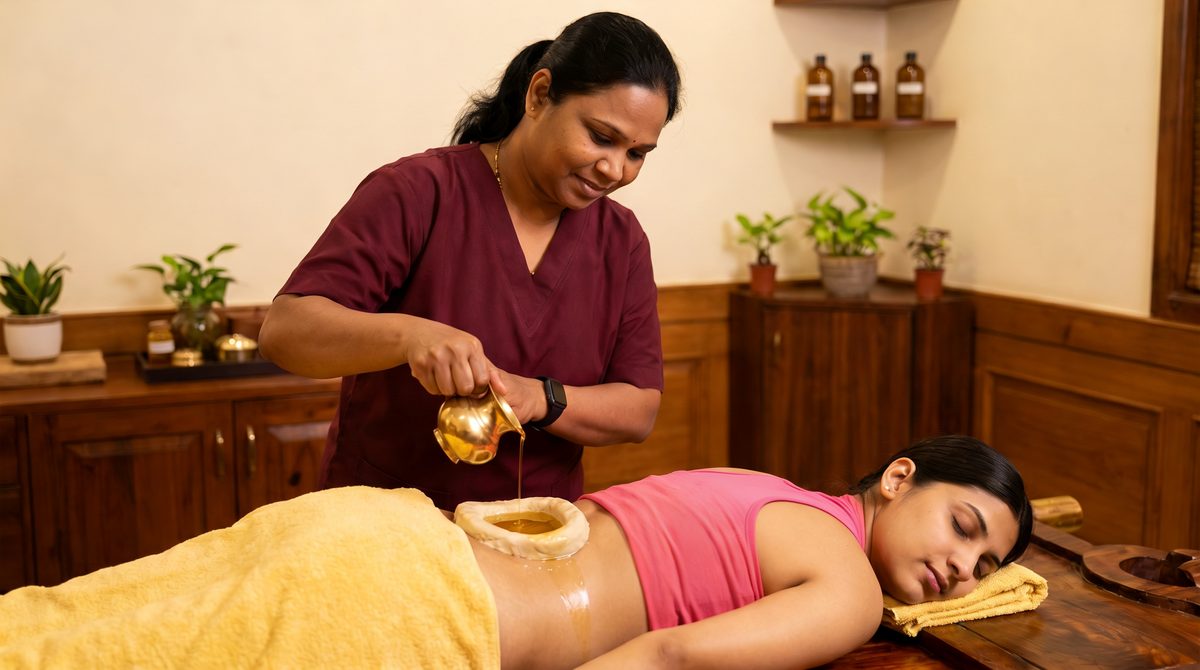
Kati Basti (for Lower Back)
Warm herbal oil is applied to the lower back within a dough boundary. It nourishes the spinal muscles and discs, relieves chronic back pain, sciatica and lumbar spondylitis, and strengthens the lower back.
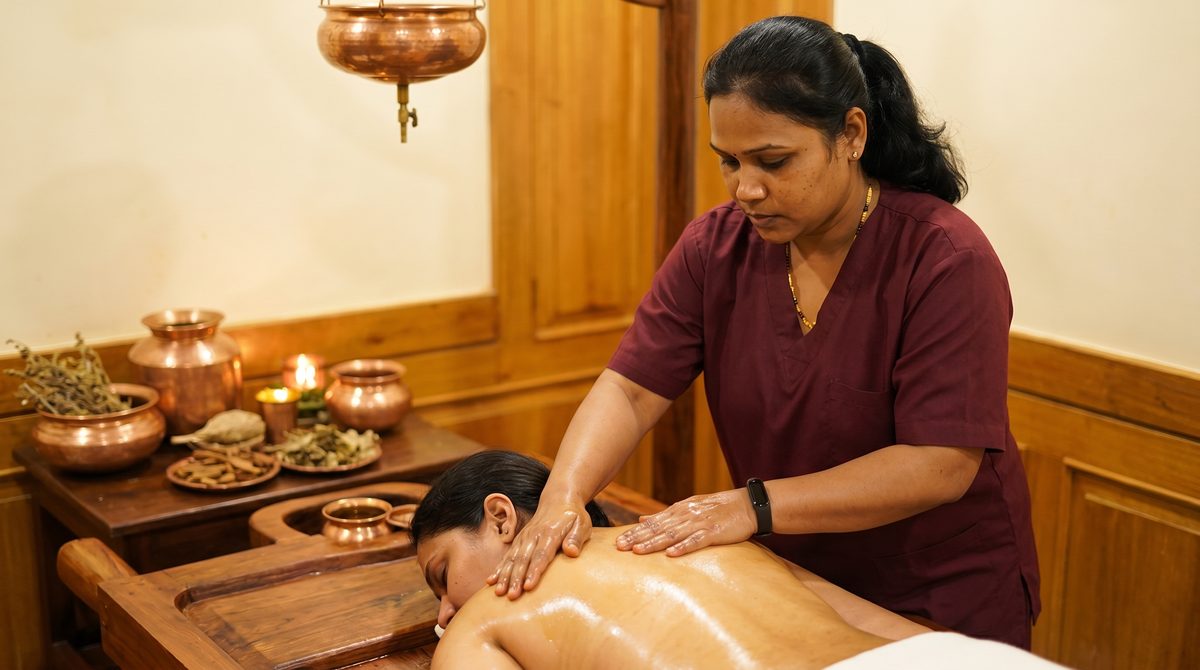
Abhyanga (Oil Massage)
A massage using warm, medicated oils selected for your dosha. It improves blood circulation, relaxes the muscles, reduces stress, improves joint flexibility and helps flush toxins out of the body.
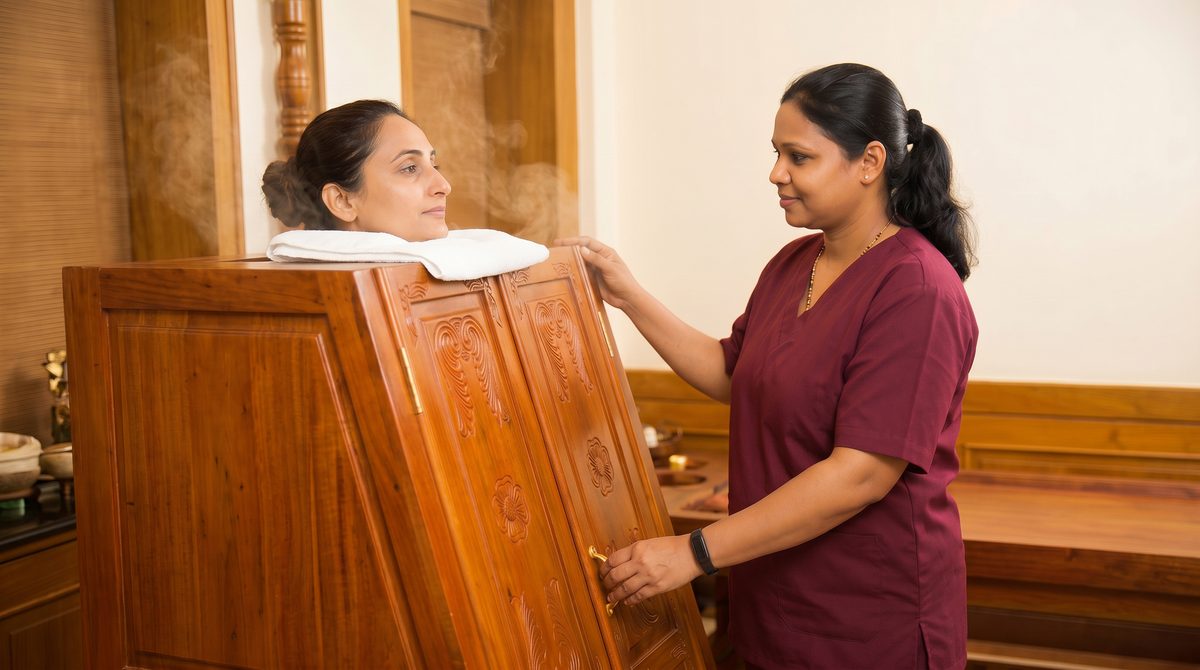
Swedana (Herbal Steam)
A herbal steam therapy that follows Abhyanga. It opens the skin pores and promotes sweating, which helps release deep-seated toxins, reduces stiffness and relieves joint and muscle pain by improving mobility.
4. Internal Ayurvedic Medicines
Herbal tablets, oils and decoctions that reduce inflammation, strengthen the joints and support cartilage health.
What to Expect Across Your Four Weeks
Every plan is set by your doctor after Nadi Parikshan, so the exact schedule varies. Broadly, a month of joint care moves through three phases.
-
Week 1 — Assessment and Preparation
Pulse diagnosis, a review of your history and any reports you bring, and the start of internal medicines. Diet is adjusted early to rekindle Agni, because therapies work far better once digestion begins to settle. Many patients notice their morning stiffness easing during this first week.
-
Weeks 2 and 3 — Active Panchakarma
This is the core of the programme. Abhyanga and Swedana are usually paired in the same sitting, followed by Janu Basti or Kati Basti depending on which joints are affected. Sittings are scheduled across the week rather than daily, so the body has time to respond between sessions.
-
Week 4 — Consolidation and Home Care
Therapies taper while the focus shifts to holding your progress. You will be given a simple home routine — self-massage, warm-food guidance, and gentle joint-friendly movement — along with any medicines to continue. A follow-up consultation decides whether a second cycle is worthwhile.
Why Choose Herbal Hills Panchakarma Center?
At our Ayurvedic Panchakarma center in Mumbai, every treatment is personalised. Our team of experienced MD Panchakarma doctors performs a detailed Nadi Parikshan before beginning any therapy.
- Treats the root cause, not just the symptoms
- Uses pure Ayurvedic herbs and formulations
- Safe, non-invasive and chemical-free
- Designed by specialists with 20+ years of Ayurvedic experience
- Includes diet and lifestyle guidance
Frequently Asked Questions
Is Ayurvedic treatment for joint pain permanent?
Ayurveda addresses the underlying Vata imbalance rather than masking the pain, so relief tends to last far longer than with painkillers. How lasting it is depends on the stage of your condition and how closely you follow the diet and lifestyle guidance given after the programme.
How many sittings are included in the 1-month package?
The number of therapy sittings is decided after your Nadi Parikshan, since the protocol is built around your condition and constitution. Your doctor will share the full schedule during your first consultation.
Can I continue my allopathic medicines during Panchakarma?
In most cases, yes. Please bring your current prescriptions to the consultation so our doctors can plan the timing of your Ayurvedic medicines around them.
Is Janu Basti painful?
No. Janu Basti is a warm, comfortable therapy. Most patients find it deeply relaxing, and the warmth of the medicated oil itself brings noticeable relief from stiffness.
How soon will I feel a difference?
Most patients report easier movement and reduced morning stiffness within the first two weeks. Deeper changes — strength, stability and reduced flare-ups — build over the full month and the weeks that follow.
Find out exactly what your joints need — start with a free consultation with our MD Panchakarma doctors.
This article is for educational purposes and does not replace a personal consultation. Ayurvedic treatment is prescribed individually after examination by a qualified practitioner.