

Blog
Two Systems, One Patient

Ayurveda vs Allopathy: How They Differ, Where Each Helps Most, and How to Use Both Safely
Ayurveda vs allopathy is not really a contest. Allopathy, or modern medicine, is strongest in emergencies, infections, surgery and fast control of serious disease. Ayurveda is strongest in prevention, long-term lifestyle conditions, recovery and daily wellbeing. Each looks at the body differently. Many people get the best results by using both, with each doctor aware of the other’s treatment.
Why people compare Ayurveda and allopathy
Most families in India use both systems at some point: a modern doctor for a fever or a fracture, and Ayurveda for digestion, joint stiffness, stress or a seasonal reset. Questions naturally follow. Which is better? Is Ayurveda slower? Can I take both? Will one interfere with the other?
The honest answer is that they are built for different jobs. Understanding where each is strongest helps you make better decisions for yourself and your family.
What allopathy is
Allopathy is the everyday name in India for modern, evidence-based medicine. It diagnoses disease through examination, blood tests and scans, and treats it with medicines, procedures and surgery. Its strengths are speed, precision and a large body of clinical research. It is the system you need in emergencies, for serious infections, injuries, heart attacks, strokes, cancer, and for controlling conditions such as diabetes and high blood pressure.
What Ayurveda is
Ayurveda is India’s traditional system of medicine, recognised and regulated by the Ministry of AYUSH. It understands the body through the three doshas, Vata, Pitta and Kapha, and the strength of digestion, or Agni. It treats through diet, daily routine, herbal medicines and therapies such as Abhyanga, Basti and Panchakarma. Its first aim is to keep healthy people healthy; its second is to restore balance in those who are unwell. Our blog What is Ayurveda? explains the basics.
Difference 1: How each looks at illness
Allopathy usually starts with the disease: it identifies the condition, the organ involved and the cause, such as a bacterium or a blocked artery, and targets it. Ayurveda starts with the person: their body type, digestion, sleep, stress and habits, and asks what pushed them out of balance. Two people with the same diagnosis may get the same modern medicine, but different Ayurvedic plans.
Difference 2: How diagnosis is done
Modern medicine relies on examination, blood tests, imaging and specialist assessments. Ayurveda uses detailed questioning, observation of the tongue, skin, eyes and body build, and Nadi Parikshan, the Ayurvedic pulse assessment. A good Ayurvedic doctor also reads your modern reports and will ask for tests when needed. The two approaches give different, complementary information.
Difference 3: Speed
Allopathy is usually faster for symptom control: a painkiller works within an hour, an antibiotic within days. Ayurveda usually works more gradually, because it aims to change digestion, routine and the underlying pattern. For long-standing problems such as chronic stiffness, sleep trouble or digestive complaints, that slower pace is often what makes improvement last.
Difference 4: Treatment methods
| Allopathy | Ayurveda | |
|---|---|---|
| Main tools | Medicines, procedures, surgery | Diet, routine, herbal medicines, therapies |
| Focus | The disease and its cause | The person and their balance |
| Strength | Emergencies, infections, surgery, fast control | Prevention, lifestyle conditions, recovery, wellbeing |
| Pace | Usually fast | Usually gradual |
| Daily habits | Advised alongside treatment | Central to treatment |
Difference 5: Prevention
Modern medicine prevents disease through vaccines, screening tests and advice on diet, exercise and smoking. Ayurveda builds prevention into daily life through Dinacharya, the daily routine, seasonal routines and periodic cleansing therapies. The two complement each other: screening tests catch problems early, while daily habits reduce the chance they develop.
Difference 6: Side effects and safety
All effective medicine can have side effects. Modern medicines list them clearly and are tested in large trials. Ayurvedic medicines are often gentle when prescribed correctly, but they are not automatically safe: wrong doses, poorly made products or the wrong herb for the person can cause problems, and some herbs interact with modern medicines. Use Ayurvedic medicines from trusted manufacturers, prescribed by a qualified doctor. Our blog on side effects of Ayurvedic medicine covers this in detail.
Difference 7: The role of the patient
In Ayurveda, the patient does much of the work: eating at regular times, sleeping on time, following the routine and coming back for follow-ups. In modern medicine, the patient also has a role, but more of the effect comes from the medicine or procedure itself. This is why Ayurvedic results depend so much on consistency.
When allopathy should come first
- Emergencies: chest pain, breathlessness, stroke signs, severe injuries, heavy bleeding.
- High fever, serious infections and dehydration.
- Conditions needing surgery.
- Cancer diagnosis and treatment.
- Uncontrolled diabetes, blood pressure, heart or kidney disease.
- Pregnancy complications.
In these situations, Ayurveda can support recovery later, but modern medical care comes first.
Where Ayurveda often helps most
- Prevention and staying healthy through routine and diet.
- Digestive complaints such as bloating, acidity and constipation.
- Stress, poor sleep and low energy.
- Joint stiffness and long-standing aches, alongside medical care.
- Recovery after illness, once the acute phase has passed.
- Skin and hair concerns linked to digestion and lifestyle.
- Seasonal cleansing and rejuvenation.
Using both together safely
- Tell both doctors everything: share your full list of medicines, herbs and supplements with each.
- Never stop prescribed medicines on your own: any change should be made by the doctor who prescribed them.
- Space medicines if advised: some doctors suggest a gap between modern and Ayurvedic medicines.
- Keep monitoring: blood sugar, blood pressure and other readings, as your doctor advises.
- Use qualified practitioners: a BAMS or higher Ayurvedic doctor, and trusted medicine makers.
Read more about combining approaches in our blog on Ayurvedic medicines and therapies together.
An example: knee osteoarthritis
A 58-year-old with knee osteoarthritis might use modern medicine for an X-ray, occasional pain relief and physiotherapy, and Ayurveda for Janu Basti, oil therapies, weight care, diet changes and medicines suited to their body type. Each doctor knows what the other is doing. The person gets faster pain control from one and longer-term support from the other.
An example: diabetes
Someone with type 2 diabetes stays on the medicines prescribed by their physician and keeps testing their sugar. Ayurveda adds meal timing, digestion, weight and stress care, and sometimes therapies such as Basti and medicines, with the physician informed. Doses of modern medicines are only adjusted by the prescribing doctor, based on readings. Our blog on building a diabetes care plan shows how the pieces fit.
What Ayurvedic treatment at a doctor-led centre looks like
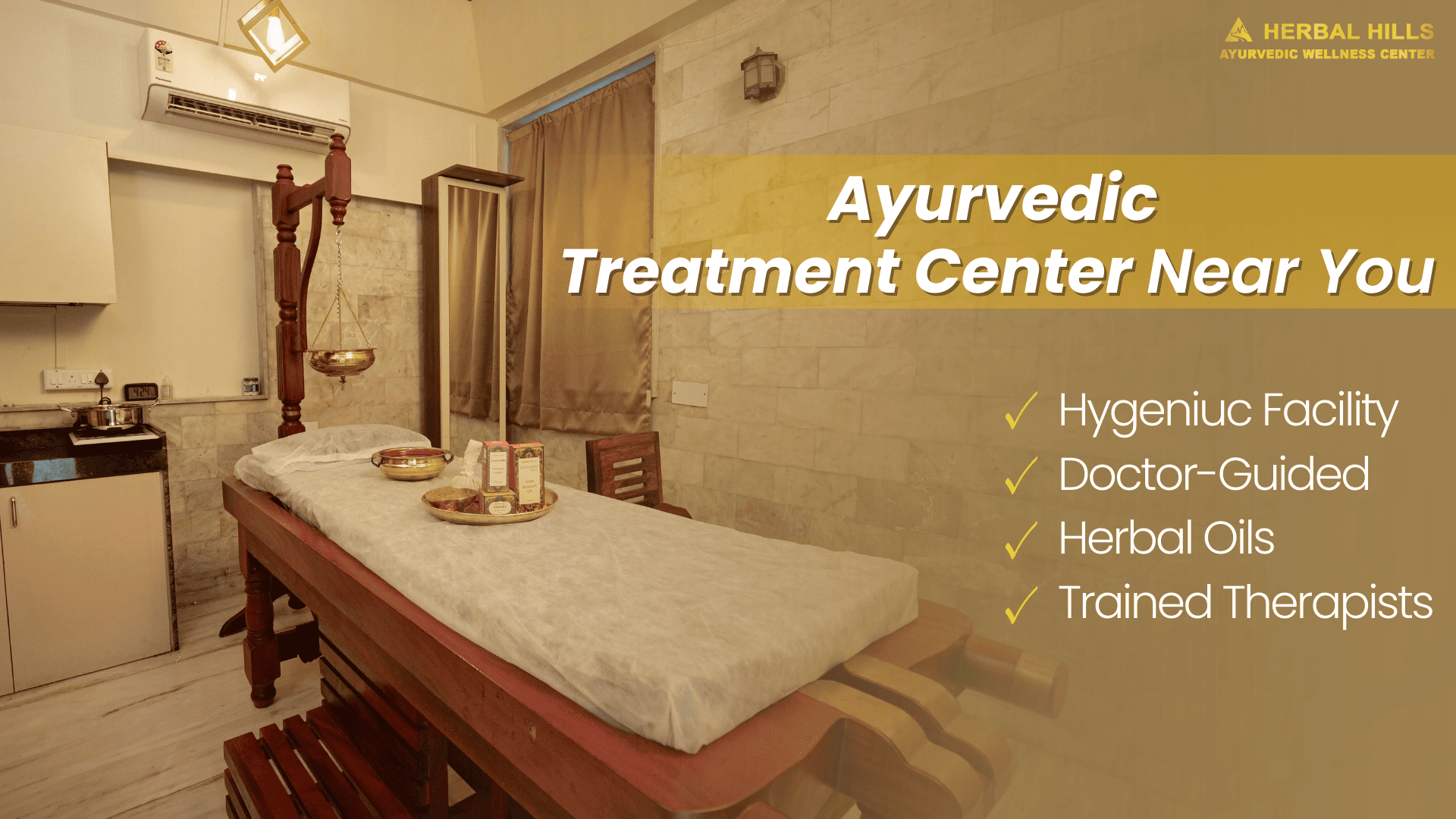
Genuine Ayurvedic care starts with a doctor, not a therapy menu. At Herbal Hills, every visitor first has a free consultation with Nadi Parikshan. The doctor reviews your concern, reports and current medicines, then suggests diet and routine changes and, if suitable, therapies, medicines or a package. Therapies are done by trained therapists in private rooms with attached showers, using oils chosen for you from more than 40 Herbal Hills preparations. Follow-ups track how you respond. See our Ayurvedic therapies to understand the range.
Common myths about Ayurveda and allopathy
“Ayurveda has no side effects.”
Any effective medicine can have side effects if misused.
“Allopathy only treats symptoms.”
Modern medicine treats many root causes, such as infections and blocked arteries.
“You must choose one.”
Many people use both safely, with their doctors informed.
“Ayurveda is only massage.”
It is a full medical system with diagnosis, medicines, diet and therapies.
Ayurveda vs allopathy: the short version
Ayurveda vs allopathy is better thought of as Ayurveda and allopathy. Modern medicine is essential for emergencies, infections, surgery and fast control of serious disease. Ayurveda is strong in prevention, lifestyle conditions, recovery and daily wellbeing. Use qualified doctors in both, keep each informed, and never stop prescribed medicines on your own.
Ayurveda vs allopathy for chronic conditions
For long-standing conditions such as arthritis, diabetes, high blood pressure or digestive problems, the ayurveda vs allopathy question often has the same answer: both. Modern medicine controls the condition and prevents complications, while Ayurveda supports diet, routine, digestion, stress and comfort. The key is coordination, with each doctor knowing what the other prescribes.
Ayurveda vs allopathy for everyday complaints
For minor, everyday problems such as occasional bloating, mild stiffness, poor sleep or low energy, many people start with Ayurvedic diet and routine changes, which often help within weeks. If symptoms are severe, sudden or do not improve, a medical check comes first. Neither system should be used to delay care for warning signs such as chest pain, blood in stools, weight loss or high fever.
How each system sees prevention and daily life
When people compare ayurveda vs allopathy, they often overlook daily life. Modern medicine gives clear guidelines on exercise, diet, alcohol and screening. Ayurveda turns these into a daily rhythm: when to wake, when to eat, how to oil the body, how to adjust habits by season. Many families find Ayurveda’s routine easier to follow because it fits naturally into Indian homes and kitchens.
Cost and time: what to expect
Modern treatment for an acute problem may be short and quick. Ayurvedic care for a long-standing problem often involves a course of therapies, medicines and follow-ups over weeks. Ask any doctor, in either system, what the plan is, how long it will take and what it will cost. Our blog on the cost of Ayurvedic treatment explains what is usually included.
Qualifications to look for
In India, allopathic doctors hold an MBBS degree and may specialise further. Ayurvedic doctors hold a BAMS degree and may hold an MD in Ayurveda, for example in Panchakarma. Both should be registered with the relevant council. Whichever system you use, check qualifications and avoid anyone who discourages you from seeing other doctors.
Questions to ask before combining treatments
- Can these Ayurvedic medicines be taken with my current prescriptions?
- Should I keep a gap between them?
- What readings should I monitor, and how often?
- What signs mean I should stop and call a doctor?
- How will we know if the plan is working?
Clear answers to these questions make it safe to use the best of ayurveda vs allopathy together.
Ayurveda vs allopathy: what patients often say
Many people describe the difference simply: modern medicine helped them through an emergency or an illness, and Ayurveda helped them feel well again afterwards, with better digestion, sleep and energy. That is a fair way to see ayurveda vs allopathy: two systems that, used wisely, cover different parts of the same journey.
A note for families
In many homes, grandparents trust Ayurveda while younger members trust modern medicine. Disagreements can delay care. Agree as a family that emergencies go straight to a hospital, that prescribed medicines are never stopped without the doctor, and that Ayurveda is welcome for prevention, recovery and long-term wellbeing. Our blog on family health the Ayurvedic way has more ideas.
Diagnosis compared: a simple example
Consider someone with frequent acidity. A modern doctor may check for ulcers or reflux, prescribe an acid-reducing medicine and advise on diet. An Ayurvedic doctor may see a Pitta imbalance with weak digestion, suggest meal timing, cooling foods, fewer spicy and sour dishes, stress care and suitable herbs. If symptoms are severe or persistent, tests come first. Often, the person benefits from both views.
What modern research says about integration
Integrative care, where traditional systems are used alongside modern medicine with good communication, is increasingly discussed in India and abroad. The World Health Organization’s traditional medicine strategy encourages safe, evidence-informed use of traditional medicine within health systems. In practice, that means qualified practitioners, good-quality products, honest expectations and doctors who talk to each other.
Ayurveda vs allopathy for recovery after illness
After an infection, surgery or hospital stay, modern medicine treats the illness, and Ayurveda can help rebuild strength once the acute phase has passed. Light, warm food, gradual return to activity, good sleep and gentle Rasayana care support recovery. Our blog on Rasayana in Ayurveda explains this rebuilding phase. Always follow your treating doctor’s instructions on medicines and activity.
Ayurveda vs allopathy in pregnancy and childhood
During pregnancy and for young children, safety comes first. Prenatal and paediatric care should always be led by a qualified obstetrician or paediatrician. Ayurvedic diet and routine advice can support wellbeing, but herbs and therapies must only be used with both doctors’ agreement, as many are not suitable at these stages.
Where to start if you are unsure
If you are unsure which system to turn to, start with the urgency. Sudden, severe or worrying symptoms go to a modern doctor or hospital first. For long-standing, everyday or lifestyle concerns, a consultation with a qualified Ayurvedic doctor, bringing your reports and medicine list, is a sensible next step. A good Ayurvedic doctor will tell you honestly if you need a modern specialist as well.
Ayurveda vs allopathy: one practical rule
Use modern medicine to find out what is wrong and to handle anything urgent or serious. Use Ayurveda to build the daily habits, digestion and resilience that keep you well. Keep both doctors informed, and you get the strengths of each.
Frequently asked questions
Allopathy, or modern medicine, targets specific diseases with medicines, procedures and surgery, and is usually fast. Ayurveda looks at the whole person, their body type and digestion, and works through diet, routine, herbal medicines and therapies, usually more gradually.
Neither is better for everything. Allopathy is essential for emergencies, infections, surgery and serious disease. Ayurveda is strong in prevention, lifestyle conditions, recovery and wellbeing. Many people benefit from both.
Often yes, but only with both doctors informed. Some herbs interact with modern medicines, so share your full medicine list and never stop prescribed treatment on your own.
Ayurvedic medicines are usually gentle when prescribed correctly, but wrong doses, poor-quality products or the wrong herb can cause problems. Use medicines from trusted makers, prescribed by a qualified doctor.
Ayurveda aims to change digestion, routine and the underlying pattern, not only the symptom. That usually takes weeks, but the improvement tends to last when habits are kept up.
Yes. Ayurveda is a recognised system of medicine in India, regulated by the Ministry of AYUSH. Ayurvedic doctors complete a BAMS degree and may train further.
This article is for general education and does not replace medical advice. Ayurvedic therapies and medicines at Herbal Hills are planned by qualified doctors after a personal consultation.
Doctor-led Ayurveda near you
Ayurveda works best alongside your regular care, with a doctor you can visit easily. Herbal Hills has five centres in Western Mumbai, in Juhu (Andheri West), Goregaon West, Kandivali West and two in Borivali West, open Tuesday to Sunday, 10 am to 7 pm. Find your nearest centre.
Bring your reports. Get both views.