

Blog
Knees Keep the Score

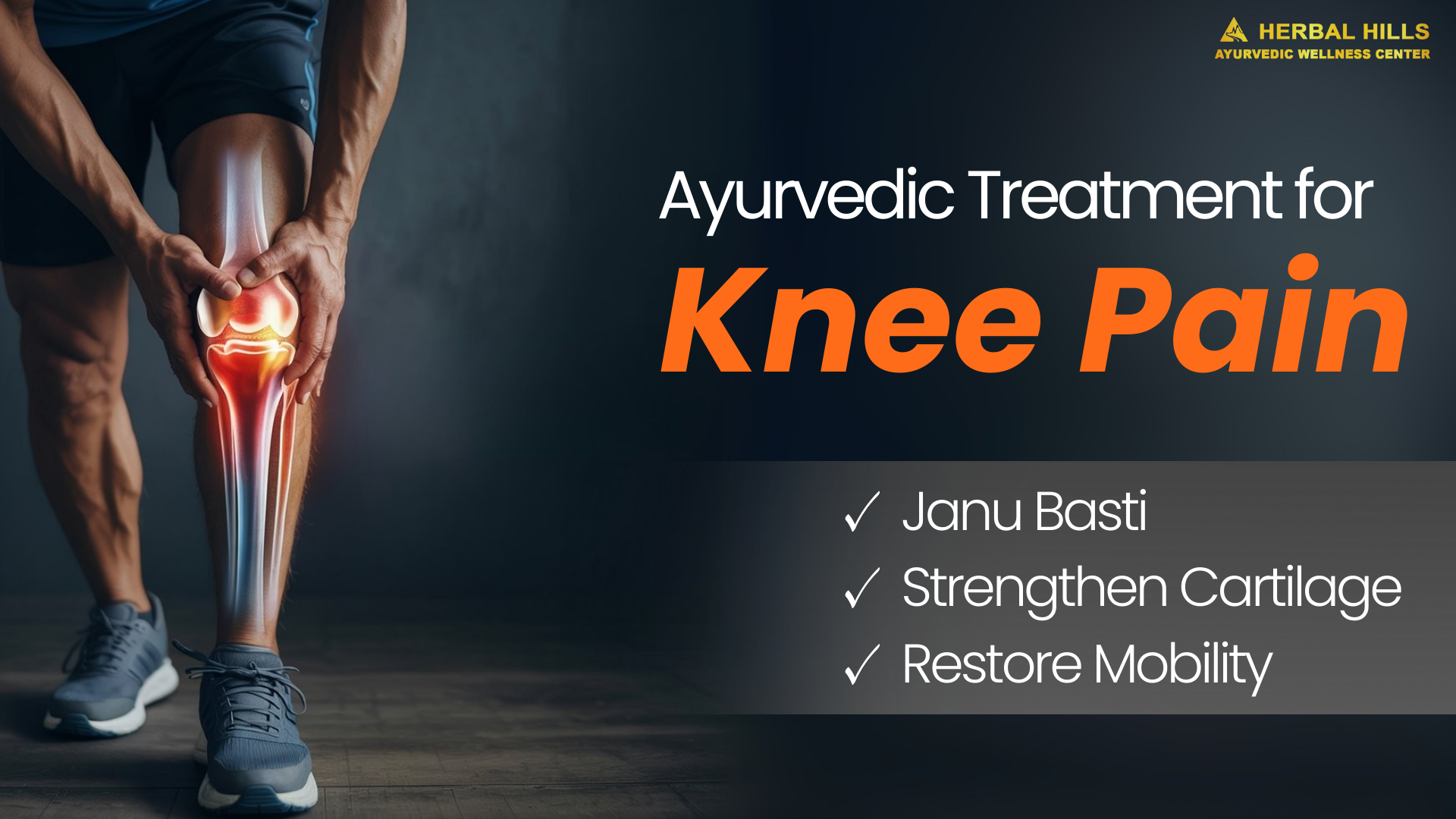
Knee Pain Causes: 10 Common Reasons Your Knees Hurt, and How Knee and Back Pain Are Linked
Knee pain causes range from wear and tear (osteoarthritis) and extra body weight to weak thigh muscles, injuries, overuse, gout and inflammatory arthritis. Where the pain sits, when it started and what makes it worse usually point to the cause. Ayurveda reads most knee pain as Vata settling in the joint, sometimes with inflammation or heaviness, and matches the care to the cause.
Why the knee is so easily hurt
The knee is the largest joint in the body and one of the hardest working. It carries body weight with every step, bends deeply when you sit on the floor or climb stairs, and twists when you turn. It relies on cartilage for cushioning, ligaments for stability and the thigh muscles for support. When any of these is weak or worn, pain follows.
Indian lifestyles add particular strain: squatting, sitting cross-legged, climbing stairs in buildings without lifts, long hours of standing, and in Mumbai, crowded commutes and uneven pavements. That is why knee pain is one of the most common reasons adults visit a doctor.
Where it hurts: a clue to the cause
| Where the pain is | Common knee pain causes |
|---|---|
| Inside of the knee | Osteoarthritis, meniscus tear, strain of the inner ligament |
| Front of the knee, around the kneecap | Runner’s knee (patellofemoral pain), tendon strain, weak thigh muscles |
| Outside of the knee | Iliotibial band irritation, outer ligament strain |
| Back of the knee | A Baker’s cyst, hamstring strain; rarely a clot |
| Whole knee, swollen | Arthritis, gout, injury or infection |
This is a guide, not a diagnosis. A doctor’s examination is needed to be sure.
Cause 1: Osteoarthritis (wear and tear)
Osteoarthritis is the most common of all knee pain causes after 40. The cartilage that cushions the joint thins over time, so the bones move less smoothly. Typical signs are pain on walking and climbing stairs, stiffness after sitting that eases with movement, cracking sounds and, later, a change in the shape of the knee.
Ayurveda calls this picture Janu Sandhivata, Vata settling in the knee joint. Our blog on osteoarthritis and Sandhivata explains how it is assessed.
Cause 2: Extra body weight
Every extra kilo adds load on the knees with each step, and several times more on stairs. Extra weight also adds to low-grade inflammation. For many people with knee pain, losing even a few kilos makes walking noticeably easier. Ayurveda links weight gain with excess Kapha and weak digestion, and treats both alongside knee care.
Cause 3: Weak thigh and hip muscles
The quadriceps at the front of the thigh and the muscles around the hip act as shock absorbers for the knee. When they are weak, often from long hours of sitting, more load passes straight to the joint. This is one of the most common hidden knee pain causes in people under 50. Simple strengthening, such as straight-leg raises and sit-to-stand practice, often helps more than rest.
Cause 4: Runner’s knee and overuse
Pain around or behind the kneecap that worsens on stairs, squatting or after sitting with bent knees is often patellofemoral pain, also called runner’s knee. It is common in runners, cyclists, people who suddenly increase walking or gym work, and those with weak thigh or hip muscles. Rest from aggravating activities, strengthening and good footwear usually help.
Cause 5: Injuries to ligaments and the meniscus
A twist, fall or sports injury can strain or tear a ligament or the meniscus, the C-shaped cartilage inside the knee. Signs include sudden pain, swelling within hours, a feeling that the knee gives way, or locking and catching. These need a doctor’s examination, and sometimes a scan, before any massage or oil therapy.
Cause 6: Gout and inflammatory arthritis
Gout can cause sudden, very painful, hot, red swelling of the knee. Rheumatoid and other inflammatory arthritis often affect both knees along with smaller joints, with long morning stiffness and tiredness. These conditions need medical diagnosis and treatment. Ayurveda describes similar pictures as Vatarakta and Amavata and can support care alongside a rheumatologist.
Cause 7: Posture, footwear and flat feet
How you stand and walk affects the knees. Flat feet, worn-out shoes, high heels, walking on hard floors and standing with the knees locked all change the load on the joint. Supportive footwear and simple changes to posture often reduce knee strain.
Cause 8: Squatting and floor sitting
Deep squatting, sitting cross-legged and using Indian-style toilets put the knees under high pressure. For healthy knees this is usually fine, but for knees with osteoarthritis or runner’s knee, it can make pain worse. A low stool, a chair for prayers or meals, and a Western toilet can make a real difference.
Cause 9: Low vitamin D and weak bones
Low vitamin D is common in India, even with plenty of sunshine, especially in people who spend most of the day indoors. It can cause bone and muscle aches that are felt around the knees. A simple blood test can check levels, and your doctor can advise on correction.
Cause 10: Pain from the back or hip
Sometimes knee pain does not start in the knee. Problems in the lower back, such as a pinched nerve, or in the hip, can cause pain felt in or around the knee. This is why doctors examine the back and hip when the knee itself looks normal. It is also one reason knee and back pain so often appear together.
How knee pain and back pain are linked
Knee and back pain feed each other. A painful knee changes how you walk, which puts extra strain on the lower back. A stiff back changes posture and loads the knees unevenly. Weak core and thigh muscles, extra weight and long sitting are shared causes of both.
Ayurveda sees both as Vata-related problems of the joints and spine, and often treats them together: Janu Basti for the knee, Kati Basti for the lower back, oil massage, warmth and strengthening. Read about joint pain causes for the wider picture.
Back pain home remedies that also help the knees
- Warmth: a warm compress or hot water bag on the lower back or a stiff knee for 15 minutes.
- Gentle oil massage: warm sesame or a doctor-suggested oil such as Mahanarayan, followed by warmth.
- Movement breaks: stand and walk for a few minutes every 45 minutes.
- Core and thigh strengthening: bridges, straight-leg raises, wall sits within comfort.
- A better chair and mattress: support for the lower back while sitting and sleeping.
- Ginger and turmeric in cooking: traditional warming spices for Vata.
These back pain home remedies support the knees too, because the same muscles and posture protect both. If pain lasts more than two weeks or keeps returning, see a doctor.
How Ayurveda reads knee pain
Ayurveda links most knee pain with aggravated Vata: dryness, wear and reduced lubrication in the joint, worse in cold weather and with age. When the knee is swollen and heavy, it looks for Ama, residue from weak digestion. When it is hot and red, it looks for excess heat. Each pattern is treated differently: warm oils for dry, stiff knees; digestion first and dry fomentation for swollen knees; cooling care and medical treatment for hot, inflamed knees.
How a doctor finds the cause
- History: when the pain started, where it is, what makes it worse, any injury, morning stiffness.
- Examination: swelling, warmth, movement, stability, the back and hip.
- Tests if needed: X-ray, uric acid, inflammatory markers, vitamin D.
- Ayurvedic assessment: body type, digestion and Nadi Parikshan to understand the dosha pattern.
Ayurvedic care for knee pain
Once the cause is clear, Ayurvedic care may include Janu Basti, where warm medicated oil is held over the knee, Podikizhi or Elakizhi herbal pouch therapy, Abhyanga, steam, medicines chosen for you, and diet and exercise advice. For long-standing knee osteoarthritis, the one-month Joint Care: Osteoarthritis package combines therapies, medicines and follow-up. Read more on our knee pain treatment and back pain treatment pages.
When knee pain needs urgent attention
See a doctor promptly if the knee is suddenly hot, red and very swollen; if you have fever with knee pain; if you cannot bear weight or the knee gives way after an injury; if the knee locks; or if the calf behind the knee is swollen, warm and painful, which can rarely be a clot. These need medical assessment before any home remedy or therapy.
Common myths about knee pain
“Knee pain is just age.”
Age is a factor, but weight, muscle strength and activity matter just as much.
“Rest is the best treatment.”
Too much rest weakens the muscles that protect the knee. Gentle movement usually helps.
“Cracking knees always mean arthritis.”
Painless cracking is common and often harmless.
“Only surgery helps worn knees.”
Many people manage well with weight care, strengthening and therapies, though some do need surgery.
Knee pain causes: the short version
The most common knee pain causes are osteoarthritis, extra weight, weak thigh and hip muscles, overuse, injury, gout and inflammatory arthritis, posture and footwear, low vitamin D, and pain from the back or hip. Knee and back pain often go together. Find the cause first, then choose care that fits it: strengthening, weight care, warmth, oil therapies and, where needed, medical treatment.
Knee pain causes by age
| Age group | Common knee pain causes |
|---|---|
| Teens and 20s | Sports injuries, runner’s knee, overuse, growth-related pain |
| 30s and 40s | Weak thigh muscles, long sitting, weight gain, early wear |
| 50s and beyond | Osteoarthritis, gout, weaker bones, low vitamin D |
Age is a clue, not a diagnosis. Any of these knee pain causes can appear at any age.
Knee pain causes in women
Women are more likely than men to develop knee osteoarthritis, especially after menopause, and to have pain around the kneecap. Hormonal changes, pregnancy, weight gain, low vitamin D, weaker thigh muscles and footwear such as heels all play a part. Strengthening, weight care and supportive footwear help, and a doctor can check bone health. Our blog on hormonal imbalance in women covers related changes.
Knee pain causes linked to everyday habits
- Sitting for long hours without breaks.
- Sitting with crossed legs or knees bent under a desk for hours.
- Sudden increases in walking, running or gym work.
- Worn-out or unsupportive shoes.
- Carrying heavy bags on one side.
- Climbing many stairs each day with weak thigh muscles.
These are some of the most fixable knee pain causes, because small changes to daily habits reduce the load on the joint.
Simple exercises that protect the knees
- Straight-leg raises: lying on your back, tighten the thigh and lift a straight leg slowly, 10 times each side.
- Sit-to-stand: stand up from a chair and sit back down slowly, without using your hands, 10 times.
- Bridges: lying on your back with knees bent, lift your hips gently, 10 times.
- Calf raises: rise onto your toes and lower slowly, holding a support, 10 times.
Stop if any exercise causes sharp pain, and ask a doctor or physiotherapist which exercises suit your knees.
Back pain home remedies for desk workers
For people who sit at a desk all day, the most useful back pain home remedies are about posture and movement: keep the screen at eye level, sit with feet flat and the lower back supported, stand and walk every 45 minutes, and do a few gentle back stretches morning and evening. A warm compress in the evening helps stiff muscles relax. These changes protect the knees as well as the back.
Diet and knee health
Ayurveda recommends warm, freshly cooked food for Vata-type joint stiffness, with a little ghee or sesame oil, and warming spices such as ginger and turmeric. For swollen, heavy knees, it suggests lighter food and good digestion first. Modern advice adds enough protein for muscles, calcium and vitamin D for bones, and a healthy weight. Avoid heavy, fried and very sweet food, especially late at night.
Knee pain causes: when to rest and when to move
After a fresh injury or a sudden, hot, swollen knee, rest and a doctor’s check come first. For most long-standing knee pain causes, such as osteoarthritis, weak muscles and runner’s knee, gentle movement and strengthening are better than complete rest. A good rule: activity that leaves the knee no worse the next morning is usually safe to continue; activity that makes it clearly worse needs adjusting.
Knee pain at night
Knee pain that wakes you at night, or is worse at rest, can point to inflammation, gout or, rarely, a more serious cause, and should be checked. Mild aching after a busy day often eases with a warm compress, a pillow between or under the knees, and a gentle oil massage before bed.
Footwear checklist for healthy knees
Choose shoes with a cushioned sole, good arch support and a firm heel counter. Replace walking or running shoes when the sole wears unevenly. Limit high heels and completely flat, thin-soled slippers for long walks.
Frequently asked questions
The most common knee pain causes are osteoarthritis, extra body weight, weak thigh and hip muscles, overuse such as runner’s knee, ligament or meniscus injuries, gout and inflammatory arthritis, posture and footwear, and pain referred from the back or hip.
Pain on stairs is common with osteoarthritis and with runner’s knee, where the kneecap presses harder on the thigh bone. Weak thigh muscles and extra weight make it worse.
Yes. A pinched nerve in the lower back or a hip problem can cause pain felt around the knee. A painful knee can also strain the back by changing how you walk.
Warmth, gentle oil massage, regular movement breaks, core and thigh strengthening, a supportive chair and mattress, and warming spices in food. See a doctor if pain lasts more than two weeks.
Ayurveda treats knee pain according to its cause, using therapies such as Janu Basti, Podikizhi and Abhyanga, medicines chosen for you, diet and exercise advice, after a doctor’s assessment.
See a doctor if the knee is suddenly hot and swollen, you have fever, cannot bear weight, the knee locks or gives way, or pain lasts more than two weeks.
This article is for general education and does not replace medical advice. Ayurvedic therapies and medicines at Herbal Hills are planned by qualified doctors after a personal consultation.
Knee and back care near you
Knee care works best with regular sessions, so a nearby centre helps. Herbal Hills has five centres in Western Mumbai, in Juhu (Andheri West), Goregaon West, Kandivali West and two in Borivali West, open Tuesday to Sunday, 10 am to 7 pm. Find your nearest centre.
Find out why your knees hurt.