

Blog
Light, Warm and Active

How to Increase Metabolism: What Metabolism Really Is, How Ayurveda Explains Agni and Kapha, 10 Daily Habits, and Apatarpana Signature Therapy
How to increase metabolism in a healthy way? Build and keep muscle through strength training, move more through the whole day, eat regular meals with enough protein, sleep seven to eight hours and manage stress, and get your thyroid and other medical causes checked if you feel unusually slow or tired. Ayurveda adds its own view: keep Agni, the digestive fire, steady, balance a heavy Kapha dosha, and, where a doctor finds it suitable, use lightening care such as Apatarpana Signature therapy.
The short version
- Metabolism is how your body turns food into energy.
- Muscle, age, genes, activity and hormones all affect it.
- Rule out medical causes, such as an underactive thyroid, first.
- Strength training, daily movement, protein, sleep and calm all help.
- Ayurveda links a slow, heavy feeling with weak Agni and high Kapha.
- Apatarpana is a doctor-planned Signature lightening therapy at Herbal Hills.
What is metabolism, in plain words?
Metabolism is the set of processes your body uses to turn food and drink into energy. Even at rest, you use energy to breathe, pump blood, keep warm and repair cells. This is called the basal metabolic rate.
On top of that, you use energy to digest food and to move. When people ask how to increase metabolism, they usually mean how to use a little more energy each day and feel more active, not tired and sluggish.
What affects your metabolic rate?
- Muscle: muscle uses more energy than fat, even at rest.
- Age: metabolism tends to slow a little with age, often because muscle reduces.
- Body size and sex: larger bodies use more energy.
- Genes: some people naturally burn energy faster.
- Activity: every step and movement counts.
- Hormones: thyroid hormones play a key role.
Some of these you cannot change. Muscle, activity, sleep and food habits you can.
Signs your metabolism may feel slow
There is no single symptom of a slow metabolism. People often describe:
- Tiredness and low energy through the day
- Feeling cold more than others
- A heavy, sluggish feeling after meals
- Slow digestion and low appetite in the morning
- Puffiness or mild swelling
These signs have many possible causes. They are a reason to look closer, not a diagnosis.
Medical causes to check first
Before you work on how to increase metabolism with habits, make sure there is no medical cause. An underactive thyroid is a common one, and is easily checked with a blood test. The NHS guide to an underactive thyroid lists its typical symptoms.
Other causes of tiredness and heaviness include anaemia, diabetes, low vitamin D, sleep problems, depression and some medicines. A doctor can advise which tests you need.
How Ayurveda sees metabolism: Agni
Ayurveda does not use the word metabolism, but it has a close idea: Agni, the digestive and metabolic fire. Agni digests food and turns it into nourishment for the body tissues.
When Agni is steady, you feel hungry at meal times, digest well and feel light and active. When Agni is weak, food may sit heavily, appetite drops and you may feel dull. In Ayurveda, the answer to how to increase metabolism begins with steadying Agni.
Kapha dosha and a heavy, slow feeling
Ayurveda describes three doshas, Vata, Pitta and Kapha. Kapha dosha carries the qualities of heaviness, stability, coolness and moisture. In balance, Kapha gives strength, steady energy and calm.
When Kapha is high, people may feel heavy, sleepy after meals, slow in the morning and prone to puffiness or congestion. Ayurveda balances Kapha with warmth, lightness and movement: warm cooked food, gentle spices, regular exercise and fewer heavy, cold, sweet foods.
Ama: undigested residue in simple words
Ayurveda uses the word Ama for food that has not been fully digested. Classical texts link it with dullness, a coated tongue and low appetite.
Modern science does not measure Ama directly. You can think of it as the Ayurvedic way of describing poor digestion. The approach is practical: eat lighter, warm meals, avoid overeating, and let the doctor plan any further care.
Water retention: what it is and when to worry
Water retention, or oedema, means fluid builds up in the body tissues, often in the feet, ankles, hands or face. Mild puffiness can follow long sitting or standing, hot weather, a salty meal or hormonal changes.
Swelling can also be a sign of heart, kidney, liver or vein problems. The NHS page on oedema explains when to get help. See a doctor for swelling in one leg, swelling that does not settle, or swelling with breathlessness.
How to increase metabolism: the basic idea
You cannot change your genes or age, but you can influence how much energy your body uses each day. The three biggest levers are muscle, movement and steady daily rhythm.
Quick fixes, such as fat-burning pills or very low-calorie diets, often backfire. They can reduce muscle and leave you tired. The habits below are slower, but they are safe and they last.
How to increase metabolism: 10 daily habits
These ten habits on how to increase metabolism combine modern advice with Ayurvedic principles. They suit most healthy adults.
If you have diabetes, a heart, kidney or thyroid condition, are pregnant, or take regular medicines, ask your doctor before changing your exercise or diet. Make changes gradually and notice how your body responds.
Habit 1: Build muscle with strength training
Strength training is the most important answer to how to increase metabolism over time. More muscle means more energy used, even while you rest.
Aim for two or three sessions a week using body weight, resistance bands or weights. Squats, lunges, push-ups against a wall and step-ups are good starting points.
Habit 2: Move more through the whole day
The energy you use in everyday movement, such as walking, climbing stairs, cooking and cleaning, adds up to a lot.
- Stand up and move for a few minutes every hour.
- Take the stairs where you can.
- Walk while you talk on the phone.
- Take a short walk after meals.
In Ayurveda, movement is one of the best ways to balance a heavy Kapha dosha.
Habit 3: Add brisk walking or cardio
Aim for at least 150 minutes of moderate activity a week, such as brisk walking, cycling or swimming. This is a simple way to learn how to increase metabolism while supporting the heart and lungs.
Ayurveda suggests exercising in the morning, when Kapha is naturally higher, and working to about half your capacity, enough to break a light sweat without exhausting yourself.
Habit 4: Include protein at every meal
The body uses more energy to digest protein than to digest fats or carbohydrates. Protein also helps protect muscle, which is central to how to increase metabolism.
Good sources include dals, sprouts, paneer, curd, eggs, fish, chicken, soya and nuts. Spread them across breakfast, lunch and dinner rather than having all your protein at once. People with kidney problems should follow their doctor’s advice on protein.
Habit 5: Eat at regular times
Eating at the same times each day gives your body a steady rhythm. Ayurveda advises three meals, with the largest at midday when Agni is usually strongest.
Avoid constant snacking. Leaving three to four hours between meals lets digestion finish before the next meal starts. This is one of the simplest Ayurvedic tips on how to boost metabolism and feel lighter.
Habit 6: Keep dinner light and early
A heavy, late dinner can leave you feeling sluggish the next morning. Try to finish dinner two to three hours before sleep.
Choose a lighter meal, such as soup, khichdi, vegetables and a small portion of roti or rice. Kapha is heavier in the evening, so keeping dinner light supports digestion overnight and is a quiet part of how to increase metabolism.
Habit 7: Use warming spices in cooking
Ayurveda uses warming spices to support Agni. Ginger, black pepper, cumin, turmeric, cinnamon and ajwain are common in Indian kitchens.
Use them in normal cooking amounts. Spices support digestion and taste; they are not a shortcut on their own. Avoid large amounts if you have acidity or ulcers.
Habit 8: Drink warm water, not ice-cold drinks
Drinking enough water supports every process in the body. Ayurveda prefers warm or room-temperature water to ice-cold drinks, which it sees as dulling Agni and adding to Kapha.
Sip warm water through the day. Limit sugary drinks and fruit juices. If you have water retention due to heart or kidney disease, follow your doctor’s advice on fluids.
Habit 9: Sleep seven to eight hours
Poor sleep affects the hormones that control hunger and energy. People who sleep badly often feel tired, crave sweet food and move less, so sleep is part of how to increase metabolism.
Ayurveda advises sleeping by about 10 pm and waking early. It also advises against long daytime naps for people with high Kapha, as they can add to heaviness. If you need a nap, keep it short.
Habit 10: Manage stress
Long-term stress can affect sleep, appetite and food choices, and can lead to comfort eating and less activity.
Slow breathing, a daily walk, yoga, time outdoors and a regular bedtime all help. In Ayurveda, a calm mind supports steady Agni. If stress feels overwhelming, talk to a doctor or counsellor.
How to boost metabolism: what does not work
- Crash diets: very low-calorie eating can reduce muscle and slow you down.
- Fat-burning pills: many are unproven and some are unsafe.
- Skipping breakfast and overeating later: this disturbs your daily rhythm.
- Detox teas: they often act as laxatives or diuretics, not metabolism boosters.
When you think about how to increase metabolism, steady habits are slower but far safer.
How to increase metabolism: a sample Kapha-balancing day
| Time | What to do |
|---|---|
| 6 to 7 am | Wake, warm water, 30 minutes of brisk walking or exercise |
| 8 am | Light breakfast with protein, such as moong chilla |
| 1 pm | Main meal: dal, vegetables, roti or rice, salad |
| Afternoon | Short walk, warm water, stand up each hour |
| 7 pm | Light dinner: soup or khichdi with vegetables |
| 10 pm | Sleep |
What is Apatarpana Signature therapy?
Apatarpana means lightening in Ayurveda. At Herbal Hills, Apatarpana is a Signature therapy curated by Ayurvedic MD doctors for people with a heavy, Kapha-type pattern, such as lethargy, water retention, slow digestion and excess weight.
It begins with Nadi Parikshan and a doctor consultation. The doctor checks whether it suits you and adds dietary suggestions to support the therapy. It is part of our Signature programme.
The four therapies inside Apatarpana
| Therapy | What it involves |
|---|---|
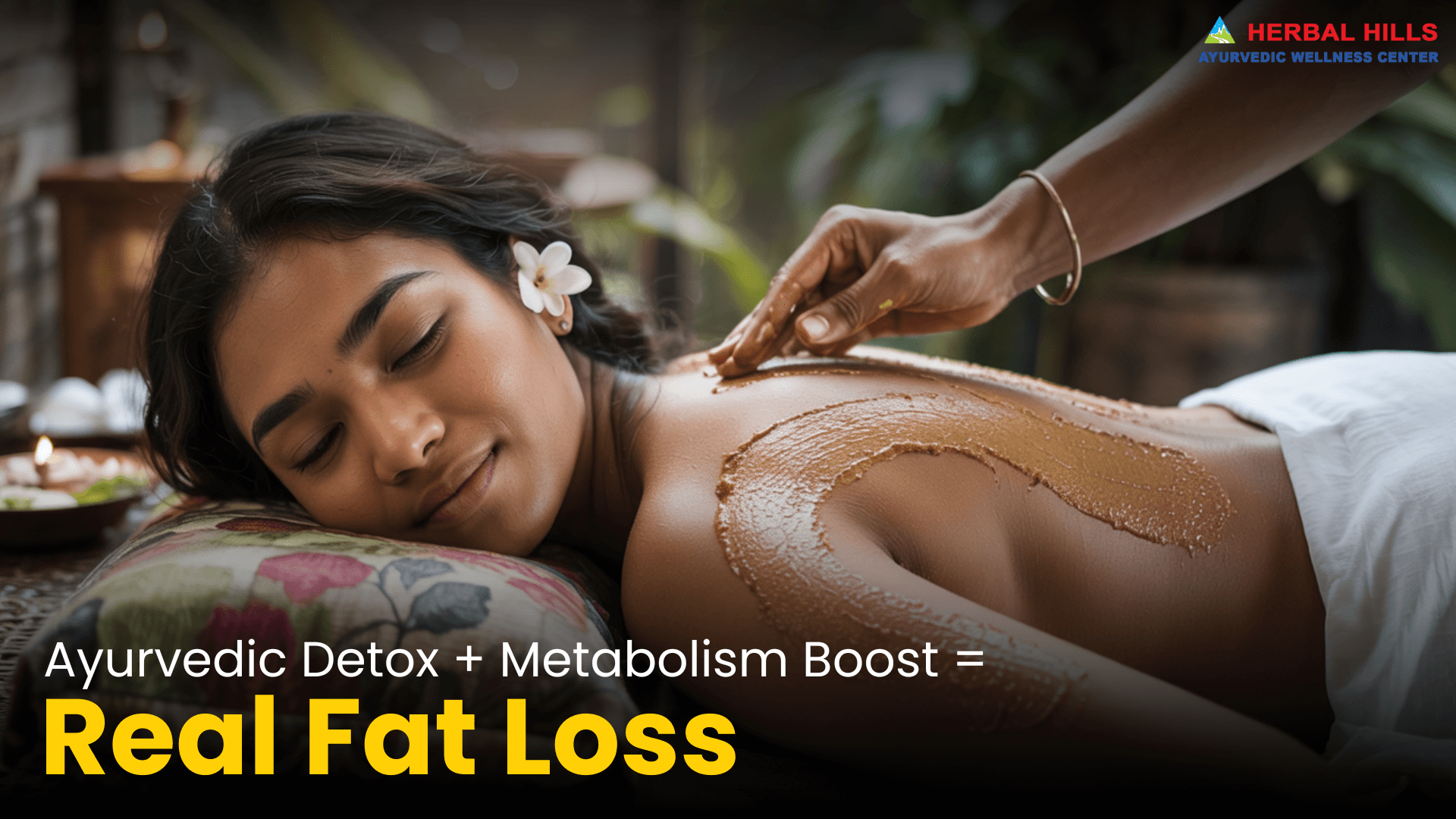
| Sarvanga Udvartana | A dry massage with herbal powders over the whole body |
| Nadi Swedan | Herbal steam directed through a pipe to specific areas |
| Sthanik Abhyanga | A focused warm oil massage on selected areas |
| Lekhan Basti | A medicated Basti with herbs chosen by the doctor |
The doctor decides which therapies suit you.
Who may be suited to Apatarpana, and who should wait
Apatarpana may suit adults who feel heavy and sluggish, have slow digestion or mild water retention, and want doctor-guided support alongside diet and exercise.
It may not be suitable during pregnancy, during an acute illness or fever, for people who are underweight or very weak, or for some heart and kidney conditions. The doctor will check your health and medicines first. If you are underweight, Santarpana, the nourishing approach, may be considered instead.
Why therapies alone are not enough
Therapies like Udvartana and steam may help you feel lighter and more active. But the real work on how to increase metabolism happens every day at home: movement, strength training, regular meals, sleep and calm.
Think of Apatarpana as support that helps you start, not a replacement for daily habits. If your goal is mainly weight, read about our Ayurvedic weight management care.
Myths about how to increase metabolism
Myth: eating very little speeds metabolism up
It usually does the opposite. Very low intake can reduce muscle and leave you tired.
Myth: one food or drink can fire up metabolism
Green tea, chilli or lemon water have small effects at most. Muscle and movement matter far more.
Myth: a slow metabolism cannot change
You cannot change genes or age, but strength training, activity and sleep can make a real difference.
When to see a doctor
See a doctor if you have:
- Constant tiredness, feeling cold, dry skin or hair thinning
- Weight gain or loss without a clear reason
- Swelling that does not settle, or swelling in one leg
- Swelling with breathlessness, chest pain or reduced urine
- Irregular periods with weight change
- Very low mood or poor sleep for weeks
Get urgent help for sudden breathlessness or chest pain.
How Herbal Hills can help
At Herbal Hills, care starts with a free doctor consultation with Nadi Parikshan. The doctor asks about your energy, digestion, sleep, routine and medical reports, and checks your dosha balance.
You get practical advice on food and routine, and, where suitable, Apatarpana or other therapies in private rooms with attached showers, using Herbal Hills oils. Any Ayurvedic medicines are given only as prescribed by the doctor.
Your first 14 days
- Days 1 to 3: book blood tests if advised, fix meal and sleep times.
- Days 4 to 7: add a daily brisk walk and move every hour.
- Days 8 to 10: start two strength sessions a week and add protein to each meal.
- Days 11 to 14: keep dinner light and early, review how you feel.
After two weeks, most people notice steadier energy. Keep going, and review progress with your doctor.
Frequently asked questions
Build muscle with strength training two or three times a week, move more through the day, eat regular meals with protein, sleep seven to eight hours and manage stress. Get your thyroid checked if you feel unusually tired or cold.
There is no safe shortcut. Strength training and daily movement have the biggest effect. Crash diets and fat-burning pills can reduce muscle and are often unsafe.
Kapha dosha is one of the three doshas in Ayurveda. It carries heaviness, stability and moisture. In balance it gives strength and calm. When high, it may bring heaviness, sluggishness and puffiness.
Mild water retention can follow long sitting or standing, hot weather, salty food or hormonal changes. Swelling that does not settle may be a sign of heart, kidney, liver or vein problems and needs a doctor’s check.
Apatarpana is a Signature lightening therapy at Herbal Hills for a heavy, Kapha-type pattern. It may include Sarvanga Udvartana, Nadi Swedan, Sthanik Abhyanga and Lekhan Basti, chosen by a doctor after consultation.
Ayurveda supports steady Agni and balanced Kapha through warm, regular meals, movement, routine and, where suitable, doctor-planned therapies. It works best alongside medical checks for causes such as thyroid problems.
This article is for general education and does not replace medical advice. Ayurvedic therapies and medicines at Herbal Hills are planned by qualified doctors after a personal consultation.
Find a Herbal Hills centre near you
A doctor can help you understand why you feel heavy or slow and plan the right next step. Herbal Hills has five centres in Western Mumbai, in Juhu (Andheri West), Goregaon West, Kandivali West and two in Borivali West, open Tuesday to Sunday, 10 am to 7 pm. Find your nearest centre.
Feel lighter. Move with energy.
One thought on “Light, Warm and Active”