
Not Every Imbalance Is PCOS

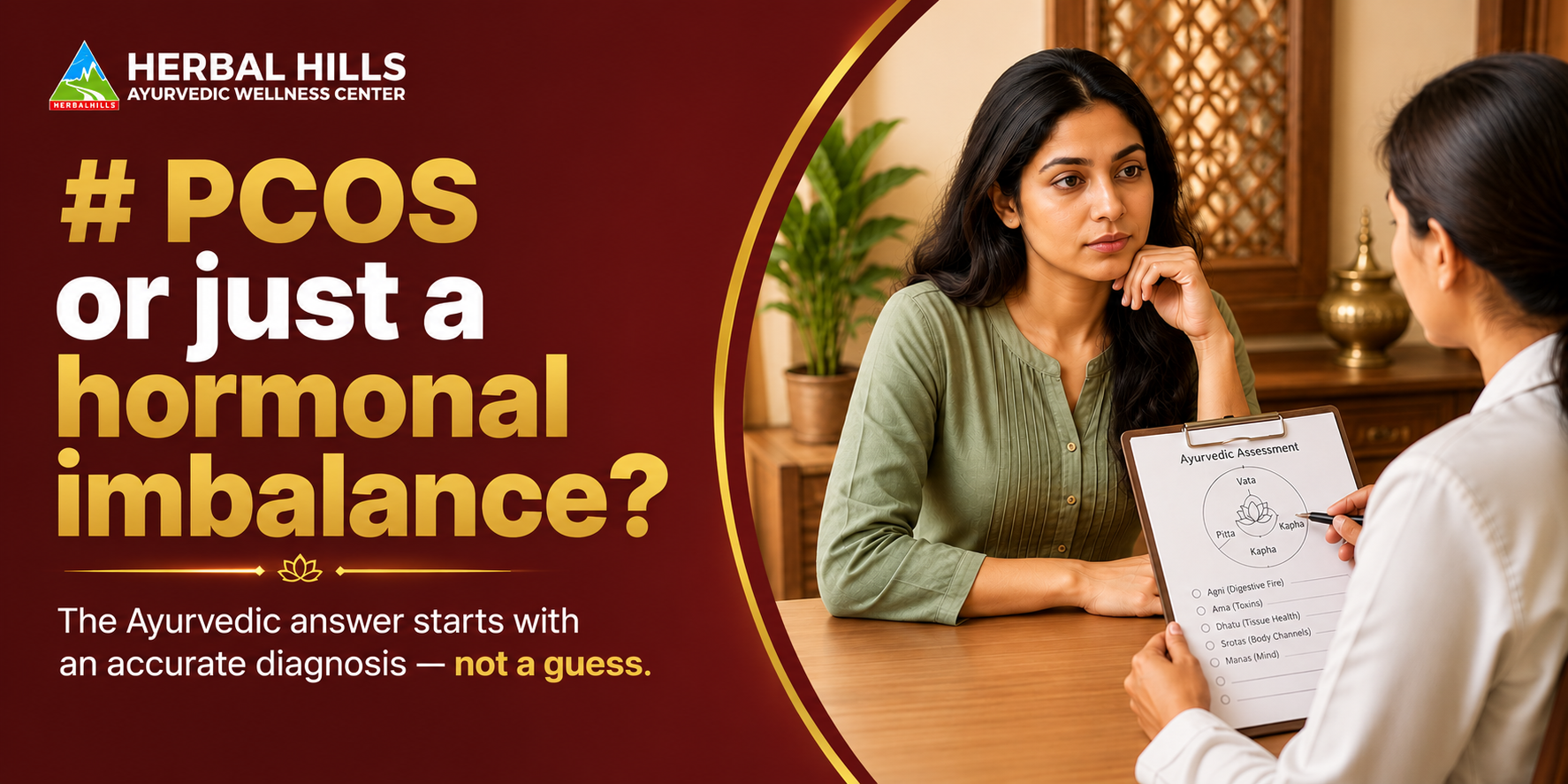
What Is PCOS: Common Symptoms, Likely Causes, How It Is Diagnosed, Daily Habits That Help, and Doctor-Planned Ayurvedic Support
What is PCOS? Polycystic ovary syndrome (PCOS) is a common hormonal condition in women of reproductive age, in which the ovaries may not release an egg regularly, levels of male-type hormones (androgens) may be higher than usual, and the ovaries may look polycystic on an ultrasound. It can cause irregular periods, acne, extra facial or body hair and weight changes. PCOS has no single cause and needs a proper diagnosis by a gynaecologist. This guide explains the symptoms, likely causes, how it is diagnosed, daily habits that help, and how doctor-planned Ayurvedic care may support you alongside medical care.
The short version
- PCOS is a common hormonal condition affecting periods, skin, hair and metabolism.
- Symptoms differ a lot from woman to woman.
- Insulin resistance, hormones, genes and lifestyle all play a part.
- A gynaecologist diagnoses PCOS after ruling out other causes.
- Not every hormonal imbalance is PCOS. Tests lead.
- Food, movement, sleep and steady weight habits help many women.
- Ayurveda may support you alongside your gynaecologist. Never stop prescribed medicines.
What is PCOS?
PCOS stands for polycystic ovary syndrome. It is a long-term condition that affects how the ovaries work and how the body handles certain hormones, including insulin.
The World Health Organization fact sheet on PCOS describes it as a common condition in women of reproductive age, and notes that many women who have it do not know. So when people ask what is PCOS, the honest answer is: a common, manageable condition that deserves proper care.
What is PCOS, in simple terms?
Each month, the ovaries usually prepare and release one egg. In PCOS, this process often does not happen regularly. Several small follicles may start to grow but do not mature and release an egg.
On an ultrasound, these follicles can look like many small dots on the ovary. Despite the name, they are not true cysts. Alongside this, the body may make more androgens than usual, which explains symptoms such as acne and extra hair.
Common PCOS symptoms
- Irregular, infrequent or absent periods.
- Difficulty getting pregnant because ovulation is irregular.
- Extra hair on the face, chest, back or tummy.
- Acne or oily skin.
- Thinning hair on the scalp.
- Weight gain, especially around the waist, or difficulty losing weight.
- Dark, velvety patches of skin on the neck or underarms.
You do not need all of these. Many women have only one or two.
Why PCOS looks different in every woman
Two women can both have PCOS and look very different. One may have very irregular cycles but clear skin. Another may have regular periods but troublesome acne and facial hair. Some women with PCOS are slim, and some are not.
This is why understanding what is PCOS for you, personally, matters more than comparing yourself with others. Symptoms can also change with age, weight, stress and life stage.
PCOS causes: what we know so far
The exact cause of PCOS is not fully known. Experts believe it comes from a mix of factors working together:
- Insulin resistance: the body does not respond well to insulin.
- Hormones: higher androgen levels and changes in signals between the brain and the ovaries.
- Genes: PCOS often runs in families.
- Lifestyle: diet, activity, sleep and weight can influence symptoms.
No single factor explains every case.
Insulin resistance, explained simply
Insulin is the hormone that helps sugar move from the blood into the cells for energy. In insulin resistance, the cells respond less well, so the body makes more insulin to keep blood sugar steady.
High insulin levels can push the ovaries to make more androgens, which may disturb ovulation. This link is one reason why food, activity and weight habits matter so much when doctors explain what is PCOS and how to manage it.
Hormones, genes and lifestyle
In PCOS, the balance of hormones that control the monthly cycle is often disturbed. Higher androgens can affect the skin, hair and ovulation.
Having a mother or sister with PCOS, or a family history of type 2 diabetes, may raise the chance of developing it. Lifestyle does not cause PCOS on its own, but long hours of sitting, irregular meals, poor sleep and stress can make symptoms more noticeable.
How a gynaecologist decides what is PCOS
There is no single test for PCOS. A gynaecologist usually diagnoses it when at least two of these three features are present:
- Irregular or absent ovulation, often seen as irregular periods.
- Signs of higher androgens, either on blood tests or as symptoms such as extra hair or acne.
- Polycystic ovaries on an ultrasound scan.
Importantly, other causes with similar symptoms must be ruled out first. In teenagers, doctors are usually more cautious, as cycles take time to settle.
Tests you may be asked to do
| Test | Why it may be done |
|---|---|
| Hormone blood tests | To check androgens and other reproductive hormones |
| Thyroid tests | To rule out thyroid problems |
| Prolactin | To rule out raised prolactin |
| Blood sugar and lipids | To check metabolic health |
| Pelvic ultrasound | To look at the ovaries and womb lining |
Your gynaecologist decides which tests you need. Together they answer what is PCOS and what is not, in your case. Bring old reports.
Not every hormonal imbalance is PCOS
Irregular periods, acne, weight gain, fatigue and mood changes can come from many causes. Thyroid problems, raised prolactin, stress, sudden weight change, intense exercise and some medicines can all affect the cycle.
So before asking what is PCOS treatment, the first question is whether it is PCOS at all. Tests lead. You can read more about hormonal imbalance in women and about Ayurvedic support for thyroid health.
PCOS or something else?
| Possible cause | What may point to it |
|---|---|
| Thyroid imbalance | Tiredness, weight change, feeling cold or hot, abnormal thyroid tests |
| Raised prolactin | Irregular periods, sometimes milky nipple discharge |
| Stress or sudden weight loss | Periods stop or become irregular after a stressful phase |
| Pregnancy | A missed period, which should always be checked first |
Only proper tests can tell these apart, so do not self-diagnose.
Long-term health and PCOS
PCOS is about more than periods. Women with PCOS may have a higher chance of type 2 diabetes, high blood pressure and raised cholesterol, which can affect heart health over time. Some also have sleep problems or low mood.
Very infrequent periods over a long time may affect the womb lining, which a doctor may want to check. These risks are not certain, and healthy daily habits with regular check-ups can lower many of them.
PCOS and fertility
Because ovulation may be irregular, some women with PCOS take longer to get pregnant. However, many women with PCOS do conceive, sometimes naturally and sometimes with medical help.
If you are trying to conceive and your cycles are irregular, see a gynaecologist early rather than waiting. Ayurvedic care, if you choose it, should be planned with your gynaecologist’s knowledge, especially during fertility treatment or pregnancy.
What is PCOS doing to your mood?
Living with acne, hair changes, weight concerns and uncertainty about periods can be stressful. Some women with PCOS feel anxious, low or self-conscious, and that is understandable.
Stress can also affect sleep, eating patterns and the cycle itself. Talk openly with your doctor about how you feel, not only about physical symptoms. If low mood or worry lasts more than two weeks, ask for support from a doctor or counsellor.
Daily habits that help: food
- Eat regular meals at roughly the same times each day.
- Build meals around vegetables, dals, whole grains and some protein.
- Choose whole fruit over juice.
- Cut back on sugary drinks, sweets, refined flour and fried snacks.
- Avoid long gaps followed by heavy late dinners.
There is no single PCOS diet. Steady, balanced meals that keep blood sugar even are a good base. Ask your doctor before strict diets or long fasts.
Daily habits that help: movement
Regular movement helps the body use insulin better and supports weight, mood and sleep. Aim for about 30 minutes of activity on most days, such as brisk walking, cycling, swimming, dancing or yoga.
Adding simple strength exercises two or three times a week can also help. A short walk after meals is an easy, traditional habit. Choose something you enjoy, so that you keep doing it.
Daily habits that help: sleep, stress and weight
Aim for seven to eight hours of sleep at regular times, and keep screens away for the last hour before bed. Slow breathing, a walk or quiet time can ease daily stress.
For women who are above a healthy weight, losing even a small amount may help periods become more regular and improve other symptoms. Focus on habits, not crash diets, and be patient. Change usually takes months, not weeks.
Myths about PCOS
Myth: PCOS means you have cysts on your ovaries
Fact: The small follicles are not true cysts.
Myth: Only overweight women get PCOS
Fact: Slim women can have PCOS too.
Myth: Irregular periods always mean PCOS
Fact: Many conditions cause irregular cycles. Tests lead.
Myth: Natural care means you can stop your medicines
Fact: Never stop prescribed medicines without your doctor.
When to see a gynaecologist
Please see a gynaecologist if:
- Your periods are often irregular, or stop for three months or more.
- You notice new facial or body hair, or severe acne.
- You are trying to conceive and cycles are irregular.
- You have very heavy bleeding or severe pelvic pain.
Seek urgent care for sudden, severe tummy pain, heavy bleeding with dizziness, or a possible pregnancy with pain. Modern care comes first in these situations.
What is PCOS in Ayurveda?
Ayurveda does not use the word PCOS, but it describes similar patterns. It looks at Agni, the digestive and metabolic fire, and how well the body processes food. It also looks at Kapha, linked with heaviness and weight, and Vata, linked with irregularity.
The cycle and reproductive tissue are described as Artava. Ayurvedic care aims to support steady Agni, balanced doshas and a healthy rhythm, through diet, routine and doctor-planned therapies.
How Herbal Hills doctors assess hormonal concerns
At Herbal Hills, care starts with a free doctor consultation, not a package. Our doctors review your menstrual and medical history, lifestyle, sleep, stress, weight changes, current medicines and any lab reports. They also assess your Prakriti, Vikriti and Agni, and use Nadi Parikshan, the traditional pulse assessment.
If tests or a gynaecologist’s opinion are needed first, the doctor will say so. Read more on PCOS and Ayurvedic hormone balance.
Level 1: Individual therapies
For mild imbalance or menstrual discomfort, the doctor may suggest individual therapies chosen for you. These may include Sarvanga Abhyanga, a full body warm-oil massage, Swedan, a herbal steam therapy, Basti, a classical doctor-supervised therapy, and stress-management therapies.
Therapies take place in private rooms with attached showers, using Herbal Hills oils selected by the doctor. The number of sessions depends on your assessment.
Level 2: Signature treatments
Signature treatments focus on relaxation, stress reduction, rejuvenation and healthy lifestyle maintenance. They suit women who feel broadly well but want regular support as part of a personalised plan.
Because stress and sleep affect the cycle, a calm routine can be a useful part of daily care. Your doctor will explain whether a Signature treatment fits your needs or whether a structured programme is more suitable.
Level 3: Detox Pro Therapy Package
The Detox Pro Therapy Package is a one-month, doctor-supervised programme. It includes consultations and follow-up, eight personalised Panchakarma sessions, and diet and lifestyle guidance.
Ayurvedic medicines, if the doctor prescribes them, are purchased separately. Once your doctors have explained what is PCOS in your case, this level suits women whose concerns have continued for some time and who want a structured plan alongside their gynaecologist’s care.
Level 4: Detox Pro Hormonal Balance
The Detox Pro Hormonal Balance package follows the same one-month programme, with the same consultations, eight Panchakarma sessions and diet guidance. The difference is that the doctor-prescribed Ayurvedic medicine kit is included, with continuous progress monitoring.
It is planned only after a consultation, and it is designed to work alongside, not instead of, your gynaecologist’s advice and any medicines you already take.
Therapy Package or Hormonal Balance?
| Included | Therapy Package | Hormonal Balance |
|---|---|---|
| Consultations and follow-up | Yes | Yes |
| Eight Panchakarma sessions | Yes | Yes |
| Diet and lifestyle guidance | Yes | Yes |
| Ayurvedic medicine kit | Separate | Included |
Your doctor helps you choose the level that fits, after a full assessment. See our Ayurvedic care for PCOS page for details.
Ayurvedic medicines and safety
Herbs can interact with other medicines, including hormonal pills, diabetes medicines and thyroid medicines. Take any Ayurvedic medicine only as prescribed by a doctor who knows your full history, and tell your gynaecologist what you take.
Never stop or change prescribed medicines on your own. If medicines are prescribed, they are available from the in-house Ayurvedic medicine shop, made by Herbal Hills, which has been manufacturing for more than 20 years.
What is PCOS care that actually lasts?
Lasting care for PCOS is rarely one tablet or one therapy. It is usually a steady mix of the right diagnosis, regular check-ups, daily food and movement habits, good sleep, stress care and treatment chosen with your doctors.
Ayurveda fits into this picture as support for Agni, routine and balance. Working with both your gynaecologist and an Ayurvedic doctor keeps the plan safe, joined up and realistic.
Key takeaways
- What is PCOS? A common hormonal condition affecting ovulation, androgens and metabolism.
- Symptoms vary, and diagnosis needs a gynaecologist and tests.
- Not every hormonal imbalance is PCOS.
- Food, movement, sleep and steady weight habits help many women.
- Ayurveda may support you alongside medical care, never instead of it.
Start with the right diagnosis, then build the habits, one step at a time.
Frequently asked questions
PCOS, or polycystic ovary syndrome, is a common hormonal condition in which the ovaries may not release an egg regularly and androgen levels may be higher than usual. It can cause irregular periods, acne, extra hair and weight changes.
The exact cause is not fully known. Insulin resistance, higher androgen levels, family history and lifestyle factors such as diet, activity, sleep and weight all seem to play a part.
A gynaecologist usually diagnoses PCOS when at least two of three features are present: irregular ovulation, signs of higher androgens, and polycystic ovaries on ultrasound, after ruling out other causes with tests.
No. Thyroid problems, raised prolactin, stress, sudden weight change, pregnancy and some medicines can also affect the cycle. Tests help find the real cause.
No. Ayurveda works alongside your gynaecologist. Doctor-planned diet, routine, therapies and prescribed medicines may support you, but never stop prescribed medicines on your own.
It is a one-month, doctor-supervised programme with consultations, eight personalised Panchakarma sessions, diet and lifestyle guidance, a doctor-prescribed Ayurvedic medicine kit and progress monitoring.
This article is for general education and does not replace medical advice. Ayurvedic therapies and medicines at Herbal Hills are planned by qualified doctors after a personal consultation.
Find a Herbal Hills centre near you
A doctor can review your history and reports, explain your options and plan care alongside your gynaecologist. Herbal Hills has five centres in Western Mumbai, in Juhu (Andheri West), Goregaon West, Kandivali West and two in Borivali West, open Tuesday to Sunday, 10 am to 7 pm. Find your nearest centre.
Diagnosis first. Then a plan that fits you.