

Blog
More Than a Massage

What Is Ayurvedic Massage? How It Works, Types, Oils and Benefits, and How It Differs from a Relaxation Massage
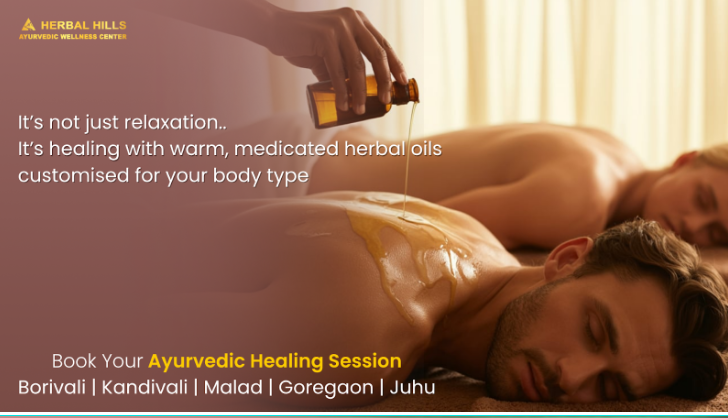
What is Ayurvedic massage? It is a traditional therapy in which warm herbal oils, chosen for your body type and health needs, are worked into the skin with rhythmic strokes, usually after a doctor has assessed you. The best-known form is Abhyanga, a full-body oil massage. Unlike a general relaxation massage, the oil, pressure, length and frequency are planned around your dosha, your season and the concern you came with.
The short version
- What is Ayurvedic massage? A planned therapy, not a one-size session.
- Warm, medicated oils are chosen by a doctor for your body type and concern.
- Abhyanga is the main full-body form; there are several focused types too.
- It may help with relaxation, stiffness, dry skin and sleep, as part of a wider routine.
- It is not suitable for everyone, every day; fever, infections and some conditions need a pause.
Read on for the details, or skip to the FAQs at the end.
What is Ayurvedic massage, in simple words?
Put simply, what is Ayurvedic massage? It is oil applied with intention. In Ayurveda, the skin is seen as a large organ that takes in what is applied to it. Warm oil, slow strokes and attention to sensitive points are used to calm the body, ease dryness and support circulation.
The Sanskrit word for oiling, snehana, also means affection. That idea runs through the therapy: it should feel nurturing, steady and unhurried, never rushed or painful.
Where it comes from
Oil massage is described in classical Ayurvedic texts as part of dinacharya, the daily routine for staying well. Daily self-massage was advised for most adults, with special care for the head, ears and feet.
Over time, therapists developed many forms: full-body oiling, herbal pouch massage, rice bolus massage and oil pooling on specific joints. Today these are offered in Ayurvedic centres, usually after a consultation, and the NCCIH describes massage with oils as one of the common Ayurvedic practices.
How Ayurveda explains the effect
Ayurveda describes three doshas, Vata, Pitta and Kapha. Vata governs movement and dryness, and it is easily disturbed by travel, irregular meals, late nights and cold, dry weather.
Warm, heavy oil is the classic way to settle Vata. That is why stiffness, dry skin, poor sleep and a restless mind are among the most common reasons people book. Pitta and Kapha types get different oils and strokes, which is why a personal plan matters.
What is Ayurvedic massage versus a regular relaxation massage?
| Point | Ayurvedic massage | General relaxation massage |
|---|---|---|
| Planning | After a doctor consultation | Usually no medical input |
| Oil | Herbal oil chosen for your dosha and concern | One standard or scented oil |
| Focus | Balance of doshas, joints, nerves, skin | Muscle relaxation |
| Strokes | Direction and rhythm matter; marma points | Varies by style |
| Course | Often a planned series | Usually one-off |
Why the difference matters
Both kinds can feel good. What is Ayurvedic massage for, then? Purpose. A relaxation massage aims to help you unwind for the day. An Ayurvedic massage aims to support a specific goal, such as easing joint stiffness or improving sleep, as one part of a wider plan that may include diet, routine and medicines prescribed by a doctor.
If you simply want to relax, either may suit you. If you have a health concern, start with the consultation.
The 7 main types of Ayurvedic massage
The common types of Ayurvedic massage include:
- Abhyanga: full-body warm oil massage.
- Shiro Abhyanga: head, neck and shoulder massage.
- Padabhyanga: foot and lower leg massage.
- Potali massage: warm herbal pouches pressed over the body.
- Navarakizhi: rice boluses cooked in milk and herbs.
- Udvartana: dry herbal powder massage, upward strokes.
- Pizhichil: warm oil poured and massaged at the same time.
Abhyanga: the classic full-body form
Abhyanga is what most people mean when they ask what is Ayurvedic massage. Warm oil is applied from head to feet with long strokes on the limbs and circular strokes on joints, usually for 45 to 60 minutes. One or two therapists may work in rhythm.
It is often followed by a short steam session and a warm shower. Learn more about the therapy on our Abhyanga massage page.
Focused types for specific areas
Not every concern needs a full-body session. Shiro Abhyanga focuses on the head and neck and is often chosen for tension and sleep. Padabhyanga works on the feet, which Ayurveda links with eyesight, sleep and grounding.
Basti therapies, such as Kati Basti for the lower back or Janu Basti for the knees, pool warm oil inside a ring of dough on one area. These are planned by a doctor for specific joint or back concerns.
Pouch and bolus massages
In Potali massage, cloth pouches filled with herbs, leaves or powders are warmed and pressed rhythmically on the body. It is often used for stiffness and muscle aches.
Navarakizhi uses pouches of Navara rice cooked in milk and herbal decoction. It is traditionally used to nourish and strengthen the body, so it may be chosen for weakness, fatigue or recovery. The doctor decides which suits you.
Udvartana: the dry massage
Udvartana is the odd one out: it uses herbal powder instead of oil, rubbed in upward strokes against the direction of hair growth. Ayurveda links it with reducing excess Kapha and supporting skin tone.
It is often part of a weight-management plan and is never a replacement for diet and exercise. People with very dry or sensitive skin may not suit it. Read more on our Udvartana page.
Ayurvedic massage oil: why the oil matters
The ayurvedic massage oil is the core of the therapy. Classical oils are made by slowly cooking herbs in a base oil, such as sesame or coconut, often with milk or decoctions, so that the herbs pass into the oil.
Sesame-based oils are warming and suit Vata. Coconut-based oils are cooling and often chosen for Pitta. Lighter oils or powders may suit Kapha. The wrong oil can leave you feeling heavy or irritated, so the choice should be personal.
Common Ayurvedic massage oils
- Mahanarayan oil: traditionally used for joints and muscles.
- Ksheerabala oil: milk-based, used for nerves and Vata.
- Dashamoola oil: made with ten roots, used for aches and stiffness.
- Bala Ashwagandha oil: used for strength and fatigue.
- Brahmi oil: often used on the head for a calm mind.
These are general uses from tradition. At Herbal Hills, the doctor selects from 40+ Herbal Hills oils for your session.
How the oil is chosen for you
The doctor looks at several things before choosing an ayurvedic massage oil:
- Your body type, or prakriti, and current imbalance.
- Your main concern, such as stiffness, poor sleep or dry skin.
- Your age and energy level.
- The season and time of day.
- Skin sensitivity and any allergies.
This is why two people in the same week may get very different oils and strokes.
What is Ayurvedic massage like? A session, step by step
- Consultation: the doctor checks your pulse (Nadi Parikshan), history and concern.
- Plan: the therapy, oil and number of sessions are decided.
- Preparation: you change in a private room; the oil is warmed.
- Massage: usually 45 to 60 minutes, depending on the therapy.
- Steam or rest: where advised.
- Shower and aftercare: simple guidance on food, rest and bathing.
Abhyanga benefits and other possible benefits
Traditional texts and many people who use it describe these abhyanga benefits:
- A calmer mind and deeper rest.
- Softer, less dry skin.
- Easier movement in stiff joints and muscles.
- Better sleep, especially when Vata is high.
- A sense of lightness and energy afterwards.
Research on Ayurvedic massage specifically is limited. The benefits are best seen as support for well-being alongside good habits, not as treatment of disease on their own.
What modern research says about massage
Studies on massage in general suggest it may help with short-term relief of stress, anxiety and some kinds of pain, such as low back and neck pain. The NCCIH notes that massage is generally safe when done by a trained therapist.
Fewer studies look at Ayurvedic oils and techniques in particular. That is a good reason to keep expectations realistic and to use massage as one part of a plan.
Myths about Ayurvedic massage
Myth: it is just an expensive oil rub
The oil, strokes and course are planned for you. That planning is the main difference.
Myth: more pressure means more benefit
Ayurvedic massage is usually firm but comfortable. Pain is not a sign it is working.
Myth: one session fixes long-standing problems
Old stiffness or poor sleep usually need a series plus daily habits.
More myths, cleared up
Myth: it is only for older people
Students, office workers and new parents often have high Vata from screens, late nights and irregular meals. Many of them benefit.
Myth: any oil from the kitchen will do
Plain oils can be fine for daily self-massage, but medicated oils for a concern should be chosen by a doctor.
Who may benefit
- People with stiffness or aches from long sitting.
- Those with poor sleep or a busy, restless mind.
- People with dry skin, especially in winter.
- Older adults wanting to stay mobile.
- Anyone looking for a regular self-care routine.
If you have an ongoing condition, the doctor will check whether it suits you and adjust the oil or therapy.
Who should wait or avoid it
Ayurvedic massage is usually paused or avoided when you have:
- Fever, cold, flu or indigestion on the day.
- Skin infections, open wounds or rashes.
- Recent fractures, surgery or blood clots.
- Uncontrolled high blood pressure or heart problems.
- Pregnancy, unless a doctor plans a gentle, specific therapy.
Always tell the doctor about any medicines you take.
When to see a doctor first
Some symptoms need a medical check before any massage. See a doctor promptly if you have joint pain with swelling, redness or fever, new numbness or weakness, back pain after a fall, unexplained weight loss, or chest pain or breathlessness.
Ayurvedic massage can sit alongside modern care, but it does not replace tests, diagnosis or emergency treatment. When in doubt, check first.
How often should you have it?
Once you know what Ayurvedic massage is, how often to have it depends on the goal. For a concern such as stiffness or poor sleep, doctors often plan a short course, for example several sessions over one to two weeks, then review.
For general well-being, many people book once a week or once a month, and do a short self-massage at home on other days. Your doctor can suggest a rhythm that suits your body and schedule.
Self-massage at home
Ayurveda encourages a short daily self-massage, especially in dry, cool months:
- Warm a few spoons of oil suited to you.
- Start with the scalp, ears and feet.
- Use long strokes on the limbs and circles on joints.
- Rest for 10 to 15 minutes.
- Take a warm shower.
Keep floors dry to avoid slipping.
Before your session
- Eat lightly, at least two hours before.
- Avoid alcohol on the day.
- Tell the doctor about allergies, medicines and recent illness.
- Wear clothes you can change out of easily.
- Keep some time free afterwards; rushing defeats the purpose.
If you feel unwell on the day, it is fine to reschedule.
After your session
- Rest for a while and avoid cold wind or air conditioning blowing directly on you.
- Drink warm water.
- Have a light, warm meal when hungry.
- Leave a gap of an hour or so before a long shower if the doctor advises.
- Avoid heavy exercise for the rest of the day.
Mild tiredness is common. If anything feels unusual, call the centre.
Ayurvedic massage and Panchakarma
Oil massage is also the first stage, called snehana, of many Panchakarma programmes. External oiling and steam prepare the body before the main cleansing procedures, which are always planned and supervised by a doctor.
So when someone asks what is Ayurvedic massage, the answer can be a stand-alone therapy or one step inside a larger plan. At Herbal Hills, the 5 Days Panchakarma Package includes 8 sessions over 5 days.
What is Ayurvedic massage at Herbal Hills?
At Herbal Hills, every massage starts with a free doctor consultation with Nadi Parikshan. The doctor plans the therapy, oil and number of sessions. Sessions take place in private therapy rooms with attached showers.
Oils come from 40+ Herbal Hills oils, backed by more than 20 years of Herbal Hills manufacturing. Any medicines prescribed by the doctor are available at our in-house medicine shop.
Signature therapies
Alongside classic therapies, Herbal Hills offers Signature therapies that combine two or three treatments into one planned session, such as a foot massage with a rice bolus therapy. These are chosen after the consultation, not from a menu alone.
See the full list in the Signature treatment catalogue, or explore our Ayurvedic massage therapies.
Questions to ask before you book
- Will a doctor see me before the massage?
- Which oil will you use, and why?
- How many sessions do you suggest for my concern?
- Are the rooms private, with a shower?
- What should I avoid before and after?
Clear answers show the centre understands what is Ayurvedic massage.
So, what is Ayurvedic massage, really?
It is a personal, doctor-planned therapy that uses warm herbal oils, steady strokes and attention to your body type. It may support relaxation, sleep, skin and comfortable movement as part of a wider routine of food, sleep and activity.
Start with a consultation, choose the right type and oil, and give it a fair number of sessions. That is how most people get the most from it.
Frequently asked questions
Ayurvedic massage is a traditional therapy in which warm herbal oils chosen for your body type and concern are applied with rhythmic strokes. Abhyanga, the full-body form, is the best known. It is usually planned by a doctor after a consultation.
The main types include Abhyanga (full body), Shiro Abhyanga (head), Padabhyanga (feet), Potali (herbal pouch), Navarakizhi (rice bolus), Udvartana (dry powder) and Pizhichil (oil pouring with massage).
There is no single best oil. Sesame-based oils usually suit Vata, coconut-based oils suit Pitta, and lighter oils or powders suit Kapha. A doctor chooses a medicated oil based on your body type, concern and the season.
People commonly report a calmer mind, better sleep, softer skin and easier movement. Research on Ayurvedic massage itself is limited, so it is best used as support for well-being alongside good daily habits.
It is planned after a doctor consultation, uses herbal oils chosen for you, follows specific strokes and points, and is often given as a course. A general relaxation massage usually uses one oil and focuses on muscles.
It is usually avoided during fever, colds, indigestion, skin infections or open wounds, and after recent fractures or surgery. People with heart problems, uncontrolled blood pressure or pregnancy should check with a doctor first.
This article is for general education and does not replace medical advice. Ayurvedic therapies and medicines at Herbal Hills are planned by qualified doctors after a personal consultation.
Try it with a doctor-planned session
The right oil and therapy start with a short consultation. Herbal Hills has five centres in Western Mumbai, in Juhu (Andheri West), Goregaon West, Kandivali West and two in Borivali West, open Tuesday to Sunday, 10 am to 7 pm. Find your nearest centre.
Right oil. Right hands. Real rest.
One thought on “More Than a Massage”