

Blog
Your Feet Carry the Whole Day

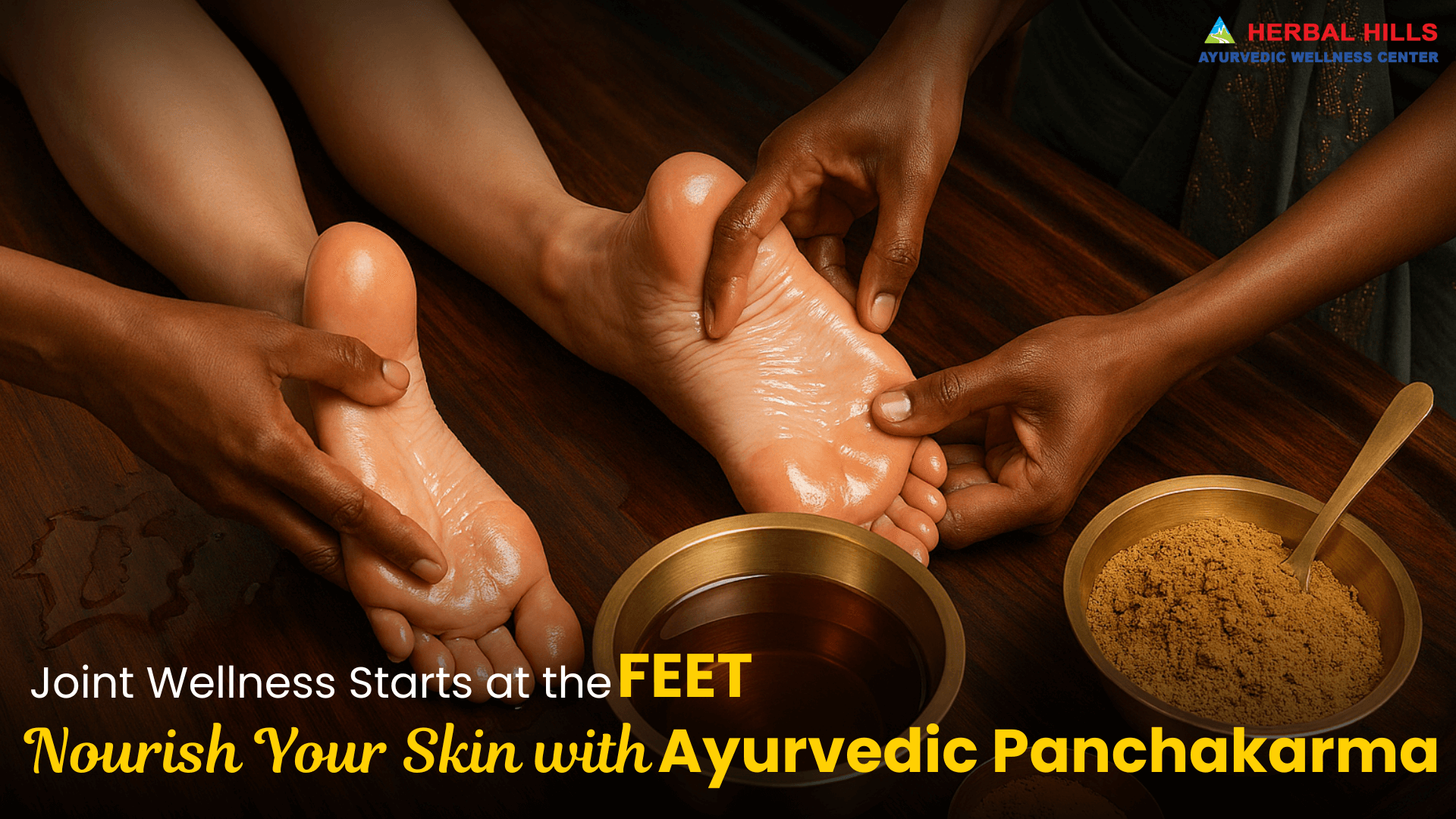
Benefits of Foot Massage: 9 Ways Padabhyanga Supports Sleep, Circulation and Tired Legs
The benefits of foot massage go well beyond relaxed feet. In Ayurveda, Padabhyanga, a warm oil foot massage, is used to calm the mind, support deeper sleep, ease tired legs and stiff ankles, and keep the skin of the feet soft. A few minutes at home before bed helps most people. For stiff knees, heavy legs or poor circulation, a doctor may suggest a fuller therapy such as the Padabhyanga Signature treatment.
Why your feet deserve more attention
Your feet carry your full body weight for thousands of steps every day. In Mumbai, that often means long commutes, hours of standing at work, tight formal shoes, hard floors and, for many, a long stretch of sitting at a desk followed by a sudden rush on foot. By evening, many people notice aching soles, heavy calves, swollen ankles or a restless feeling in the legs.
Yet the feet are usually the last part of the body anyone looks after. Ayurveda takes the opposite view. Classical texts describe daily foot care as part of a healthy routine, alongside oiling the body and the scalp. The idea is simple: when the feet are cared for, the whole body feels steadier.
What is Padabhyanga?
Padabhyanga comes from two Sanskrit words: pada, the foot, and abhyanga, oil massage. It is a gentle, rhythmic massage of the feet, ankles and lower legs with warm medicated oil, usually lasting 15 to 30 minutes.
Unlike a quick foot rub at a salon, Padabhyanga follows a set sequence: warming the oil, long strokes along the sole, circular movements around the ankle, gentle pulling of each toe, and firm pressure on specific points of the sole called marma points. The oil is chosen for the person. Sesame oil is a common base, while doctors may suggest herbal oils such as Ksheerabala or Mahanarayan for particular needs.
Benefits of foot massage: the Ayurvedic view
Ayurveda links the feet closely with Vata, the dosha of movement and dryness. Vata rises with stress, travel, late nights, cold weather, irregular meals and too much screen time. When Vata is high, people often notice dry, cracked heels, restless legs, light or broken sleep, anxiety and stiffness.
Warm oil is the classic way to settle Vata. Massaging the feet with oil is therefore described as grounding: it is said to steady the mind, support sleep and nourish the tissues of the feet and legs. Ayurvedic texts also link regular foot massage with healthy eyesight, through the connection they describe between the soles and the eyes. Modern research has not tested all of these ideas, but the calming effect of foot massage is something most people feel within minutes.
Benefit 1: Deeper, calmer sleep
The most common reason people start a foot massage routine is sleep. A slow oil massage of the feet before bed helps the body shift from a busy day into rest. Many people find they fall asleep more easily and wake less often.
Ayurveda recommends Padabhyanga especially for light sleepers, people who wake between 2 and 4 am, and those whose minds race at bedtime. Pair it with a light, early dinner and a screen-free last hour for the best effect. Our blog on how to improve sleep quality covers the full routine.
Benefit 2: A calmer mind
The soles of the feet are rich in nerve endings, which is one reason touch here feels so soothing. A steady, unhurried foot massage slows breathing and helps the body relax. Many people describe feeling lighter in the head afterwards.
For people under constant pressure, a few minutes of foot massage each evening is one of the simplest daily habits for stress. It needs no equipment, costs little and can be done at home.
Benefit 3: Lighter legs and better circulation
Long hours of standing or sitting slow the return of blood from the legs, leaving the calves heavy and the ankles slightly swollen by evening. Massaging from the toes upwards towards the knees, with the feet slightly raised, helps many people feel lighter.
This is one of the most noticeable foot massage benefits for teachers, shop staff, nurses, security staff and anyone who stands for long hours. If one leg swells suddenly, or swelling comes with pain, redness or breathlessness, see a doctor promptly instead of massaging.
Benefit 4: Softer skin and fewer cracked heels
Dry, cracked heels are a classic sign of Vata in Ayurveda, and they are common in Mumbai’s air-conditioned offices and in dry winter months. Regular oil massage keeps the skin of the soles supple and helps prevent new cracks.
Massage after a warm foot soak, when the skin is soft, then wear cotton socks for a while so the oil can absorb. Deep, painful or bleeding cracks, especially in people with diabetes, should be checked by a doctor.
Benefit 5: Easier movement in the ankles and feet
Stiff ankles and tight soles make walking uncomfortable and can change how you stand. Gentle circles at the ankle, toe stretches and long strokes along the arch help the small joints and muscles of the foot move freely. Many people who walk a lot, or who wear heels or tight shoes, find this especially helpful.
Benefit 6: Relief for tired, aching soles
Aching soles after a long day are common. Firm thumb pressure along the arch and heel, with warm oil, helps relax tight muscles. Persistent heel pain, especially first thing in the morning, may be plantar fasciitis and is worth checking with a doctor, who can suggest stretches, footwear changes and suitable therapies.
Benefit 7: Support for stiff knees
A full Padabhyanga therapy often extends above the ankle to the calves and knees. For people with early knee stiffness, warm oil and gentle movement around the joint can bring comfort. At Herbal Hills, the Padabhyanga Signature treatment adds Janu Basti, where warm medicated oil is held over the knee, for exactly this reason. Read about knee pain causes to understand what may be behind the stiffness.
Benefit 8: Relaxed, rested eyes
Ayurvedic texts say that Padabhyanga supports the eyes, and the Herbal Hills Dristi Signature therapy for tired eyes includes it for that reason. While this link has not been studied well in modern research, many people with long screen hours find that a foot massage before bed helps them unwind and rest their eyes.
Benefit 9: A daily pause for yourself
Perhaps the most underrated benefit is simple: a foot massage gives you ten quiet minutes. In a busy day, that pause can be the moment the body and mind finally slow down. Ayurveda counts such small daily rituals as part of good health, not a luxury.
Benefits of foot massage at a glance
| Benefit | Who notices it most |
|---|---|
| Deeper sleep | Light sleepers, people who wake at night |
| Calmer mind | Busy professionals, students, carers |
| Lighter legs | People who stand or sit for long hours |
| Softer heels | Dry skin, cracked heels, AC offices |
| Easier ankle movement | Walkers, people in tight shoes or heels |
| Comfort for stiff knees | Adults with early knee stiffness |
How to do Padabhyanga at home, step by step
- Warm the oil: place a small bowl of sesame oil, or the oil your doctor suggests, in warm water until it feels comfortably warm.
- Sit comfortably: on a chair or bed, with a towel under your feet.
- Start with the sole: spread oil and use long strokes from heel to toes.
- Work the arch and heel: press gently with your thumbs in small circles.
- Each toe: rub, rotate and gently pull each toe.
- The ankle: make slow circles around the ankle bones.
- The top of the foot and calf: stroke upwards towards the knee.
- Rest: wipe off excess oil, wear cotton socks and rest or sleep.
Five to ten minutes per foot is enough. Take care on smooth floors afterwards, as oily feet can slip.
Which oil is best for a foot massage?
Sesame oil is the traditional base because it is warming and suits most people, especially those with dry skin and Vata-type complaints. Coconut oil is cooler and may suit people who feel hot, have burning feet or live through Mumbai’s humid summers. Ghee is traditionally used for burning soles. Medicated oils such as Ksheerabala or Mahanarayan are chosen by a doctor for specific needs, such as stiffness or weakness.
Patch-test any new oil first, and avoid oils on broken skin or infections.
When is the best time for a foot massage?
Ayurveda favours the evening, about 30 to 60 minutes before sleep. This is when the calming effect helps most. A morning foot massage before a bath also works, especially in cooler months or before a long day of standing. Avoid a heavy massage straight after a large meal.
Who should be careful with foot massage?
- People with diabetes, especially with numbness, wounds or poor circulation in the feet: check with your doctor first and inspect your feet daily.
- Anyone with a fresh injury, fracture, sprain, open wound, infection, fungal infection or skin rash on the feet.
- People with varicose veins: avoid deep pressure on the veins.
- Anyone with sudden swelling, pain, warmth or redness in one leg: see a doctor promptly.
- Pregnant women: gentle massage is usually fine, but ask your doctor first.
Padabhyanga at home versus at a centre
A home foot massage is a daily habit for relaxation and sleep. A therapy at a centre is planned by a doctor for a particular concern, such as stiff knees, heavy legs or poor circulation, and uses medicated oils, more techniques and trained therapists. Many people do both: a short massage at home most nights, and a therapy session when their legs or joints need more support. Read more on our Padabhyanga and Ayurvedic foot massage pages.
Inside the Padabhyanga Signature therapy
The Herbal Hills Padabhyanga Signature therapy is a 2-hour session for tired feet and legs, stiff knees and better circulation. It combines four classical therapies:
- Janu Basti: warm medicated oil held over the knee in a ring of herbal dough.
- Ardhanga Abhyanga: warm oil massage of the lower half of the body.
- Padabhyanga: detailed foot and ankle massage.
- Ekanga Podikizhi: warm herbal powder pouches applied to the legs.
About 90 minutes of therapy is followed by 15 minutes of steam and shower and 15 minutes of rest. The session is priced at ₹6,000, and a free doctor consultation comes first. See the full Signature Program.
Who benefits most from a foot massage therapy?
- People who stand or walk for long hours at work.
- Office workers with stiff ankles and heavy legs from sitting.
- Adults with early knee stiffness who want gentle support.
- Light sleepers and people under constant stress.
- Older adults who want to stay comfortable and steady on their feet, with the doctor’s agreement.
Foot massage and footwear: a simple pairing
No massage can fully undo the strain of poor footwear. Choose shoes with a cushioned sole and enough room for the toes, change out of formal shoes or heels when you can, and avoid walking barefoot on hard floors for long periods. Combined with a regular foot massage, these small changes make a big difference to how your feet feel by evening.
Common myths about foot massage
“Foot massage is only for relaxation.”
It relaxes, but in Ayurveda it is also used for sleep, stiffness and dry skin.
“Any oil will do.”
The oil matters. Warming or cooling oils suit different people and seasons.
“Harder pressure works better.”
Firm but comfortable is enough. Pain is a sign to ease off.
“It can replace treatment.”
Foot massage supports care; it does not replace medical treatment for diabetes, injuries or joint disease.
Benefits of foot massage: the short version
The benefits of foot massage, in Ayurveda, include deeper sleep, a calmer mind, lighter legs, softer heels, easier ankle movement and comfort for stiff knees. Ten minutes of warm oil massage before bed is a simple daily habit. When legs or joints need more support, a doctor-planned Padabhyanga therapy goes further.
Benefits of foot massage for older adults
For older adults, the benefits of foot massage include warmer feet, softer skin, easier ankle movement and a calmer bedtime. Use gentle pressure, sit while massaging, and wipe the soles well afterwards to avoid slipping. Anyone with diabetes, numbness or poor circulation should check the feet daily and ask a doctor before starting.
Benefits of foot massage for working professionals
For people who commute, stand or sit for long hours, the benefits of foot massage show up quickly: lighter legs in the evening, fewer aching soles and an easier switch from work to rest. Keep a small bottle of oil by the bed and make it a five-minute habit on weekdays, with a longer massage on weekends.
How often should you massage your feet?
Daily is ideal, even for five minutes, because the benefits of foot massage build up with regular practice. If daily is not possible, aim for three or four evenings a week. A doctor-planned therapy such as Padabhyanga at a centre is usually taken as a single session or a short course, depending on your concern.
Frequently asked questions
The main benefits of foot massage include deeper sleep, a calmer mind, lighter legs after long hours of standing or sitting, softer skin and fewer cracked heels, easier ankle movement and comfort for stiff knees.
Padabhyanga is an Ayurvedic foot massage with warm medicated oil, covering the soles, toes, ankles and lower legs. It follows a set sequence and is traditionally used to calm Vata, support sleep and nourish the feet.
Yes. Ayurveda recommends a warm oil foot massage about 30 to 60 minutes before bed. Many people find it helps them fall asleep more easily and sleep more deeply.
Sesame oil is the traditional choice for most people. Coconut oil or ghee may suit people who feel hot or have burning feet. Medicated oils such as Ksheerabala or Mahanarayan are chosen by a doctor for specific needs.
People with foot wounds, infections, fresh injuries, numbness from diabetes, or sudden swelling and pain in one leg should check with a doctor first. Avoid deep pressure over varicose veins.
It is a 2-hour Herbal Hills session combining Janu Basti, Ardhanga Abhyanga, Padabhyanga and Ekanga Podikizhi, followed by steam, a shower and rest. It is priced at ₹6,000, after a free doctor consultation.
This article is for general education and does not replace medical advice. Ayurvedic therapies and medicines at Herbal Hills are planned by qualified doctors after a personal consultation.
Foot and leg care near you
When your feet and legs need more than a home massage, help is close by. Herbal Hills has five centres in Western Mumbai, in Juhu (Andheri West), Goregaon West, Kandivali West and two in Borivali West, open Tuesday to Sunday, 10 am to 7 pm. Find your nearest centre.
Give your feet the care they give you.