

Blog
Give Your Mind a Pause

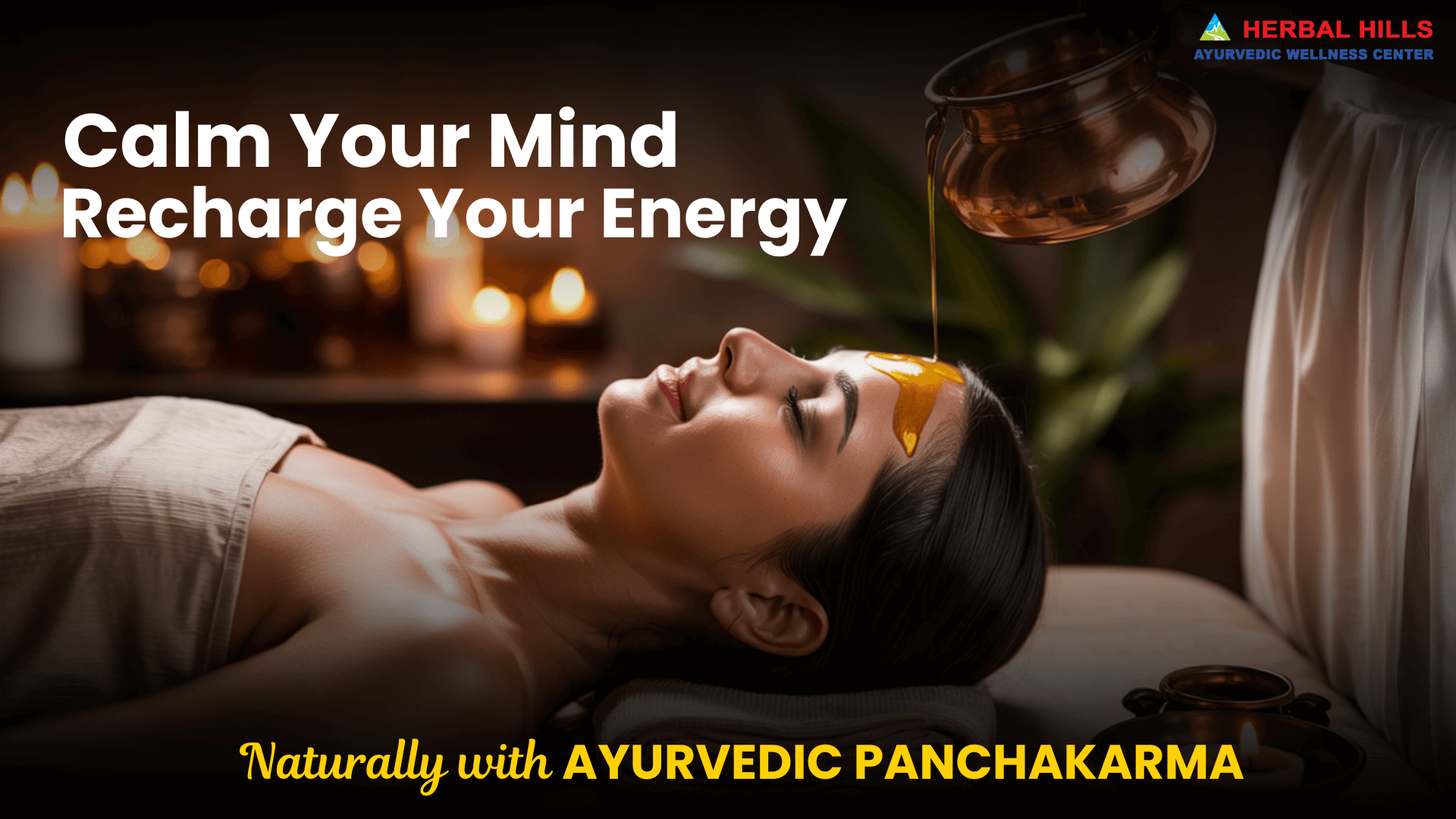
Mind Relaxation Made Simple: How to Relax Your Mind, Signs of Mental Fatigue, and Sukha, the Ayurvedic Signature Therapy for a Calm Mind
Mind relaxation means giving your mind regular, real breaks so it can slow down, settle and recover, and the simplest ways to do it are slow breathing, short screen-free pauses, time outdoors, gentle movement, a steady sleep routine and calming self-care such as a warm oil head or foot massage. Ayurveda adds a personal view of why your mind feels tired, and relaxing therapies such as Sukha, planned by a doctor. If low mood or worry lasts for weeks, professional help comes first.
The short version
- Mind relaxation is a skill you can practise every day.
- Mental fatigue shows up as poor focus, irritability and feeling drained.
- Slow breathing, screen breaks, walks and good sleep help most people.
- Ayurveda links a restless, tired mind mainly with Vata and Pitta imbalance.
- Sukha is a Herbal Hills Signature therapy for mind relaxation, planned by a doctor.
- Persistent low mood or worry needs a doctor or mental-health professional.
What is mind relaxation?
Mind relaxation is a state where your thoughts slow down, your body softens and your breathing becomes calm and even. It is not the same as sleeping or zoning out in front of a screen.
Real relaxation lets the nervous system shift out of alert mode. The NCCIH guide to relaxation techniques describes methods such as breathing exercises, progressive muscle relaxation and guided imagery that can help produce this response.
Why the mind gets tired
Your brain works hard all day: deciding, remembering, switching between tasks and filtering noise and notifications. Long working hours, constant screen use, poor sleep and little downtime leave very little time to recover.
Over time this can lead to mental fatigue, a feeling of being mentally drained even when you have not done much physical work. Mind relaxation is the daily practice that gives the brain its recovery time back.
Signs of mental fatigue
- Difficulty focusing or reading the same line again and again
- Forgetting small things
- Feeling irritable or short-tempered
- Losing interest in things you usually enjoy
- Feeling tired after sleep
- Headaches or tight shoulders and neck
- Reaching for the phone, snacks or caffeine to keep going
If several of these sound familiar, your mind may need more rest than it is getting.
Mental fatigue or physical tiredness?
| Mental fatigue | Physical tiredness |
|---|---|
| Poor focus, slow thinking | Heavy limbs, sore muscles |
| Irritability and low patience | Feeling sleepy after effort |
| Often follows long screen or desk work | Often follows exercise or physical work |
| Rest alone may not fix it | Usually improves with rest and sleep |
Many people have both. Both deserve attention.
How Ayurveda sees a tired mind
Ayurveda describes three qualities of the mind: Sattva (clarity and calm), Rajas (activity and restlessness) and Tamas (heaviness and dullness). A busy modern life tends to raise Rajas, and exhaustion can bring Tamas.
Among the doshas, a racing, scattered mind is linked with high Vata, and an intense, irritable, overheated mind with high Pitta. Ayurvedic mind relaxation aims to calm Vata and Pitta and support Sattva.
A calm daily routine, the Ayurvedic way
Ayurveda calls the daily routine Dinacharya. A steady rhythm is one of its main tools for a settled mind, because Vata, the dosha of movement, is calmed by regularity.
- Wake at about the same time each day.
- Begin with warm water and a few minutes of quiet.
- Eat meals at fixed times.
- Keep evenings slower and softer than mornings.
Small, repeated habits give the mind a sense of safety and order.
How to relax your mind: start small
You do not need an hour of meditation to feel calmer. Small, regular pauses work better than one long session once a month.
The ten simple ways below are practical and safe for most people. Try two or three for a week, then add more. Notice which ones help you most and build them into your day. Mind relaxation works best as a habit, not an emergency measure.
1. Breathe slowly
Slow breathing is the quickest route to mind relaxation. Breathe in through the nose for a count of four, and out gently for a count of six. Repeat for two to five minutes.
The NHS breathing exercise gives a simple step-by-step guide. In yoga, Anulom Vilom, or alternate nostril breathing, is a traditional practice for calm; learn it from a trained teacher.
2. Relax the body, part by part
Lie down or sit comfortably. Starting at your feet, tighten each muscle group for a few seconds, then let it go. Move slowly up to your face.
This is called progressive muscle relaxation. As the body lets go of tension, the mind often follows. It is a useful practice at bedtime or after a long day at a desk.
3. Take a short walk outdoors
A 10 to 20 minute walk, especially among trees or near water, is one of the simplest ways to relax your mind. Leave the phone in your pocket and notice what you see and hear.
Morning light also helps set your body clock, which supports better sleep at night. Even a walk around the building at lunch can reset a tired mind.
4. Give your eyes and mind screen breaks
Every hour, look away from screens for a few minutes. Stand up, stretch and look at something far away.
Turn off non-essential notifications and check messages at set times rather than all day. Constant alerts keep the mind on high alert. Fewer interruptions mean less mental fatigue by the evening. Try a phone-free first hour after waking, too.
5. Do one thing at a time
Switching between tasks feels productive, but it tires the brain. Each switch costs attention.
Try working in focused blocks of 25 to 45 minutes on a single task, then take a short break. Write down other tasks as they come to mind instead of jumping to them. Single-tasking is a quiet but powerful form of mind relaxation during the working day.
6. Try a warm oil head or foot massage
Ayurveda has long used oil massage to calm Vata. At home, warm a little coconut or sesame oil and gently massage the scalp, or the soles of your feet, for five to ten minutes before bed.
Many people find this soothing and sleep better. Do a patch test first if you have sensitive skin, and avoid oil massage on broken skin or during a fever.
7. Move gently with yoga
Gentle yoga combines movement, stretching and breath. Postures such as Balasana (child’s pose), Viparita Karani (legs up the wall) and Shavasana (lying rest) are simple and calming.
Fifteen minutes a day is enough to start. If you have back, neck or blood pressure problems, learn from a qualified teacher and ask your doctor what is safe.
8. Protect your sleep
Sleep is when the brain clears and restores itself. Without it, no amount of mind relaxation during the day can fully make up the gap.
- Go to bed and wake at similar times.
- Keep the bedroom dark, cool and quiet.
- Stop screens 30 to 60 minutes before bed.
- Keep dinner light and early.
If poor sleep lasts more than a few weeks, see a doctor. You can also read about Ayurvedic support for good sleep.
9. Eat for a calm mind
Ayurveda links food with the state of the mind. Fresh, warm, simple meals at regular times support a steady mind.
- Avoid skipping meals, which can make you irritable.
- Limit tea and coffee, especially after mid-afternoon.
- Reduce very spicy, fried and processed food if you feel heated or restless.
- A cup of warm milk at night is a traditional choice for many people.
10. Write it down or talk it out
A crowded mind often feels lighter once thoughts are on paper. Spend five minutes in the evening writing what is on your mind and one small plan for tomorrow.
Talking also helps. Share how you feel with someone you trust. Connection with other people is one of the strongest supports for mental wellbeing.
Mind relaxation at work: five-minute resets
- Two minutes of slow breathing before a meeting
- A short walk to refill your water bottle
- Shoulder rolls and neck stretches at your desk
- Closing your eyes and listening to your breath for one minute
- Eating lunch away from your screen
These small resets keep mental fatigue from building up through the day. Students and homemakers can use the same pauses between study sessions or chores.
Mind relaxation before bed
An evening routine tells your body it is time to slow down. Try this:
- Dim the lights an hour before bed.
- Put the phone away or on silent.
- Take a warm shower or bath.
- Do a gentle foot massage with warm oil.
- Read something light or listen to calm music.
- Practise slow breathing in bed.
Keep the routine simple so you can follow it every night.
What to avoid when you want to relax your mind
- Late-night scrolling: bright screens and endless feeds keep the mind alert.
- Alcohol to unwind: it may feel relaxing but disturbs sleep.
- Too much caffeine: it can make restlessness worse.
- Packing every free minute: the mind needs empty time too.
Replacing one of these habits with a calmer one can make a real difference.
How long before you feel calmer?
Slow breathing can bring a sense of calm within a few minutes. Deeper changes, such as better focus, steadier mood and easier sleep, usually build over two to four weeks of regular practice.
Be patient with yourself. Some days will feel easier than others. Keep a short note of how you sleep and feel each day, so you can see the gradual change that is easy to miss from one day to the next.
What is Sukha Signature therapy?
Sukha is a Herbal Hills Signature therapy for mind relaxation. It was designed by experienced MD Panchakarma doctors and focuses on the head, spine and nervous system, the areas most affected by mental strain.
It may help you feel calmer, sleep better and think more clearly, as part of a wider plan that includes routine and self-care. Sukha is part of our Signature programme.
The four therapies inside Sukha
| Therapy | What it involves |
|---|---|
| Shirodhara | A slow, steady stream of warm medicated oil over the forehead |
| Sarvanga Abhyanga | A rhythmic full body warm oil massage |
| Shiro Abhyanga | A relaxing head massage with herbal oils |
| Sthanik Abhyanga | A focused massage on the neck, shoulders and back |
The doctor decides which therapies suit you.
Why Shirodhara is at the heart of Sukha
Shirodhara is one of the best-known Ayurvedic therapies. Warm oil flows gently and continuously over the forehead while you lie still.
Many people describe it as deeply calming. In Sukha, it is combined with head, body and focused massage so the whole body can let go of tension. The doctor chooses the oil based on your dosha balance and health.
Who may be suited to Sukha, and who should wait
Sukha may suit busy professionals, students and homemakers who feel mentally drained, tense or restless, or who sleep poorly because of a busy mind.
It may not be suitable during a fever or acute illness, with some scalp or skin conditions, in early pregnancy, or soon after head or neck injury. The doctor checks your health and medicines before advising any therapy.
What a Sukha visit is like
Your visit starts with a doctor consultation and Nadi Parikshan, the Ayurvedic pulse assessment, so the therapy can be personalised.
Therapies take place in a private room with an attached shower, using Herbal Hills oils, with trained therapists. Afterwards, the doctor may suggest simple home care, such as a sleep routine, food changes and breathing practice, so the benefits of mind relaxation continue at home.
Myths about mind relaxation
Myth: relaxing means doing nothing
Scrolling or watching TV is not always restful. Real mind relaxation often involves gentle, focused activity like breathing or walking.
Myth: you need a long holiday to recover
Small daily pauses often help more than one long break a year.
Myth: a therapy alone will fix a tired mind
Therapies may help you feel calmer, but daily habits and sleep matter most.
When to seek professional help
Self-care is useful, but it is not enough for everyone. See a doctor or mental-health professional if:
- Low mood, worry or irritability lasts more than two weeks
- You have panic attacks or cannot sleep for many nights
- Daily work or relationships are badly affected
- You rely on alcohol or other substances to cope
If you have thoughts of harming yourself, seek emergency help or call a crisis helpline straight away.
How Herbal Hills can help
At Herbal Hills, care starts with a free doctor consultation with Nadi Parikshan. The doctor asks about your sleep, work, food and routine, and checks your dosha balance.
You get simple advice for daily mind relaxation and, where suitable, Sukha or other relaxing therapies. For people whose main concern is stress, the doctor may also discuss our Ayurvedic care for stress. Any medicines are given only as prescribed.
Your 7-day mind relaxation plan
- Day 1: two minutes of slow breathing, morning and night.
- Day 2: add a 15-minute walk outdoors.
- Day 3: turn off non-essential notifications.
- Day 4: stop screens an hour before bed.
- Day 5: try a warm oil foot massage at night.
- Day 6: 15 minutes of gentle yoga.
- Day 7: write down what helped most and keep it.
Frequently asked questions
Mind relaxation is a calm state where your thoughts slow down, your body softens and your breathing becomes even. It can be built with simple daily practices such as slow breathing, walks, screen breaks and good sleep.
Breathe in slowly through the nose for four counts and out for six, for two to five minutes. Relax your shoulders, look away from screens and, if you can, step outside for a short walk.
Common signs include poor focus, forgetfulness, irritability, feeling tired after sleep, headaches, tight shoulders and losing interest in things you usually enjoy.
Sukha is a Herbal Hills Signature therapy for mind relaxation. It may include Shirodhara, Sarvanga Abhyanga, Shiro Abhyanga and Sthanik Abhyanga, chosen by a doctor after consultation and Nadi Parikshan.
Ayurveda links a restless, tired mind with Vata and Pitta imbalance. It uses routine, food, oil massage, yoga and doctor-planned therapies to support a calmer mind, alongside professional care when needed.
See a doctor if low mood, worry or poor sleep lasts more than two weeks, or if daily life is badly affected. Seek emergency help straight away if you have thoughts of harming yourself.
This article is for general education and does not replace medical advice. Ayurvedic therapies and medicines at Herbal Hills are planned by qualified doctors after a personal consultation.
Find a Herbal Hills centre near you
A doctor can help you understand why your mind feels tired and suggest the right next step. Herbal Hills has five centres in Western Mumbai, in Juhu (Andheri West), Goregaon West, Kandivali West and two in Borivali West, open Tuesday to Sunday, 10 am to 7 pm. Find your nearest centre.
Slow down. Feel clear again.