
When Stress Feels Constant, Make Space for Care

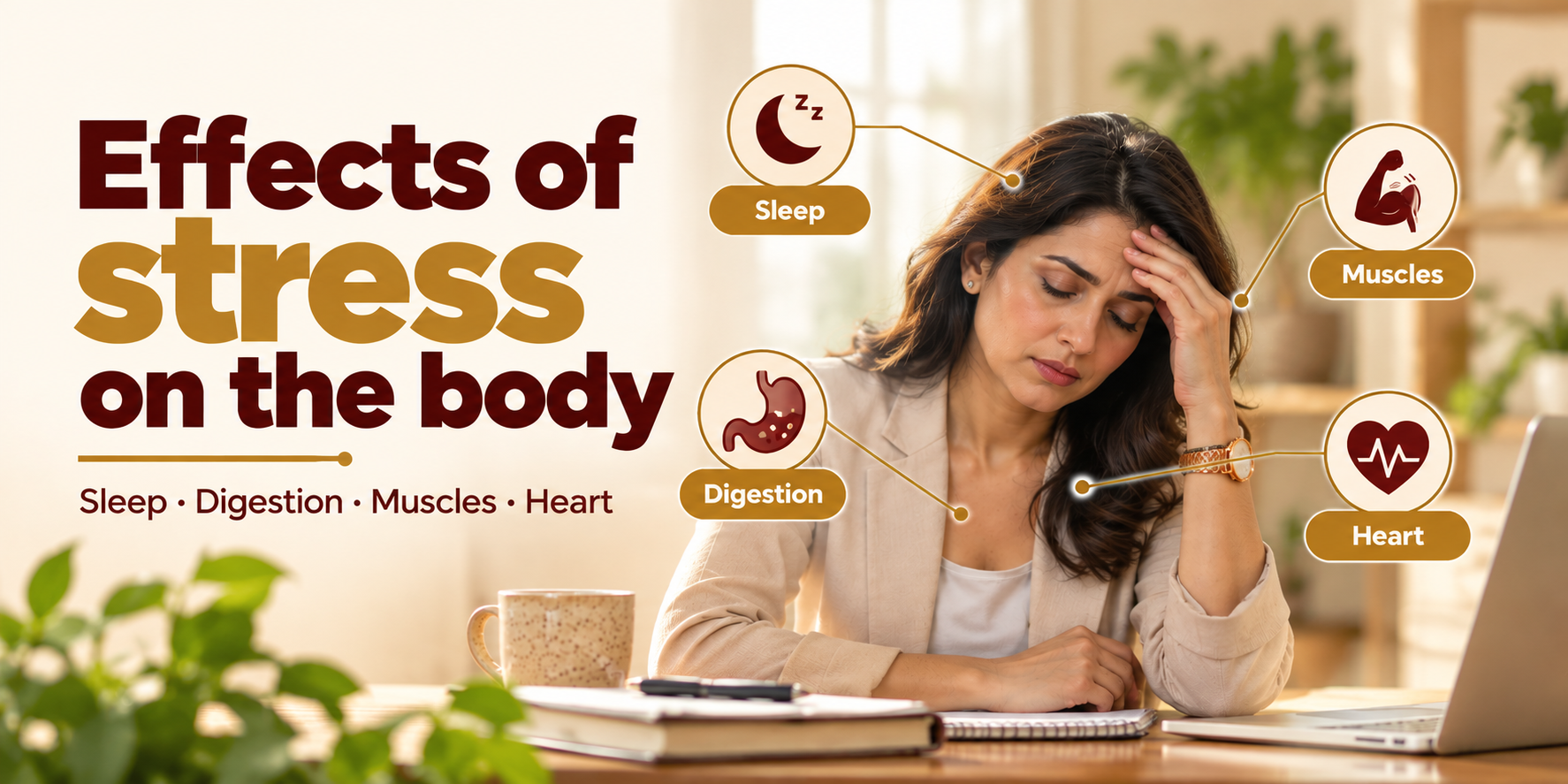
Effects of stress on the body, from sleep and blood pressure to cholesterol, and why one session is never enough: how a one-month Mann Shuddhi program supports lasting calm.
Quick answer: what are the effects of stress on the body? Constant stress keeps stress hormones high, which can disturb sleep, digestion and muscles, and is linked to high blood pressure and cholesterol. One session can refresh you; lasting calm needs a plan. Mann Shuddhi is a one-month, doctor-guided program for that.
The meeting ends. The messages keep arriving. The commute is over, but tomorrow’s tasks are already on your mind. You are not alone: Gallup, the global polling firm, found that 40% of employees worldwide had a lot of stress the previous day, in its State of the Global Workplace report. When pressure keeps returning, paying attention to your wellbeing is a reasonable next step.
What are the effects of stress on the body?
This is how stress affects the body: adrenaline and cortisol stay switched on, wearing down sleep, digestion, muscles, immunity and the heart. Mayo Clinic warns that unmanaged stress can lead to high blood pressure, heart disease, stroke, obesity and diabetes. Common chronic stress symptoms are headaches, tight shoulders, poor sleep or a foggy head.
Can stress cause high cholesterol? There are links. Harvard Health reports links between chronic stress and high blood pressure, and in an American Psychological Association study, big stress reactors were three times more likely to have high LDL cholesterol. These are links, not proof of cause, and experiences differ.
When should you seek support?
If distress is ongoing, worsening or interfering with work, relationships or daily life, seek professional assessment. Persistent symptoms should not simply be labelled “just stress”, and a wellbeing package should never delay appropriate mental-health care. Asking for help early is a strength, not a weakness.
Why does Ayurveda treat the head and nose?
Ayurveda sees stress as a Vata imbalance: a restless mind and poor sleep. Its texts call the nose the doorway to the head, so Nasya, Shirodhara and head massage are used to calm the mind. A 2026 review linked them to relaxation responses but said better trials are needed.

What is Mann Shuddhi?
Mann Shuddhi is Herbal Hills’ one-month Ayurvedic program, designed to support relaxation, sleep and stress management. It has a doctor consultation, eight sessions (Shiro Abhyanga with Shirodhara, then Nasya with body therapies) and a diet and lifestyle plan. Choose the Mann Shuddhi Health Package with medicines or the Mann Shuddhi Therapy Package. Eight sessions do not guarantee an outcome, and your doctor explains the therapies, precautions and limits before you decide.
Why is one session never enough?
One session can feel wonderfully fresh. But the effects of stress on the body build up over months, and they rarely clear in an afternoon. Lasting stress management comes from a plan: therapies spread over weeks, sleep and routine, with a doctor reviewing your progress. That is why Mann Shuddhi runs for a month, about two sessions a week.
How long you need depends on you, and your doctor advises whether to continue after the first month. Routine, movement, unwinding time and trusted company help too, alongside professional care, not instead of it.
Why start with a consultation?
A free consultation lets you discuss your concerns, existing conditions, medicines and expectations, and how the effects of stress on the body show up for you. The doctor checks whether Mann Shuddhi suits you, should be adapted, or whether another assessment is needed. Do not stop prescribed medicines or existing mental-health treatment to begin this program. You can also read about our wider Ayurvedic stress care.
What should you ask before booking?
Ask for clear answers about:
- The therapies in your plan
- Why this number of sessions is recommended
- Session length and frequency
- Total price, inclusions and extra charges
- Reviews, precautions and validity
Frequently asked questions
Common signs include headaches, muscle tension, tiredness, an upset stomach, poor sleep, irritability and trouble concentrating, according to Mayo Clinic. Having them does not mean you have a disease, but if they last for weeks or affect your daily life, please see a doctor.
Regular exercise, good sleep, time to unwind, connection with trusted people, counselling and doctor-led care can all help. Ayurvedic programs such as Mann Shuddhi are designed to support relaxation, sleep and stress management, and do not replace psychological or psychiatric treatment when needed.
Tell your doctor at the free consultation, because the doctor reviews your health profile before you begin. Mann Shuddhi is designed to support calm, sleep and stress management alongside prescribed care. Keep taking your medicines, and never stop them without your own doctor’s advice.
Take the next step in Western Mumbai, from Juhu to Borivali
Herbal Hills Ayurvedic Wellness Center has five centres across Mumbai’s western suburbs, from Juhu to Borivali, open Tuesday to Sunday, 10 AM to 7 PM. Walk in or book online. See all centres.
| Centre | Area |
|---|---|
| Herbal Hills Juhu | Juhu Lane, Andheri West |
| Herbal Hills Goregaon | Goregaon West |
| Herbal Hills Kandivali | Kandivali West |
| Herbal Hills Borivali (LT Road) | Borivali West |
| Herbal Hills Borivali (Yogi Nagar) | Borivali West |
General information only; suitability and outcomes vary; not a substitute for mental-health care. If you are in crisis or feel unsafe, contact a doctor or emergency services immediately.
When stress feels constant, make space for care.
The effects of stress on the body add up, so begin with a free consultation at your nearest Herbal Hills centre.
2 thoughts on “When Stress Feels Constant, Make Space for Care”