
Ayurvedic Treatment for Chronic Disease: What to Realistically Expect

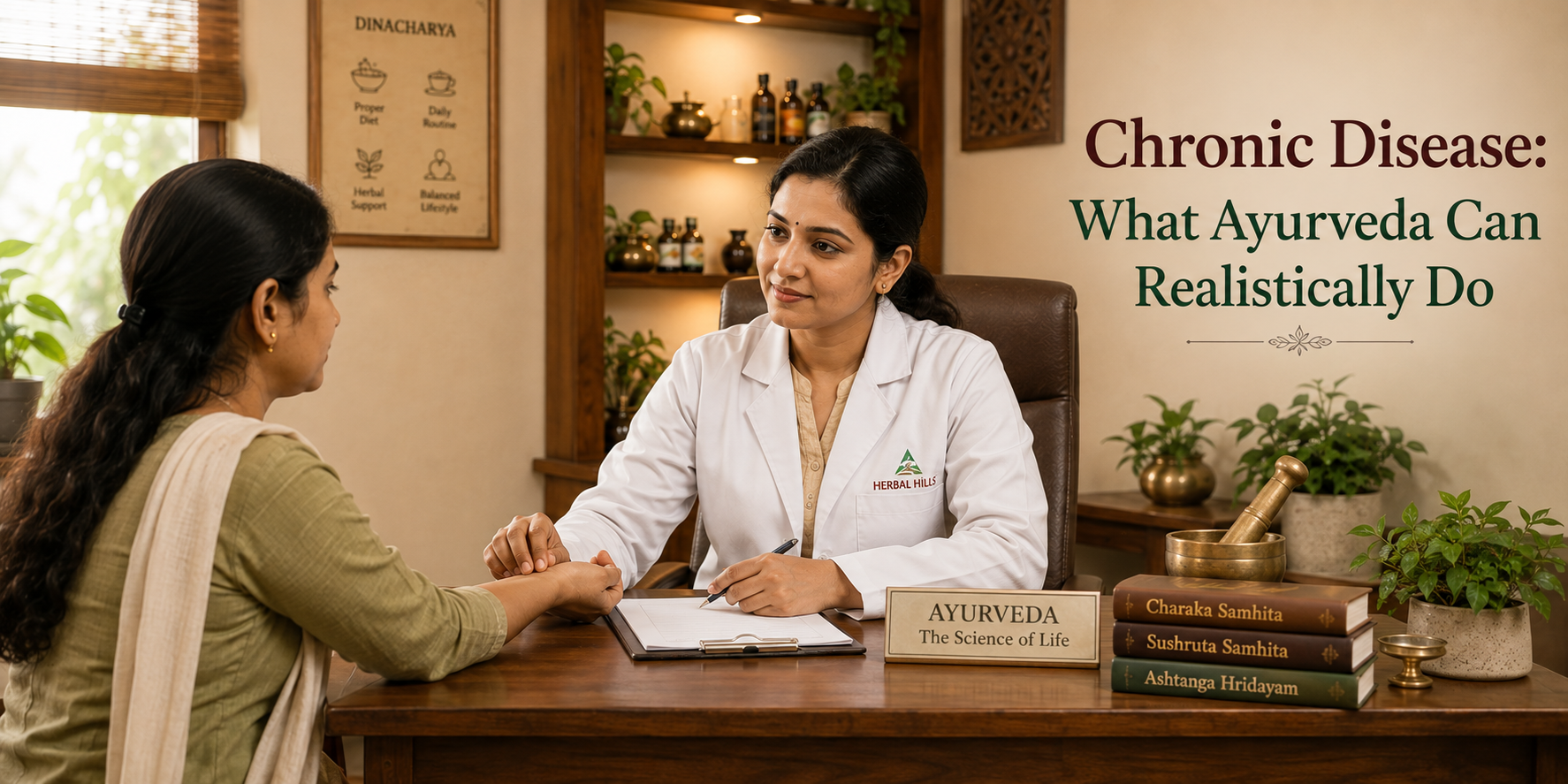
Can Ayurveda Help With Chronic Diseases or Only Manage Symptoms?
An honest answer from an Ayurvedic doctor’s perspective
The honest answer: How well Ayurvedic treatment for chronic disease works depends on the individual, the condition, how long it has been present, and many other factors. A responsible Ayurvedic doctor should never make promises without first understanding the patient.
“Doctor, Can Ayurveda Help With My Chronic Disease?”
This is one of the most frequently asked questions by patients. Whether it is arthritis, diabetes, digestive disorders, skin problems, migraines, thyroid concerns, or long-standing joint pain, almost everyone wants to know how much Ayurveda can help.
The honest answer is: it depends on the individual, the condition, how long it has been present, and many other factors. A responsible Ayurvedic doctor should never make promises without first understanding the patient.
Your questions, answered
6 Honest Answers About Ayurveda & Chronic Disease
Q1. What Is Considered a Chronic Disease?
A chronic disease is generally a condition that has been present for a long time and may require ongoing care. Many people live with such conditions for years. The longer a condition has existed, the more important it becomes to understand the person’s overall health rather than focusing only on one symptom.
Q2. How Does Ayurveda Look at Chronic Diseases?
Ayurveda does not begin by asking, “Which medicine should I prescribe?” Instead, it asks, “Why has this imbalance developed?” An Ayurvedic doctor evaluates several factors, including:
Prakriti (natural constitution)Vikriti (current imbalance)DigestionLifestyleSleepStressDaily routineMedical history
Where appropriate, Nadi Pariksha (pulse diagnosis) may also form part of the overall clinical assessment. This detailed evaluation helps create a personalised treatment plan.
Q3. Does Ayurveda Treat Only Symptoms?
The aim of Ayurveda is not only to provide temporary relief from symptoms. It also focuses on understanding the factors that may be contributing to the condition and supporting the body’s natural balance through a personalised approach. Depending on the individual’s needs, the treatment plan may include:
Dietary guidance, lifestyle modifications, Ayurvedic medicines, Panchakarma or other therapies when appropriate, yoga and stress management, and regular follow-up. The exact plan varies from person to person.
Q4. Why Is Early Treatment Important?
In general, health concerns that are addressed earlier are often easier to manage than conditions that have been present for many years. This is why Ayurvedic doctors encourage people not to ignore persistent symptoms. Seeking timely medical advice allows for a proper assessment and an appropriate treatment strategy.
Q5. Can Every Chronic Disease Be Completely Resolved?
No responsible doctor — whether practising Ayurveda or any other system of medicine — can honestly guarantee complete resolution for every chronic disease. The outcome depends on many factors, including the nature of the condition, how advanced it is, the patient’s overall health, regularity in following the treatment plan, lifestyle habits, and individual response to treatment.
What Ayurveda offers is a personalised approach aimed at supporting health, improving quality of life, and addressing the individual rather than applying the same treatment to everyone.
Q6. What Role Does the Patient Play?
Successful treatment is a partnership. Along with the doctor’s guidance, patients are encouraged to:
Take medicines as advised, follow dietary recommendations, maintain healthy daily routines, attend follow-up consultations, and practise patience and consistency. Long-term health improvements often require sustained effort from both the doctor and the patient.
The Herbal Hills Wellness Approach
At Herbal Hills Wellness Center, every patient undergoes a detailed Ayurvedic consultation before treatment begins. Our experienced Ayurvedic physicians, including doctors trained in Panchakarma, assess your health comprehensively. Depending on your condition, the evaluation may include Nadi Pariksha, along with an assessment of your digestion, lifestyle, sleep, stress levels, and overall health.
Based on this evaluation, a personalised treatment plan is prepared. It may include Ayurvedic medicines, dietary guidance, lifestyle recommendations, Panchakarma or other therapies when appropriate, and regular follow-up. Our goal is to provide thoughtful, individualised Ayurvedic care based on your specific health needs.
You can visit us at any of our five Mumbai centres: Borivali (L.T. Road & Yogi Nagar), Kandivali, Goregaon and Andheri (Juhu Lane).
Final Thought
The question is not simply, “Can Ayurveda help my disease?” A better question is, “What is the best long-term plan to improve my health?”
Ayurveda believes that every individual is unique. That is why treatment begins with understanding the person, not just the disease. With the right diagnosis, personalised guidance, patient commitment, and regular follow-up, Ayurveda aims to support better health and long-term well-being.
Common questions
Frequently Asked Questions
What is considered a chronic disease?
A chronic disease is generally a condition that has been present for a long time and may require ongoing care. The longer it has existed, the more important it becomes to understand the person’s overall health rather than focusing only on one symptom.
How does Ayurveda look at chronic diseases?
Ayurveda asks why an imbalance has developed, evaluating Prakriti, Vikriti, digestion, lifestyle, sleep, stress, daily routine and medical history. Where appropriate, Nadi Pariksha may also form part of the assessment.
Does Ayurveda treat only symptoms?
No. Ayurveda focuses on understanding the factors contributing to the condition and supporting the body’s natural balance through a personalised plan — which may include diet, lifestyle changes, Ayurvedic medicines, Panchakarma or other therapies, yoga and regular follow-up.
Why is early treatment important in Ayurveda?
Health concerns addressed earlier are often easier to manage than conditions present for many years. Seeking timely medical advice allows for a proper assessment and an appropriate treatment strategy.
Can every chronic disease be completely resolved with Ayurveda?
No responsible doctor in any system of medicine can guarantee complete resolution for every chronic disease. The outcome depends on the condition, how advanced it is, overall health, regularity in following the plan, lifestyle, and individual response. Ayurveda offers a personalised approach aimed at supporting health and quality of life.
What role does the patient play in Ayurvedic treatment?
Successful treatment is a partnership — taking medicines as advised, following dietary recommendations, maintaining healthy routines, attending follow-ups, and practising patience and consistency. Long-term improvement requires sustained effort from both doctor and patient.
Personalised treatment begins with a personalised diagnosis.
Start with a consultation and a plan built around your health.